

Available 24/7 at
+86 13632816717

What is MOSFET Transistor in Electronics?
What is MOSFET transistor in electronics? MOSFET, short for Metal-Oxide-Semiconductor Field-Effect Transistor, is a type of field-effect transistor (FET) with an insulated gate. As a widely used semiconductor device in modern electronic equipment, the MOSFET transistor in power electronic plays a critical role in high-efficiency energy conversion, power regulation, and high-speed switching applications.
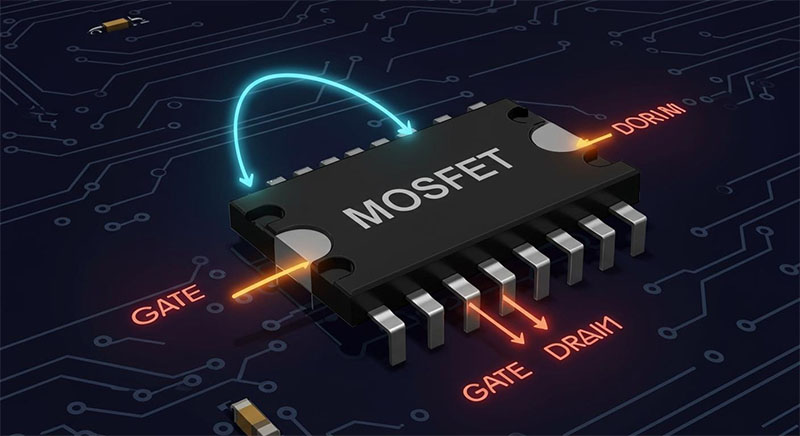
The conductivity of the device is determined by the voltage applied to the gate, and based on this characteristic, MOSFETs are mainly used for signal switching and signal amplification in electronic circuits.
The MOSFET is a voltage-controlled device. Its core difference from a JFET lies in the use of a metal-oxide gate structure. The gate electrode is separated from the N-channel or P-channel conductive channel by a thin silicon dioxide (SiO₂) insulating layer. The gate can be modeled as a capacitor plate, providing electrical insulation and preventing gate charge from directly flowing into the channel. This allows the device to control conduction through the electric field.
This insulation characteristic gives MOSFETs input resistances in the megaohm range, approaching infinity, so virtually no input current is required for control.
MOSFETs are the most widely used type of transistor in digital circuits. Inside CPUs, microcontrollers, and memory chips, hundreds of thousands to billions of MOSFETs are often integrated, making them the fundamental building blocks of modern integrated circuits.
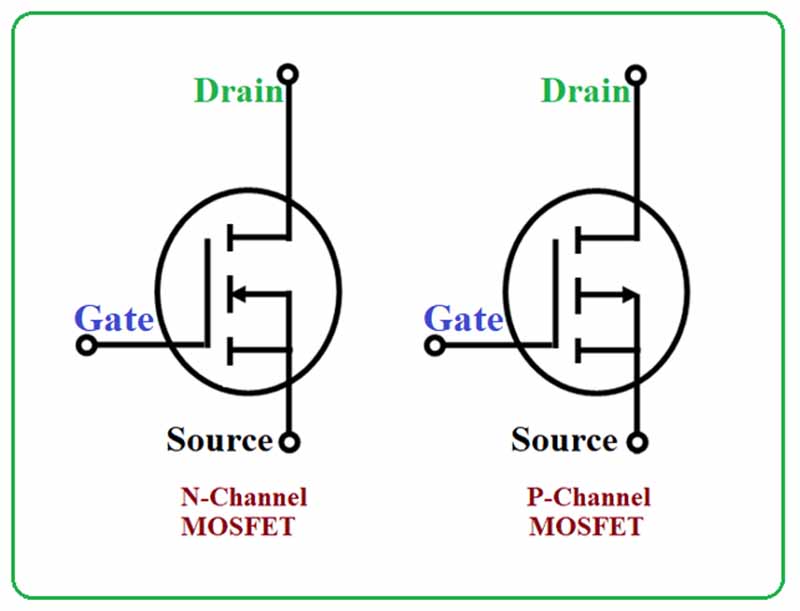
How MOSFET Transistor Works?
The core of a MOSFET is a voltage-controlled semiconductor device. It uses the electric field generated by the gate voltage across the insulating oxide layer to regulate the carrier concentration in the conductive channel between the source and drain. This controls whether the channel is on or off and determines the current flow, enabling signal amplification or digital switching. Because the gate is insulated, the input impedance is extremely high, and virtually no gate current flows.
N-Channel Enhancement MOSFET for Example
1. Basic Structure
The gate is separated from the semiconductor substrate by a layer of silicon dioxide (SiO₂) insulation. The source and drain are heavily doped N-type semiconductors, while the substrate is P-type. Under normal conditions, there is no natural conductive channel between the source and drain.
2. Gate Voltage Below Threshold (Cutoff State)
When the gate-to-source voltage is below the threshold voltage, the electric field through the insulation is insufficient to form a conductive channel. No current flows between source and drain, even if a drain-to-source voltage is applied. The device is off, corresponding to a digital "0."
3. Gate Voltage Above Threshold (On State)
When the gate-to-source voltage exceeds the threshold, the gate electric field penetrates the insulating layer, repelling holes in the substrate and attracting electrons under the oxide layer. This forms an N-type conductive channel connecting source and drain. Applying a drain-to-source voltage allows electrons to flow from source to drain, creating drain current. The device is on, corresponding to a digital "1".
4. Operating Regions
- Linear (Triode) Region: Drain-to-source voltage is small, the channel conducts uniformly, and the drain current varies linearly with drain voltage. The MOSFET acts as a controllable resistor.
- Saturation (Amplification) Region: Drain-to-source voltage is large enough that the channel is pinched off at the drain end. The drain current becomes mostly independent of drain voltage and is controlled by the gate voltage, used for signal amplification.
- Cutoff Region: Gate voltage is insufficient, the channel does not form, and the device is off, used for digital switching.
The principle of a P-channel MOSFET is symmetric, relying on holes for conduction, with the gate-to-source voltage polarity reversed for turning on.
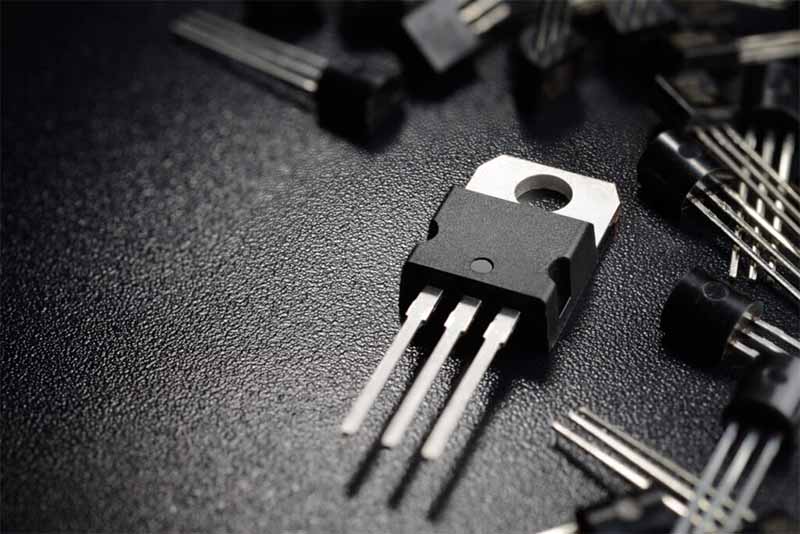
MOSFET Functions & Features
- Amplification: MOSFETs can function as amplifiers, boosting weak electrical signals. By applying a small input signal to the gate, the MOSFET can amplify it to a higher level, enabling precise reproduction of audio, data, or other signals.
- Switching: MOSFET transistor are widely used as electronic switches in digital circuits. Their fast switching speed allows them to quickly turn high-power loads, such as motors or lights, on and off in response to input signals.
- Voltage Regulation: MOSFETs are used in voltage regulation circuits to control and stabilize output voltage. They can efficiently handle large currents while providing consistent voltage output.
Types of MOSFET Transistor
1. By Gate Insulation Structure
Enhancement-mode MOSFET (E-MOSFET)
Normally OFF; requires a gate voltage to form a conducting channel.
Depletion-mode MOSFET (D-MOSFET)
Normally ON; gate voltage is used to deplete (turn off) the channel.
2. By Channel Type
N - channel MOSFET (NMOS)
Conducts using electrons; more widely used for higher mobility.
P - channel MOSFET (PMOS)
Conducts using holes; complementary to NMOS.
3. By Power / Application
Small - signal MOSFET
For low-power switching and amplification.
Power MOSFET
For high - voltage / high - current applications (e.g., DC - DC converters, motor drivers).
Common types: VDMOS, LDMOS, trench MOSFET.
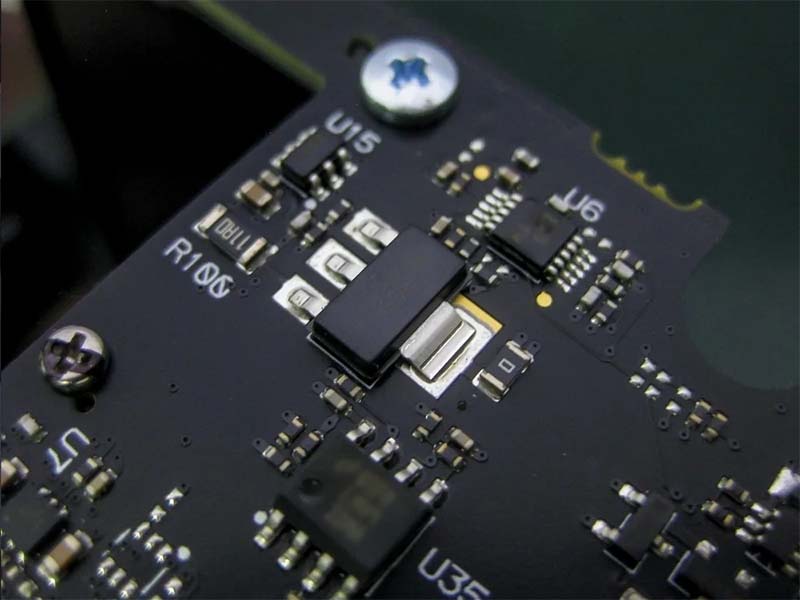
Applications of MOSFET Transistor
MOSFETs are widely used in signal amplification, motor driving, precision chopper amplifier circuits, and high-speed signal switching. Thanks to their high input impedance, low conduction loss, and fast switching characteristics, they have become key components in modern electronic systems.
1. Analog Signal Amplification
MOSFETs are extensively used for analog signal amplification. Their high input impedance allows for accurate and stable signal processing, meeting the requirements of various analog applications.
- Audio amplifiers, RF amplifiers, sensor signal conditioning circuits
2. Motor Drive and Speed Control
As core components in motor drive and speed regulation systems, MOSFETs provide crucial control thanks to their excellent switching and conduction performance. They are widely applied in motor speed control, fan regulation, power tools, and electric vehicle drives, offering reliable power management for various devices.
- Speed control, fan control, power tools, electric vehicle drive systems
3. Precision Chopper Amplifiers
MOSFETs serve as high-speed switching elements in chopper amplifier circuits. Their rapid switching ensures high circuit efficiency and reliable operation.
- Precision measurement instruments, medical devices (e.g., ECG), low-noise sensor systems
4. Signal Switching and Path Control
MOSFETs can function both as switches and amplifiers, enabling efficient control of signal paths. Their characteristics ensure stable and high-performance signal transmission and switching.
- Analog switches, multiplexers (MUX), digital circuits (CMOS logic), signal routing
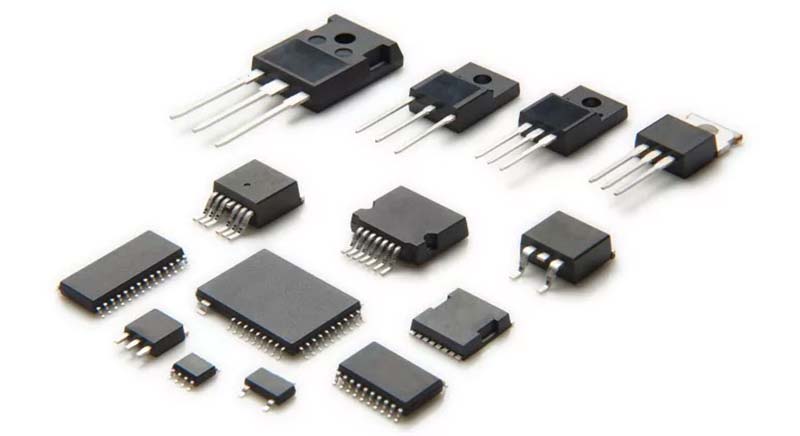
In power electronics, the MOSFET (Metal-Oxide-Semiconductor Field-Effect Transistor) is a key voltage-controlled power switch, widely used for high-efficiency energy conversion and control.
As a unipolar device with fast switching speed and low gate drive power, it is ideal for medium-to-low voltage, high-frequency applications such as DC-DC converters, switch-mode power supplies (SMPS), solar inverters, and motor drive systems. Compared with bipolar power transistors, MOSFETs reduce switching losses and improve system efficiency, making them essential in modern power conversion, battery management, and electric power train designs.
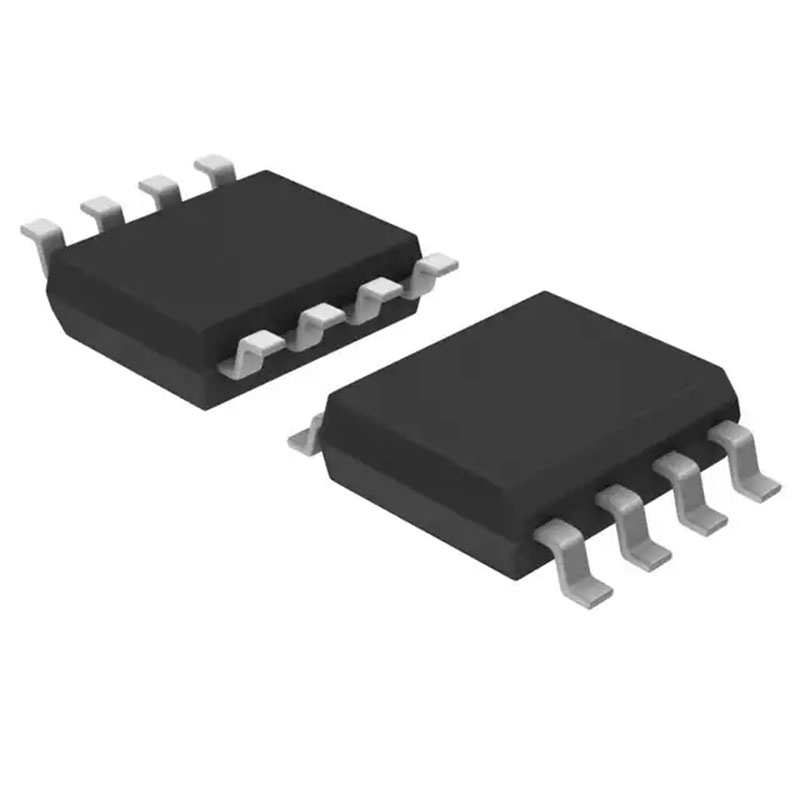
The IRF7854PBF is a specialized N-channel power MOSFET manufactured by Infineon Technologies. This device can efficiently control current in a variety of circuits. Engineers choose the IRF7854PBF to meet the dual requirements of high performance and high reliability, helping achieve effective power management in many devices.
It is features extremely fast switching speeds, making it ideal for high-speed systems, particularly in applications such as DC-DC converters. It comes in a compact 8-SOIC surface-mount package, which is well-suited for designs with limited space. The device contains two MOSFETs internally, saving PCB space and simplifying circuit design. This MOSFET finds applications in many areas, including DC-DC converters, motor control, and load switching.
The IRF7854PBF comes in an SO-8 package with dual built-in MOSFETs. The 8 pins function as follows:
- Gate 1 – Controls the first MOSFET
- Source 1 – Current return for the first MOSFET
- Drain 1 – Current output for the first MOSFET
- NC – Not connected
- Drain 2 – Current output for the second MOSFET
- Source 2 – Current return for the second MOSFET
- Gate 2 – Controls the second MOSFET
- NC – Not connected
This dual-MOSFET integrated architecture is flexible and can be adapted to various power management topologies, such as half-bridge and full-bridge configurations.
For more detailed specifications, you can contact us or refer to the Infineon datasheet.
How to Choose the MOSFET transistor for your Electronics?
Understanding the characteristics of each type of MOSFET is crucial for designing electronic systems that meet your requirements. The main differences lie in their operating principles and application areas.
Enhancement-mode MOSFETs conduct only when a voltage is applied to the gate. Depletion-mode MOSFETs are normally on and require a negative gate voltage to turn off. N-channel MOSFETs use electrons, which move quickly and are ideal for high-power and high-frequency switching. P-channel MOSFETs use holes, which move more slowly and are best suited for high-side switching in high-power systems.
Power handling capability refers to the voltage and current a MOSFET can withstand. You need to choose a MOSFET that meets your power requirements. Many N-channel and P-channel MOSFETs can handle voltages up to 1700 V. High power-handling capability allows you to use MOSFETs in applications requiring robust and reliable devices, such as automotive systems, industrial equipment, and energy systems.
For the most comprehensive range of MOSFET brands and part numbers, please visit eastechic, your professional electronic components supplier. You may also contact us for expert product recommendations, quotations and supply services.
MOSFET FAQs
Q: Which MOSFET is recommended for beginners?
A: N-channel enhancement-mode MOSFETs are easier to understand due to their simple conduction characteristics. They are easy to wire as low-side switches and feature low on-resistance, fast switching, and good cost-performance, making them ideal for beginner-level experimental circuits.
Q: What is the key difference between MOSFETs and BJTs?
A: MOSFETs are voltage-controlled devices with very high input impedance and virtually no gate drive current. BJTs are current-controlled devices that require base current for operation. This makes MOSFETs more suitable for high-frequency applications and scenarios with low drive power.
Q: Why is the MOSFET gate easily damaged by static electricity?
A: The MOSFET gate is made of a thin silicon dioxide (SiO₂)insulating layer. This layer is extremely thin and has limited voltage tolerance. High voltages from static electricity can easily break down the insulation, so anti-static precautions are usually needed during storage and soldering.
Q: How does RDS(on) affect circuit performance?
A: RDS(on) is the MOSFET's on-resistance. Lower RDS(on) reduces conduction loss and improves circuit efficiency. However, devices with very low RDS(on) are usually more expensive, and package size or junction capacitance may vary, so trade-offs should be considered when selecting a MOSFET.
Q: How to choose between enhancement-mode and depletion-mode MOSFETs?
A: Enhancement-mode MOSFETs are off at zero gate voltage and require a gate voltage to turn on. Depletion-mode MOSFETs are on at zero gate voltage and require a reverse gate voltage to turn off. For conventional switching and digital circuits, enhancement-mode MOSFETs are preferred. Depletion-mode MOSFETs are used when normally-on operation, constant current, or special startup circuits are needed.
Q: How to choose between N-channel and P-channel MOSFETs?
A: N-channel MOSFETs have higher carrier mobility and lower on-resistance, making them suitable for low-side switches and high-frequency applications. P-channel MOSFETs are easier to drive and do not require bootstrap circuits, often used for simple high-side switches, but their performance and efficiency are generally lower than N-channel devices.
In summary, MOSFETs are essential building blocks in modern electronics, from digital circuits and microcontrollers to power management systems. Their flexibility, high efficiency, and compact packaging make them ideal for applications of MOSFET transistor, including analog amplification, motor control, DC-DC conversion, load switching, and precision measurement systems, ensuring reliable performance across automotive, industrial, and power electronics.
Related information
- 2026.08.09 What Are Automotive Chips?
- 2026.07.19 What is GDDR Memory?


- 2026.05.05 What are Inertial Measurement Units?