

Available 24/7 at
+86 13632816717

What is GDDR Memory?
GDDR (Graphics Double Data Rate) memory is a specialized type of memory designed to deliver high bandwidth and efficient data transfer for demanding computing tasks. In this article, we will explore what is gddr memory used for helps explain why it is widely adopted in graphics cards, AI acceleration, gaming systems, and professional visualization platforms.
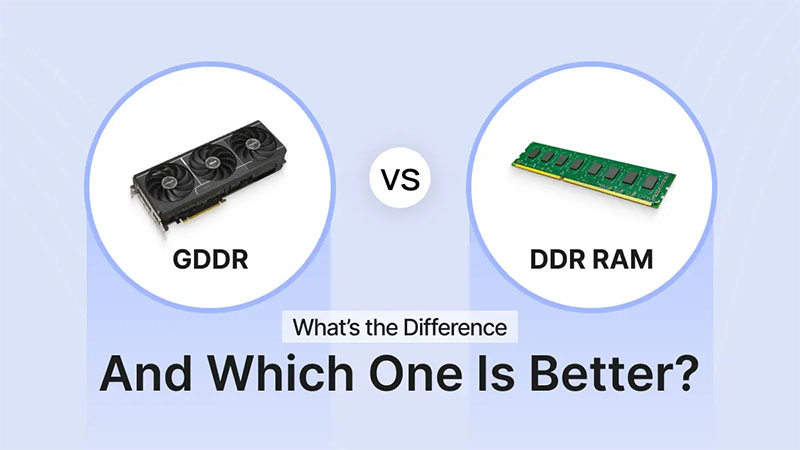
What is GDDR Memory?
GDDR stands for Graphics Double Data Rate, a high-speed specialized memory standard designed exclusively for graphics processing units (GPUs), distinct from system RAM (DDR for CPUs). It is optimized to handle massive, continuous graphical data throughput for gaming, rendering, AI computing, and professional visualization.
What are Difference Between GDDR and DDR?
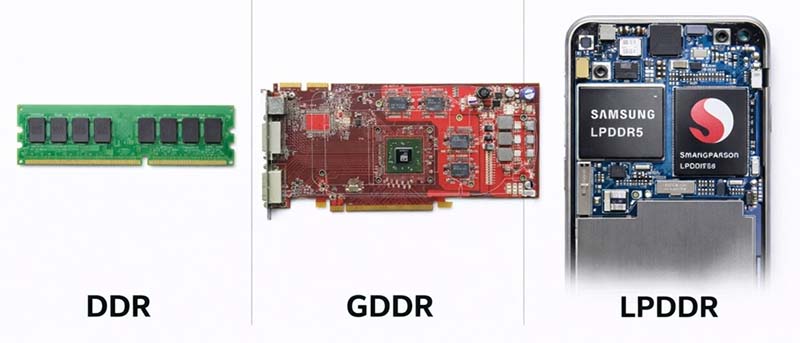
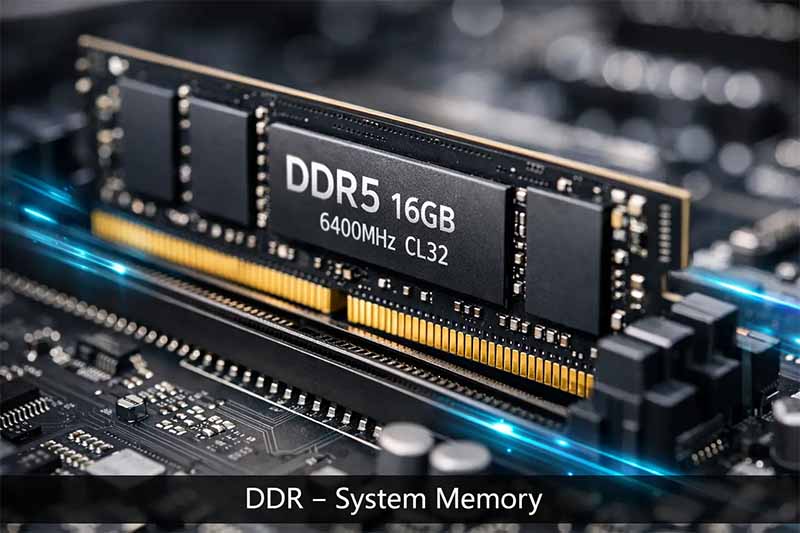
DDR serves as main system memory for desktops and servers. Its core design target is low random access latency to quickly feed the CPU, which frequently jumps between small batches of program data. It uses a relatively narrow memory bus and moderate operating speeds, balancing performance and cost. High bandwidth is not its priority, so it cannot sustain the massive continuous data flow required by graphics rendering or AI computation.
LPDDR is the low-power mobile variant of DDR, optimized for smartphones, tablets and lightweight embedded devices. It drastically cuts operating voltage and clock speed to minimize power consumption and heat, extending battery life. It sacrifices both bandwidth and latency for energy efficiency, making it unsuitable for heavy graphics or large-scale model inference tasks.
GDDR is designed for GPUs, prioritizing maximum sustained bandwidth above all else. It adopts wider memory buses, higher operating frequencies and optimized parallel data transmission architecture to stream massive texture files, frame buffers and AI tensor data nonstop. It accepts higher power draw and heat output to maintain ultra-fast throughput, while its random access latency is far higher than DDR.
GDDR vs DDR Which is Better?
|
Feature |
GDDR Memory (GPU) |
DDR Memory (CPU Main RAM) |
|
Primary Purpose |
Texture loading, frame buffer, ray tracing, AI tensor calculation |
General system program/data storage |
|
Bandwidth Design |
Ultra-high parallel bandwidth (priority) |
Low latency (priority) |
|
Interface |
Wide bus width, high clock frequency |
Narrower bus, optimized for quick random access |
|
Heat & Power Tuning |
Tolerates higher power draw for speed |
Low power, heat-sensitive |
|
Typical Use |
Gaming GPUs, data center AI accelerators (A800, L40S), graphics cards |
Laptops, desktops servers' main memory |
What is GDDR Memory Used For?
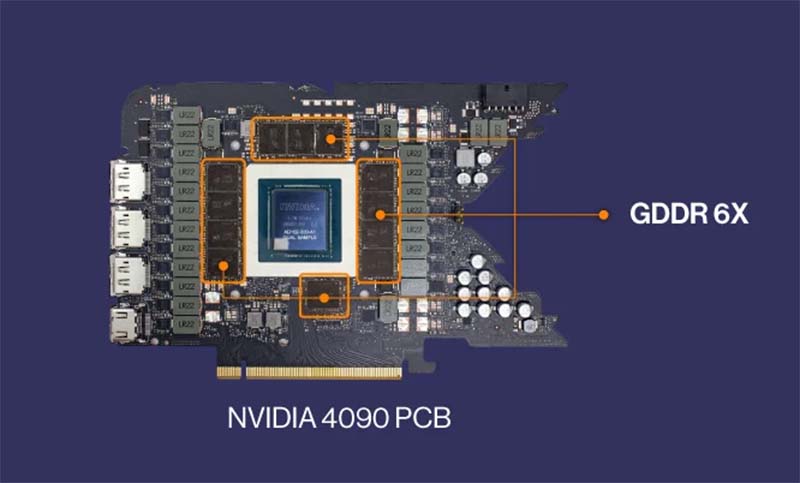
GDDR (Graphics Double Data Rate) memory is a specialized type of high-speed memory designed primarily for graphics processing units (GPU). Unlike standard system memory, GDDR is optimized to provide the extremely high memory bandwidth required for graphics rendering and parallel computing tasks.
Modern GPU use GDDR memory to rapidly transfer large amounts of data between the graphics processor and memory, enabling smooth performance in graphics-intensive and compute-heavy applications.
Gaming
Rendering high-resolution textures, realistic lighting, and complex visual effects.
Professional graphics
Accelerating CAD, 3D modeling, animation, and video editing workflows.
Artificial intelligence (AI)
Processing large AI models, machine learning training, and inference workloads.
Scientific computing
Supporting simulations, engineering analysis, and data-intensive research.
Content creation
Speeding up video rendering, visual effects (VFX), and image processing.
Cryptocurrency mining
Handling the memory-intensive calculations required by certain mining algorithms.
Compared with DDR and LPDDR memory, GDDR prioritizes maximum memory bandwidth over low latency or low power consumption. This makes it the preferred choice for applications that require massive parallel data processing, while DDR is better suited for general system memory and LPDDR is optimized for battery-powered mobile devices.
How GDDR Memory Boosts Computing Performance?
GDDR (Graphics Double Data Rate) memory improves overall GPU performance by increasing memory bandwidth, optimizing data transfer efficiency, and supporting large-scale parallel computing. For modern GPUs, processing units such as CUDA Cores and Tensor Cores require continuous access to large amounts of data. Even with powerful GPU cores, insufficient memory speed can create performance bottlenecks due to limited data availability.
1. Providing Higher Memory Bandwidth for Faster Data Transfer
The biggest advantage of GDDR memory is its high-bandwidth data transfer capability. Compared with standard DDR memory, GDDR uses higher data transfer rates and wider memory interfaces, allowing more data to be transferred within a given period of time. This enables GPUs to access graphics assets and computing data faster, improving overall processing efficiency.
2. Reducing GPU Core Data Waiting and Improving Utilization
GPUs contain thousands of parallel processing units, such as CUDA Cores and Tensor Cores in NVIDIA GPUs. These computing units constantly require data from graphics memory to perform calculations. High-speed GDDR memory helps reduce data access delays, allowing GPU cores to operate more efficiently and achieve higher utilization.
3. Improving High-Resolution Graphics and Complex Rendering Performance
In 4K gaming and professional visualization workloads, GPUs need to quickly load large amounts of texture data, scene information, and rendering resources. GDDR6 and GDDR6X memory provide higher bandwidth, enabling GPUs to process complex graphics more smoothly, reduce frame drops, and deliver a better visual experience.
4. Accelerating AI and Machine Learning Workloads
AI applications require massive data movement between memory and processing units. GPU accelerators use GDDR memory to quickly access.
5. Supporting Larger and More Complex Workloads
GDDR memory capacity also affects how much data a GPU can handle simultaneously. Larger GDDR memory allows applications to load more complex datasets, models, and assets without frequently accessing slower system storage.
Main Generations of GDDR
GDDR6
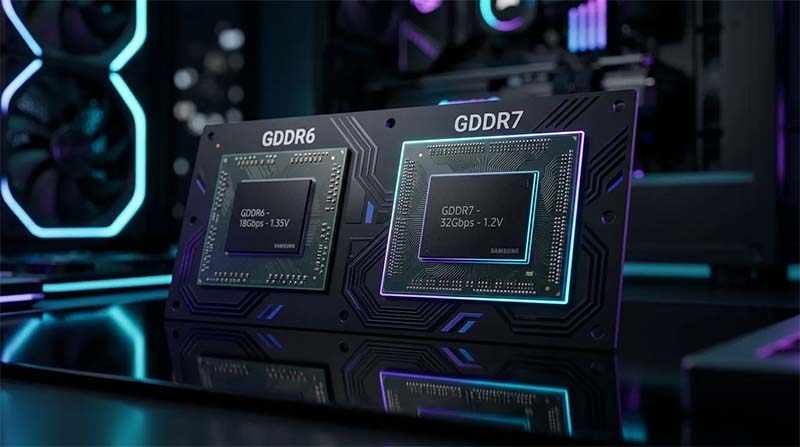
GDDR6 is a high-performance graphics memory standard widely used in gaming GPUs, professional graphics cards, and AI accelerators. Compared with GDDR5, it offers significantly higher bandwidth and improved power efficiency. GDDR6 typically operates at 14–20 Gbps per pin, with some implementations reaching 24 Gbps. Using a 32-bit memory channel per chip, it can deliver up to 96 GB/s of bandwidth per memory device, enabling smooth 4K gaming, real-time rendering, and data-intensive compute workloads.
Typical deployment: RTX 3060/4060, AMD RX 7000 mid-range, PlayStation 5, Jetson Orin series.
GDDR6X
GDDR6X is an enhanced version of GDDR6 developed to deliver even greater memory throughput for flagship GPUs. It introduces PAM4 (Pulse Amplitude Modulation 4-level) signaling instead of traditional NRZ signaling, allowing two bits to be transmitted per clock cycle and significantly increasing data transfer efficiency. GDDR6X supports data rates from 19 Gbps to over 24 Gbps, with the latest implementations reaching 21–24 Gbps and beyond. Combined with wide memory buses such as 320-bit or 384-bit, it provides memory bandwidth exceeding 1 TB/s, making it ideal for AI workloads, ray tracing, and 8K content creation.
Typical deployment: RTX 3080/3090, RTX 4080/4090, RTX A6000 professional graphics card.
GDDR7
GDDR7 is the latest generation of graphics memory, designed to meet the growing demands of AI, high-performance computing, and next-generation gaming. It adopts PAM3 (Pulse Amplitude Modulation 3-level) signaling, which improves transmission efficiency while reducing power consumption compared with GDDR6X. Initial GDDR7 devices support speeds of 32 Gbps per pin, with the JEDEC specification allowing future implementations of up to 48 Gbps. Depending on the GPU memory interface, total memory bandwidth can exceed 1.5 TB/s, enabling faster AI inference, advanced ray tracing, large language models, and ultra-high-resolution graphics processing.
Typical deployment: Upcoming RTX 5000 flagship, next-gen data center AI GPU, high-end automotive SoC, 8K real-time rendering workstations.
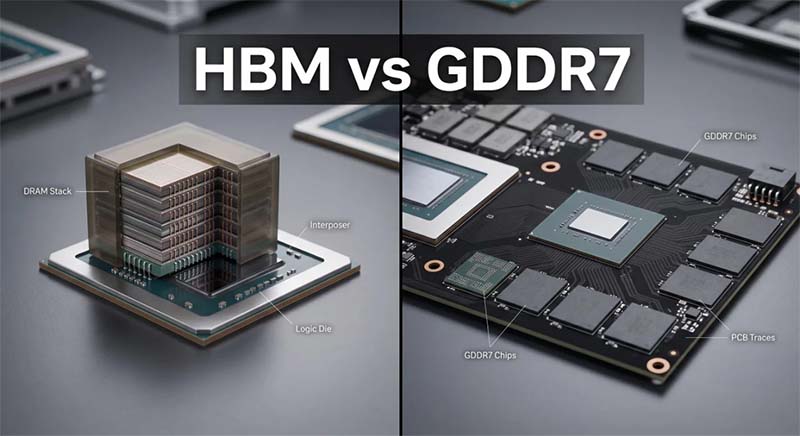
Which one is Better? GDDR vs HBM Memory
Both GDDR (Graphics Double Data Rate) and HBM (High Bandwidth Memory) are high-performance memory technologies used with GPUs and AI accelerators, but they are designed for different performance, power, and cost requirements.
GDDR
GDDR is the most widely used graphics memory for consumer and professional GPUs. It offers an excellent balance of high bandwidth, relatively low cost, and broad availability. Modern standards such as GDDR6, GDDR6X, and GDDR7 provide data rates ranging from 14 Gbps to 48 Gbps per pin, enabling total memory bandwidth that can exceed 1.5 TB/s on high-end graphics cards.
Because it is more affordable and easier to manufacture, GDDR is commonly found in gaming graphics cards, workstation GPUs, content creation systems, and edge AI devices.
HBM
HBM is designed for maximum bandwidth and power efficiency. Instead of placing memory chips around the GPU, HBM stacks multiple DRAM dies vertically and connects them to the processor through a silicon interposer. This architecture provides an ultra-wide memory interface and dramatically increases data throughput while reducing power consumption per bit transferred.
The latest HBM generations can deliver multiple terabytes per second (TB/s) of memory bandwidth, making them ideal for large language model (LLM) training, AI inference, scientific simulations, and high-performance computing (HPC). However, HBM's advanced packaging technology makes it significantly more expensive than GDDR.
|
Feature |
GDDR |
HBM |
|
Architecture |
Memory chips placed around the GPU on the PCB |
3D-stacked memory connected to the GPU using an interposer |
|
Bandwidth |
High (typically hundreds of GB/s to around 1.5 TB/s) |
Extremely high (up to several TB/s) |
|
Power Efficiency |
Good |
Higher efficiency per bit transferred |
|
Memory Bus |
32-bit per memory chip; wide aggregate bus (e.g., 256–512-bit) |
Very wide interface (typically 1024-bit per stack) |
|
Cost |
Lower |
Significantly higher |
|
Typical Applications |
Gaming GPUs, professional graphics, workstations |
AI accelerators, HPC, data centers |
How to Choose GDDR and HBM Memory?
Choose GDDR if you need a cost-effective solution for gaming, professional visualization, video editing, or general GPU acceleration. Choose HBM if your application requires the highest possible memory bandwidth and energy efficiency, such as AI training, large-scale inference, or supercomputing.
In general, GDDR dominates consumer and workstation graphics, while HBM is the preferred choice for enterprise AI accelerators and high-performance computing systems.
Eastech specializes in semiconductor distribution, offering a broad portfolio of GPUs, memory chips, memory modules, and integrated circuits from leading manufacturers. By providing reliable supply channels, competitive pricing, and professional component support, we help customers accelerate the development of AI workstations, edge computing systems, professional visualization platforms, and advanced electronic applications.
We have established stable supply channels with leading memory manufacturers, including Samsung, SK hynix, and Micron. Through close cooperation with trusted industry partners and global sourcing networks, we provide customers with reliable access to high-quality memory products, including GDDR, DDR, LPDDR, and other advanced memory solutions.
In conclusion, GDDR memory has become a key technology for graphics processing, AI workloads, and high-performance computing by providing high bandwidth and efficient data transfer. As AI models continue to demand greater memory bandwidth, the comparison of GDDR vs HBM memory has become increasingly important. While HBM offers extremely high bandwidth for advanced AI accelerators and data center applications, GDDR remains a flexible and cost-effective choice for GPUs, workstations, and many professional computing systems.
Related information

- 2026.08.09 What Are Automotive Chips?

- 2026.05.05 What are Inertial Measurement Units?

- 2026.04.08 What Types of Sensors Used in Drones?