

Available 24/7 at
+86 13632816717

What are Inertial Measurement Units?
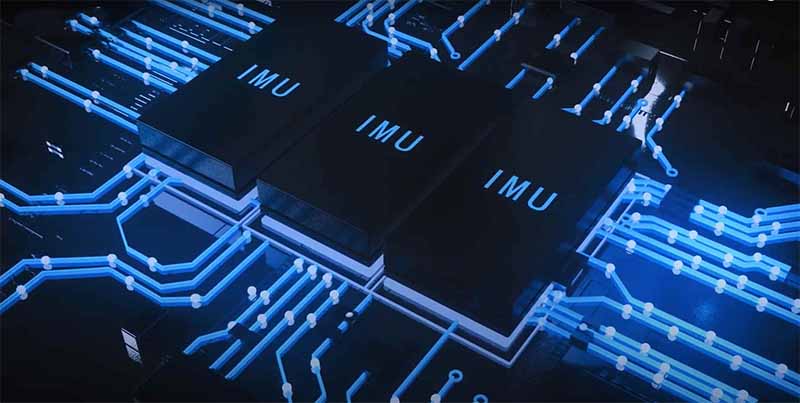
What are inertial measurement units? An Inertial Measurement Unit (IMU) is an integrated system composed of high-precision multi-axis sensors, including gyroscopes, accelerometers, magnetometers, and pressure sensors. By combining three-axis angular velocity from gyroscopes with three-axis linear acceleration data, it enables precise measurement of motion in three-dimensional space. Unlike a standalone accelerometer, an IMU provides both translational and rotational sensing capabilities. With reliable acquisition and processing of multi-degree-of-freedom data, it delivers stable, continuous, and comprehensive motion insights even in complex dynamic environments-making it a key consideration when selecting the best inertial measurement unit for UAV.
How do MEMS Inertial Measurement Unit Work?
The essence of an IMU is the application of Newton's laws of motion. It does not rely on GPS signals or base stations; instead, it perceives changes in speed and direction through the physical changes of its internal sensors. This "autonomy" makes it irreplaceable in environments such as underground garages, tunnels, or the deep sea.
Accelerometer (Sensing Linear Motion)
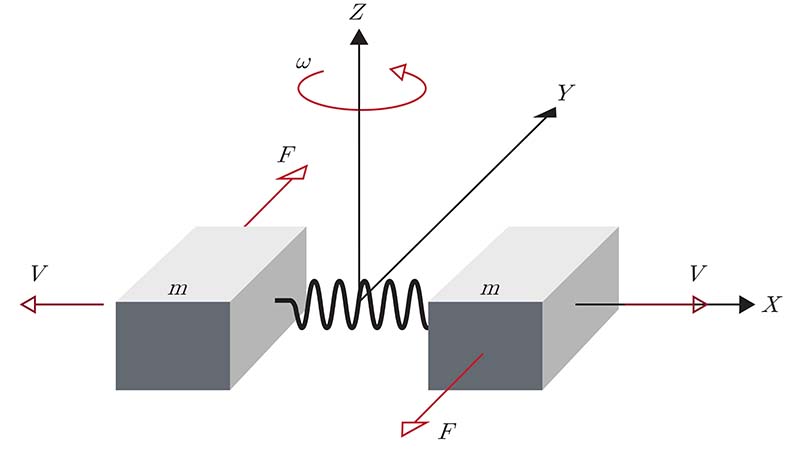
Inside an accelerometer, there is typically a tiny "proof mass" suspended between capacitive plates. When an object moves or changes speed, inertia causes the mass to displace, thereby changing the capacitance value. By measuring this change, the IMU can perceive linear acceleration along the X, Y, and Z axes.
Gyroscope (Sensing Rotational Motion)
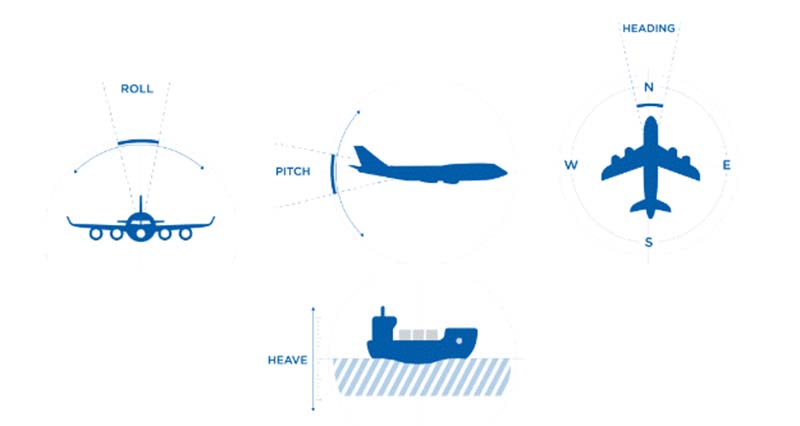
Gyroscopes utilize the principle of the "Coriolis force." When the sensor rotates around an axis, the internally vibrating microstructure is subjected to a lateral force that causes deflection. The sensor captures this deflection and converts it into angular velocity data. This allows the IMU to know if an object is rolling, pitching, or yawing.
Magnetometer (Sensing Absolute Orientation)
A magnetometer functions similarly to an electronic compass, determining the absolute heading of an object by sensing the Earth's magnetic field. It is primarily used to correct the cumulative error generated by the gyroscope over time (known as "drift"), ensuring the correct heading during long-distance navigation.
Data Fusion and Attitude Estimation
Raw data (acceleration and angular velocity) is sent to a processor and fused using algorithms such as the Kalman filter. The accelerometer is responsible for providing a long-term tilt reference, while the gyroscope captures instantaneous, sharp movements. The two complement each other to ultimately output precise 3D attitude, velocity, and position information.
Which Sensors Are Used in an Inertial Measurement Unit?
An IMU combines multiple sensors, with its design depending on system complexity and required degrees of freedom.
Accelerometer (Essential)
The accelerometer is the foundation of any IMU. It measures linear acceleration along one or more axes (typically X, Y, and Z). By detecting the force of gravity, it can also determine the device's tilt or inclination relative to the Earth's surface when at rest.
Gyroscope (Essential)
The gyroscope measures angular velocity, or the rate of rotation around the three axes (Roll, Pitch, and Yaw). While the accelerometer tells you how fast you are moving in a straight line, the gyroscope tells you how fast you are turning.
Magnetometer (Common in 9-axis IMUs)
Often referred to as an electronic compass, the magnetometer measures the strength and direction of the Earth's magnetic field. It is used to provide an absolute heading (North) and to correct the "drift" that gyroscopes naturally accumulate over time.
Pressure Sensor / Barometer (optional)
In many advanced IMUs, particularly those used in drones or wearable fitness trackers, a barometric pressure sensor is included. It measures atmospheric pressure to determine altitude or changes in height, adding a vertical dimension that is more precise than using acceleration alone.
Temperature Sensor
Most high-precision IMUs include an internal temperature sensor. This is not used to tell you the weather, but to calibrate the other sensors. Since MEMS (Micro-Electro-Mechanical Systems) components are sensitive to heat, the IMU uses temperature data to compensate for thermal bias and ensure accuracy.
|
IMU Type |
Sensors Included |
Data Provided |
|
6-Axis |
Accelerometer + Gyroscope |
Linear motion & rotation |
|
9-Axis |
Accel + Gyro + Magnetometer |
Motion, rotation & absolute heading |
|
10-Axis |
Accel + Gyro + Mag + Barometer |
Full motion tracking plus altitude |
Why Choose MEMS Sensor for Your Unmanned Systems?
1. Miniaturization and High Integration
MEMS (Micro-Electro-Mechanical Systems) sensors integrate mechanical structures and electronic circuits onto tiny silicon chips. While traditional mechanical gyroscopes can be as large as a fist, a MEMS IMU is only the size of a fingernail, with a thickness often less than 1 mm. This allows them to be easily embedded in smartphones, smartwatches, and even implantable medical devices.
2. Ultra-Low Power Consumption
Due to their extremely small physical dimensions, the energy required for MEMS devices to operate is minimal. A typical MEMS sensor's operating current is usually in the microampere ($\mu A$) range. This is critical for battery-powered portable devices-such as drones and fitness trackers-significantly extending the device's battery life.
3. High Cost-Effectiveness
MEMS sensors utilize batch production processes similar to semiconductors (such as photolithography and etching). This means that thousands of sensors can be manufactured simultaneously on a single wafer, leading to a significant reduction in unit cost.
4. Excellent Durability and Shock Resistance
Unlike mechanical gyroscopes that contain complex bearings and rotors, the interior of a MEMS device is typically a solid silicon structure. Because this microstructure has very low mass, it is exceptionally resistant to impact and vibration, making it ideal for high-dynamic environments.
5. Digitalization and Ease of Integration
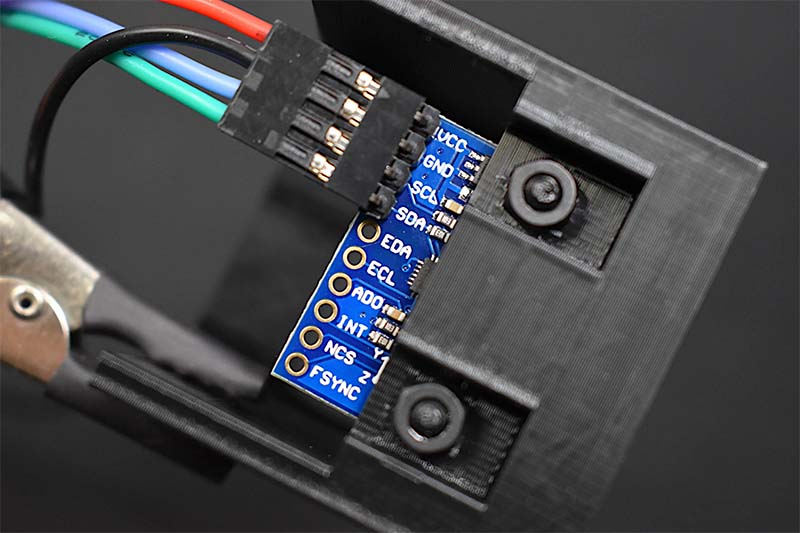
Modern MEMS sensors usually feature built-in Application-Specific Integrated Circuits (ASIC) for signal processing, providing direct digital signal output (such as I2C or SPI interfaces). Developers can connect them directly to an MCU (Microcontroller) or SoC (System on Chip) without handling complex analog signal conditioning, greatly simplifying circuit design.
How to Calibrate an Inertial Measurement Unit?
1.Accelerometer: Six-Sided Static Calibration
The sensor is placed horizontally and remains stationary on each of its six faces (the positive and negative directions of the X, Y, and Z axes). Using Earth's gravity ($1g$) as the standard reference value, the sensor's Zero-point Bias and Scale Factor are corrected by comparing the actual output against the theoretical values.
2. Gyroscope: Static Drift Calibration
Under conditions of absolute stillness, the average output data of the gyroscope is recorded over a specific duration. At this time, the theoretical angular velocity should be $0^\circ/s$. Software algorithms are then used to subtract the minute deviations recorded during this period, thereby mitigating long-term angular drift.
3. Magnetometer: Sphere-Fitting Calibration
The device is rotated in all directions within a 3D space to collect magnetic field data across all dimensions. These data points are fitted to a standard mathematical sphere. Through mathematical transformations, Hard-Iron and Soft-Iron interference-caused by surrounding metals or electronic components-is eliminated.
4.Temperature Compensation Calibration
Sensor output variations are measured at different temperatures within a controlled thermal chamber. A temperature-error model is then established, allowing the IMU to automatically compensate for data deviations caused by physical property changes based on real-time temperature readings during operation.
5.Dynamic Online Calibration
During system operation (such as a drone in flight), IMU data is compared with external information like GPS or Visual Odometry using algorithms like the Kalman Filter. By calculating real-time residuals, the system dynamically corrects instantaneous sensor errors that occur during motion.
IMU Calibration Tips
When performing the Six-Sided Calibration, ensure the surface is as level as possible. Even a $1^\circ$ tilt can introduce an error of approximately $0.017g$, which may significantly impact the precision of high-performance MEMS sensors.

What are the Applications of the IMU?
Leveraging autonomous operation, high-speed sampling, and strong anti-interference capabilities, the Inertial Measurement Unit (IMU) is widely utilized across diverse sectors including consumer electronics, agriculture, outdoor industries, and defense.
1. Consumer Electronics: Intelligent Perception & Interaction
In smartphones and wearable devices, the IMU is the core of the intelligent experience. It is used for automatic screen rotation, pedometer algorithms, and tilt-to-steer controls in racing games.
Action Cameras: IMUs measure and compensate for camera shake to achieve professional-grade video stabilization (EIS).
2. Drones and Robotics
IMU technology has revolutionized drone systems, enabling precise movement and attitude control-essential for safe and efficient operations across various industries.
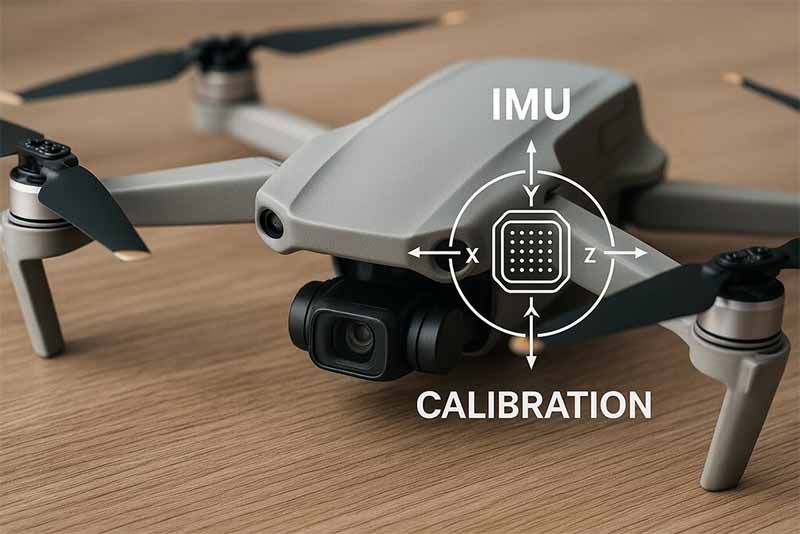
2.1 Flight Stabilization: The IMU is the "inner ear" of the Flight Controller (FC). By monitoring tilt angles and vibrations at high frequencies, the flight control algorithm adjusts motor speeds at millisecond intervals.
2.2 Autonomous Navigation: In the absence of pilot intervention, the IMU provides continuous Dead Reckoning capabilities. It can take over navigation by integrating motion data to estimate position, enabling path planning and safe Return-to-Home (RTH) over short durations.
2.3 Gimbal Stabilization: To capture stable aerial footage, gimbal systems require a dedicated IMU or shared flight data. The IMU captures the drone's wobbles and vibrations in real-time, driving gimbal motors to perform counter-compensations.
2.4 Obstacle Avoidance: The IMU provides indispensable motion feedback. When sensors detect an obstacle, the precise acceleration and deceleration data from the IMU allow the system to calculate the shortest braking distance and optimal bypass trajectory.
2.5 VTOL & Landing Control: During Vertical Take-Off and Landing (VTOL), the IMU's perception of the gravity vector determines the smoothness of the maneuver. It monitors platform turbulence to help the drone align precisely with the landing center.
3. Autonomous Driving & Automotive Systems
While GPS/GNSS provides location data, satellite signals often drop out in tunnels, urban canyons, or underground garages. In these scenarios, the IMU uses Dead Reckoning to estimate the vehicle's position and heading, filling the signal gaps. Furthermore, it is critical for Electronic Stability Control (ESC) and crash sensing for airbag deployment.
4. Industrial & Agricultural Automation
- Industrial: IMUs monitor the vibration status of heavy machinery or act as clinometers to monitor the structural integrity of bridges and buildings.
- Agriculture: In agricultural drones, the IMU ensures constant altitude and spray angles over uneven terrain. Even during acceleration, turns, or payload changes (as pesticides are consumed), the IMU maintains nozzle stability to ensure uniform coverage and prevent missed or overlapping sprays.
5. Sports Analysis & Motion Capture
By wearing IMU-integrated sensors on human joints, athletes can record precise motion trajectories in real-time-such as the arc of a golf swing or sprinting posture-for performance optimization.
6. Aerospace & Marine: Long-range Precision Navigation
In missiles, satellites, and submarines, the IMU is the core component of the Inertial Navigation System (INS). Since these platforms often cannot rely on GPS (e.g., submarines in the deep sea or missiles in high-interference environments), high-precision IMUs-such as Ring Laser Gyros (RLG) or Fiber Optic Gyros (FOG)-become the sole navigation reliance to ensure pinpoint accuracy over long distances.
How to Choose the Best IMU for UAV?
Choosing the best IMU (Inertial Measurement Unit) for a UAV hinges on balancing accuracy, SWaP (Size, Weight, Power), environmental ruggedness, and cost against your mission's specific needs.
1. Define Your Mission & Performance Requirements
First, clarify your use case-it directly dictates IMU grade and precision:
|
Application |
Required IMU Grade |
Key Precision Targets |
|
High-Precision (3D mapping, surveying, military, GPS-denied navigation) |
Tactical-Grade |
Gyro bias stability <1°/h; accelerometer bias stability <0.1 mg |
|
Commercial/Industrial (Inspection, agriculture, logistics) |
Industrial-Grade |
Gyro bias stability 1–10°/h; accelerometer bias stability 0.1–1 mg |
|
Consumer/Recreational (Hobby flying, basic aerial video) |
Low-Cost MEMS |
Gyro bias stability >10°/h; moderate noise tolerance |
DoF (Degrees of Freedom):
6-DoF: 3-axis gyro + 3-axis accelerometer (basic attitude control, low cost).
9-DoF: +3-axis magnetometer (better heading accuracy, ideal for navigation; account for magnetic interference).
2. Evaluate Core Technical Parameters
Gyroscope Performance
Bias Stability: The single most critical spec-measures drift over time. Lower values = better long-term stability.
Noise Density (ARW): Affects short-term jitter; critical for smooth hovering and dynamic flight.
Update Rate: ≥100 Hz for general UAVs; ≥500 Hz for high-agility or indoor flight.
Accelerometer Performance
Bias Stability: Determines accuracy of velocity/position estimates.
Range: ±2g to ±16g for most UAVs; higher for high-dynamic maneuvers.
Drift & Error Characteristics
In-Run Bias Drift: How much bias shifts during operation (key for GPS-outages).
Scale Factor Error: Impacts linearity of measurements.
3. Optimize SWaP (Size, Weight, Power)
UAVs are highly constrained by payload and battery:
Size/Weight: Small drones (e.g., micro-UAVs) need IMUs <50g and <30 cm³.
Power Consumption: Prioritize <1W for battery-powered UAVs; high-end units may draw 2–5W.
Form Factor: Compact, rugged enclosures (e.g., aluminum) for integration into airframes.
4. Ensure Environmental Ruggedness
UAVs operate in harsh conditions-verify:
Vibration Resistance: MEMS IMUs should handle 5–20g vibration (common in multirotors); look for vibration isolation mounting options.
Temperature Range: -40°C to +85°C for industrial use; wider ranges for military/high-altitude missions.
EMI Shielding: Critical for UAVs with GPS, radios, or ESCs to avoid electromagnetic interference.
5. Compatibility & Integration
Fusion Readiness: IMUs for navigation should support GNSS/IMU fusion (e.g., EKF/UKF) to correct drift.
Communication Interface: SPI/I2C for low-cost MEMS; RS-422/Ethernet for high-end tactical units.
Calibration: Factory-calibrated (temperature, bias) units save time; field-calibration support is a plus.
Price of Inertial Measurement Unit (IMU)
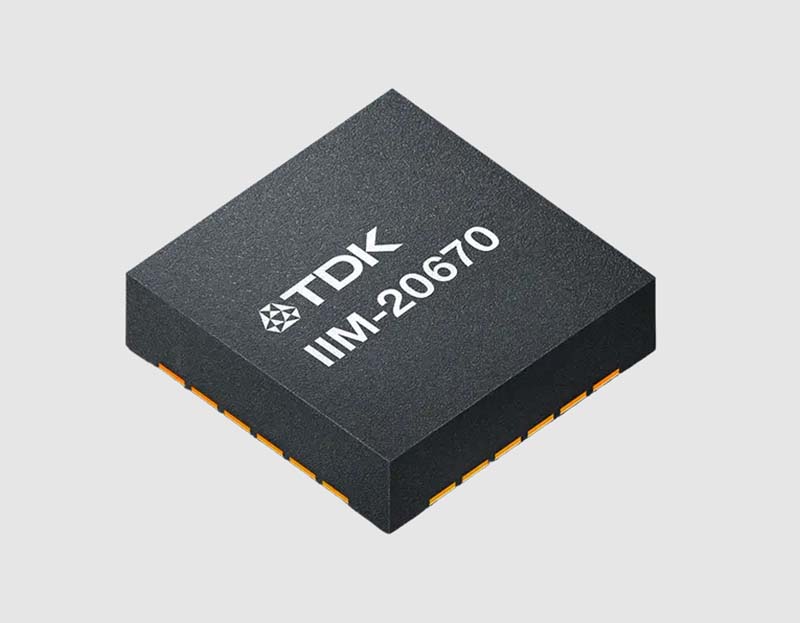
When selecting a UAV IMU, such as from IMU manufacturers TDK InvenSense, the price of inertial measurement unit for drone typically varies based on performance grade and specific application requirements.
Consumer-grade 6-axis and 9-axis MEMS models including ICM-42605, ICM-20602 and ICM-20948 for hobby and civilian drones cost $2~4 , perfect for basic attitude control and daily flight tasks. Industrial and vehicle-grade high-reliability IMUs from the IIM and IAM series, suited for agricultural and inspection UAVs, are priced $10–20 per unit, offering better temperature resistance, vibration suppression and stability for complex outdoor environments. Integrated factory-calibrated finished IMU modules cost 2~5 times the bare chip price, ranging from $15~$50.
In conclusion, Inertial Measurement Units play a critical role in modern motion sensing and navigation systems. Understanding how each inertial measurement unit sensor-such as gyroscopes, accelerometers, and other supporting components-works together helps in selecting the right IMU for specific applications. Whether used in UAVs, robotics, or industrial and agricultural automation systems, IMUs continue to deliver accurate and reliable motion data for increasingly demanding environments.
Related information

- 2026.08.09 What Are Automotive Chips?

- 2026.07.19 What is GDDR Memory?

- 2026.04.08 What Types of Sensors Used in Drones?