

Available 24/7 at
+86 13632816717

What Integrated Circuit Are in a Drone System
As the intelligent core of a drone, chips are responsible for critical functions such as flight control, attitude stabilization, navigation, and communication. With the growing adoption of drones across various industries, the market demand for high-performance chips continues to rise rapidly. Whether you're building a racing drone, a commercial surveying UAV, or a lightweight consumer model, having the best drone integrated circuit guide at your side makes all the difference between unstable flights and reliable, high-performance operation.
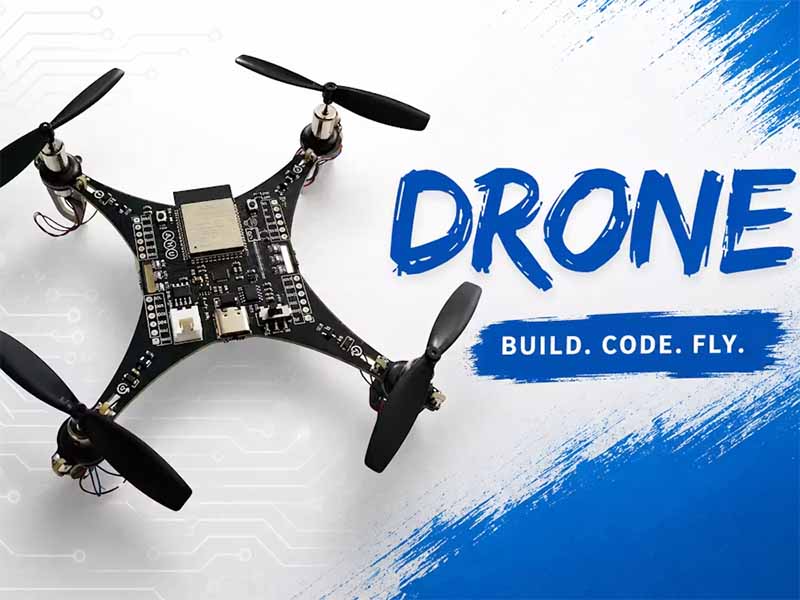
What Integrated Circuit Are in a Drone System?
Every integrated circuit inside a drone serves a distinct and irreplaceable role, working in tandem to guarantee stable flight, accurate control and full functionality. Below are the functions of drone ICs and electronic components for UAVs.
1. Flight Control MCU
As the core processing chip, it collects real-time data from all sensors, runs flight control algorithms, and converts pilot commands into executable instructions. It manages basic flight actions like takeoff, landing, hovering and direction adjustment, and also supports intelligent functions such as automatic return and route planning. It decides the drone's response speed, flight smoothness and overall control performance.
Industrial-grade and automotive-grade MCUs are the mainstream choice due to their high reliability and stability, serving as the core of most drone flight control systems.
Applications:
- Decoding remote control signals
- Attitude calculation and stabilization
- Motor speed control
- Hovering, takeoff, landing, and waypoint navigation
- Fault protection and emergency handling
- Sensor fusion of barometer, gyroscope, and accelerometer data
MCUs are essential components in both consumer and industrial UAVs.
Dedicated Flight Control SoC
Dedicated flight control SoCs integrate multiple peripherals and hardware acceleration functions into a single chip. They are widely used in mass-produced consumer drones, helping simplify circuit design, reduce power consumption, and improve overall system stability.
AI Computing Chips
AI computing solutions mainly include FPGAs, NPUs, and lightweight AI processors designed for machine vision and intelligent recognition applications.
Applications:
- Object tracking
- Human, vehicle, and obstacle recognition
- Autonomous obstacle avoidance
- Terrain mapping and surveying
- Facial recognition
- Crop identification for agricultural drones
- Defect detection in inspection drones
In high-end UAV platforms, AI chips are also used for real-time image analysis, intelligent route planning, and advanced autonomous flight functions.
ST (STMicroelectronics) is the mainstream supplier for drone flight control MCUs:
High-performance models for industrial and professional drones: STM32H743VIT6, STM32H723VGT6, STM32F722RET6
Mid-range models for commercial UAVs: STM32F405RGT6, STM32F401CCU6
Cost-effective options for consumer-grade drones: STM32F303CCT6, STM32F103C8T6
Other alternative control chips:
TI: TM4C129ENCPDT, TMS320F28335PGFA; Microchip: DSPIC33EP; Silicon Labs: EFM8BB51F16G, EFM8BB21F16G; NXP: MIMXRT1170DVL6A
Domestic MCUs: Gigadevice GD32F4, Geehy APM32F405, CKS CKS32F103
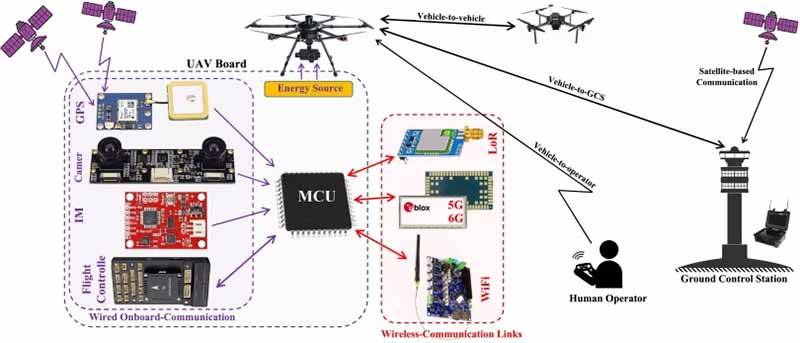
This type of integrated circuit includes accelerometers, gyroscopes and barometric pressure chips. They continuously detect the drone's attitude, tilt angle, flight speed and altitude. By feeding motion data back to the main control chip, they correct flight posture instantly to avoid shaking or drifting, which is the key to maintaining flight stability.
IMU Inertial Measurement Unit (Gyroscope + Accelerometer)
The IMU continuously monitors the drone's flight attitude, angular velocity, acceleration, and tilt angle in real time. It provides critical data for flight stabilization and balance control, enabling smooth and responsive flight performance under various operating conditions.
Barometric Pressure Sensor Chip
Barometric sensor chips accurately measure atmospheric pressure to calculate flight altitude. They enable altitude hold functionality, allowing drones to maintain a stable height during hovering and autonomous flight operations.
ADI (Analog Devices) High-precision inertial & gyro chips
Professional gyroscopes: ADIS16488, ADIS16490, ADXRS453BRGZ-RL
High-performance accelerometers: ADXL357BEZ-RL7, ADXL355BEZ-RL7, ADXL345BCCZ-RL7
ST (STMicroelectronics) Motion sensors
LSM6DSV32XTR, LSM6DSV16XTR, LSM6DS3TR-C, widely used in consumer and commercial drones for integrated acceleration and gyro detection.
TDK / InvenSense Professional IMU series
High-precision new generation: ICM-40609-D, ICM-42688-P, ICM-45686, ICM-42670-P
Classic universal IMUs: ICM-20602, ICM-20948, ICM-20689, ICM-42605, ICM-42607-P, ICM-42607-C
Bosch Inertial sensors
Mainstream inertial combinations: BMI088, BMI270
Barometric Pressure Sensors (altitude detection)
Bosch: BMP388, BMP280;
Auxiliary signal processing chips (ADI signal chain)
ADL5561ACPZ, ADL5562ACPZ, AD9253BCPZ-105 for filtering and amplifying sensor signals; AD9517-4ABCPZ provides stable clock signals for sensors.
3. GPS & Positioning ICs
Responsible for satellite positioning and geographic coordinate acquisition. These ICs enable the drone to lock its real-time location, realize fixed-point hovering, intelligent following and pre-programmed waypoint flight. High-performance positioning chips greatly improve navigation accuracy, especially for outdoor long-distance operations.
GPS / BeiDou Positioning Integrated Circuit
GPS and BeiDou positioning chips provide satellite-based navigation and location tracking. They are essential for outdoor flight applications, supporting functions such as return-to-home (RTH), position hold, waypoint navigation, and precise route planning.
Radar / LiDAR Control and Processing Chips
Working in conjunction with radar or LiDAR sensors, these chips enable high-precision obstacle detection, collision avoidance, and terrain-following capabilities. They are commonly used in industrial, agricultural spraying, surveying, mapping, and inspection drones where advanced environmental awareness is required.
4. ESC Drive ICs
They act as the power bridge between the main controller and drone motors. The ICs receive control signals and adjust the current and rotating speed of each motor independently. It directly affects flight power, agility and load capacity, and ensures consistent power output during acceleration, deceleration and steering.
5. Power Management IC (PMIC)
It undertakes overall power distribution, voltage regulation and battery protection for the whole device. It stabilizes the output voltage for different chips and modules, prevents overvoltage, undervoltage and overcurrent damage, optimizes power consumption, and effectively extends the drone's battery life and working duration.
ADI (original LTC/LTM series) High-efficiency power modules
Multi-channel DC-DC power converters: LTM4613IV, LTM4615IV, LTM4622IY
RF power & signal power management: LTC5548IUDB, LTC5549IUDB, LTC5510IUF, LTC2262IUJ-14
Microchip Power IC: MIC69502WR
MPS DC-DC conversion chips (widely used for drone secondary power supply): MP9943GQ-Z, MP9447GL-Z
Motor drive IC (power execution end): Fortior FD6288Q
6. Communication & Transmission ICs
Covering remote control signal transceivers and image transmission chips. They transmit control signals between the remote controller and the drone, and send real-time aerial footage back to the ground terminal. High-quality communication ICs reduce signal delay and anti-interference ability, avoiding signal loss during flight.
RF chips are typically categorized into three types: remote control communication, video transmission, and telemetry/data transmission.
Remote Control RF Chips
Remote control RF chips enable bidirectional communication between the transmitter and the drone, ensuring stable command execution with strong anti-interference capability. They are responsible for maintaining reliable control signals even in complex electromagnetic environments.
Video Transmission (Image Transmission) RF Chips
Video transmission RF chips are used to deliver real-time aerial video from the drone to the ground station. They play a key role in determining transmission range, latency, and image stability, which are critical for aerial photography and FPV applications.
Data Transmission (Telemetry) RF Chips
Telemetry RF chips are responsible for transmitting flight data back to the operator, including attitude, GPS position, battery status, altitude, and other system parameters. They are widely used in industrial drones that require long-range, reliable data links for remote operations and mission monitoring.
ADI RF Transceiver & Image Transmission Chips
High-performance wideband RF transceivers: AD9361BBCZ, AD9363BBCZ
Long-distance LoRa wireless communication: Semtech LR1121IMLTRT
RF Power Amplifier: Skyworks SE5004L
Video Transmission Transmitter: RichWave RTC6705A
Video & vision processing SoC (cooperate with image transmission):
Rockchip AI SoC: RK3588M, RK3588J, RK3576
Hisilicon video processing chips: SS928V100, SS928, Hi3516CV610
OSD on-screen display chip (auxiliary image transmission): Microchip AT7456E
7. Audio & Video Processing ICs
Mainly applied to camera-equipped aerial drones. These chips process, encode and compress captured images and videos, support high-definition shooting and real-time streaming. They also work with storage modules to complete local video recording, delivering clear and smooth visual output.
Flash storage: Winbond W25Q128JVSIQ, W25Q128JVPIQ (store flight data, log and video files)
FPGA programmable logic chips (for high-end industrial drones, signal processing & algorithm acceleration):
AMD Xilinx: XC7Z020-2CLG400I
Intel Altera: 10M04DCF256I7G
The above represents a recommended drone integrated circuit components list, covering the key semiconductor technologies required in modern UAV systems. From flight control MCUs and dedicated flight control SoCs, to IMU sensors, barometric pressure chips, GPS positioning modules, RF communication chips, AI processors, and motor driver ICs, each component plays a critical role in ensuring stable flight, precise navigation, efficient power management, and intelligent perception.
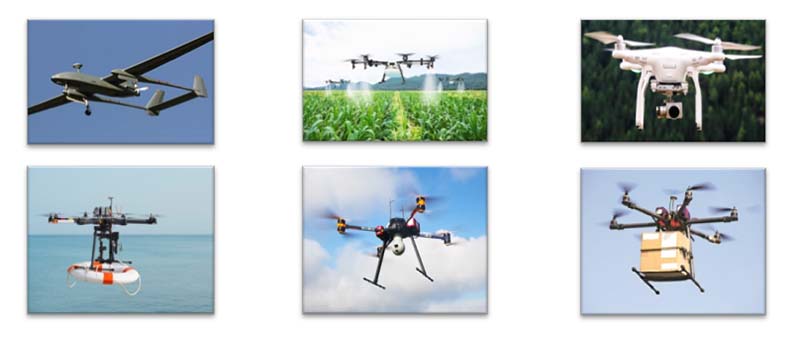
What Are the Applications of Unmanned Aerial Vehicle Systems
Consumer Aerial Photography Drones
Consumer drones rely on flight control MCUs to maintain stable flight attitude. Image processing and codec chips handle high-definition video capture and compression, while RF communication chips ensure low-latency video transmission and responsive remote control. Positioning chips enable waypoint flight, subject tracking, and return-to-home functions, ensuring smooth and stable aerial photography performance.
Logistics and Delivery Drones
In logistics applications, main control chips handle route planning and flight coordination. High-precision positioning chips ensure accurate landing and delivery points, while communication chips transmit real-time location and cargo status. Power management chips optimize energy efficiency and extend flight endurance, enabling short-range and complex-terrain delivery operations.
Agricultural Drones
AI computing and vision chips are used to identify crops, pests, and disease conditions. Flight control and motor driver chips enable precise control of spraying volume and uniform operation. Positioning chips support fully autonomous flight over farmland, significantly improving agricultural efficiency and accuracy.
High-Risk Industrial Inspection Drones
Multi-sensor fusion chips collect data such as images, distance, and flight attitude. AI processing chips analyze equipment defects and environmental hazards in real time. Long-range telemetry RF chips transmit field data back to operators, enabling safe replacement of human labor in hazardous inspection scenarios.
Racing Drones
High-frequency flight control processors ensure ultra-fast response to pilot inputs. Low-latency video transmission chips provide real-time first-person view (FPV), while high-speed motor driver chips deliver rapid thrust response, meeting the demands of high-speed maneuvers and competitive racing performance.
Mapping and Inspection Drones
Vision and image processing chips are used to capture high-resolution imagery and generate 3D models. GNSS positioning chips such as GPS and BeiDou ensure high-accuracy geospatial data for surveying and mapping applications.
Security and Law Enforcement Drones
AI recognition chips automatically identify people and abnormal targets. Communication chips enable long-range transmission of live video and control commands, making them suitable for large-area patrol, surveillance, and search-and-rescue operations.
Challenges in Drone Integrated Circuit Application
1. Core Chip Shortages
High-end drone chips-such as flight control processors, AI computing chips, high-precision sensors, and RF communication chips-still have relatively low localization rates and a high dependence on foreign suppliers. Combined with geopolitical restrictions and tight production capacity from original manufacturers, this results in long lead times, limited availability of spot stock, and significant price fluctuations. As a result, drone production is often delayed due to chip shortages, highlighting the vulnerability of the supply chain.
2. Trade-off Between Computing Power and Power Consumption
Industrial and commercial drones increasingly require high computing performance for AI-based obstacle avoidance, object recognition, and 3D reconstruction. However, drones are constrained by compact size and limited battery capacity. High-performance chips often lead to excessive power consumption, heat dissipation challenges, and reduced flight endurance.
3. Limitations in Endurance and Payload Capacity
Due to bottlenecks in lithium battery energy density, mainstream drones typically achieve only 20–30 minutes of flight time, while heavy-lift models suffer even shorter endurance and higher costs. On the chip side, insufficient low-power design and sub-optimal power management efficiency further limit improvements in flight time, severely restricting large-scale commercialization in logistics, long-range inspection, and similar applications.
4. Reliable Procurement Channels
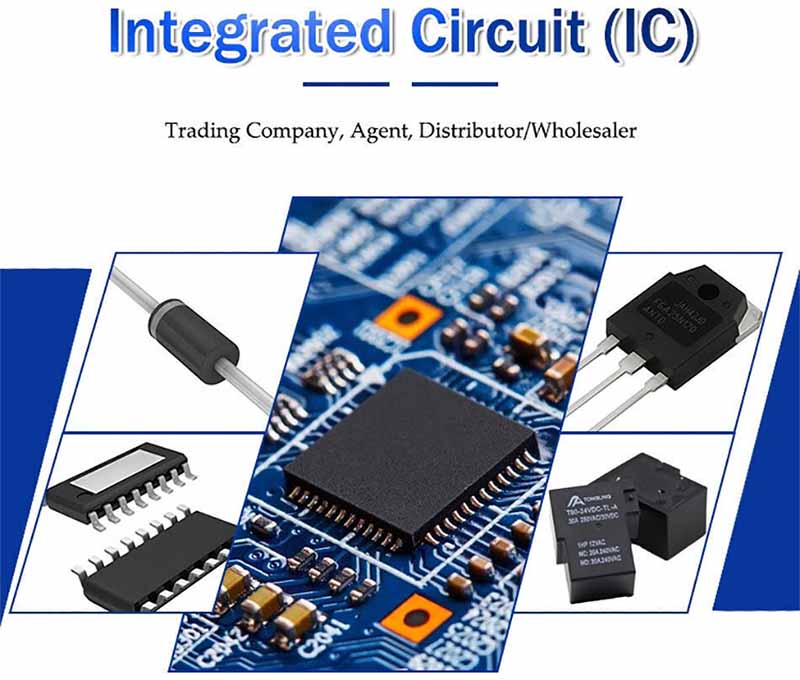
With strong demand in the UAV industry and ongoing supply chain and capacity constraints, chip shortages remain a significant challenge. Choosing a stable and reliable procurement channel is essential to ensure smooth production and R&D progress.
Drone Integrated Circuit Distributor
As a professional semiconductor distributor, we focus on the UAV sector and specialize in core chip supply chain services:
- Authorized sourcing from original manufacturers: Eastech maintains deep partnerships with globally recognized brands such as Texas Instruments, NXP Semiconductors, STMicroelectronics, and Analog Devices, ensuring genuine, traceable components including flight control MCUs, AI chips, RF devices, and sensors.
- Spot inventory and lead time assurance: We maintain safety stock for commonly used and high-demand UAV components to shorten lead times and respond quickly to customer needs, easing supply shortages.
- Domestic replacement solutions: We provide cost-effective Chinese alternatives with pin-to-pin compatibility, reducing external dependency and mitigating supply chain risks.
- End-to-end service support: We offer component selection guidance, BOM matching, quality inspection, and FAE technical support to help customers resolve procurement and application challenges efficiently.
Related information
- 2026.08.09 What Are Automotive Chips?
- 2026.07.19 What is GDDR Memory?
- 2026.05.05 What are Inertial Measurement Units?
- 2026.04.08 What Types of Sensors Used in Drones?