

Available 24/7 at
+86 13632816717

What are DC DC Converters?
The DC-DC converter is a power management device that uses semiconductor switching technology to convert DC voltages. Its core functions include step-up, step-down, polarity conversion, and voltage regulation, making it compatible with batteries, mains power, and other supply systems. This article focuses on what is DC DC converter and the isolated vs non-isolated DC-DC converter.
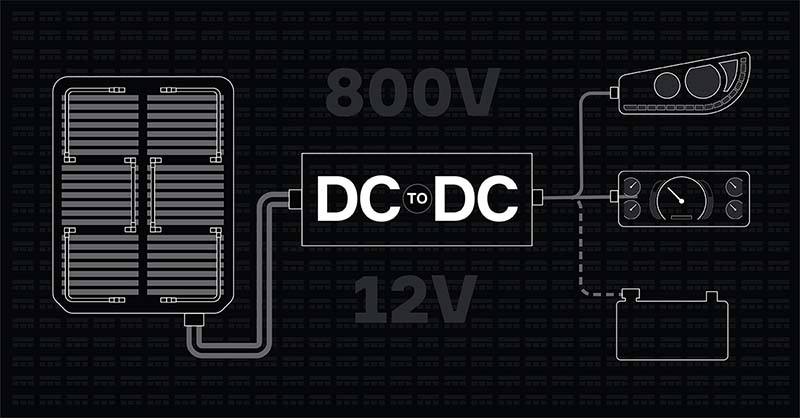
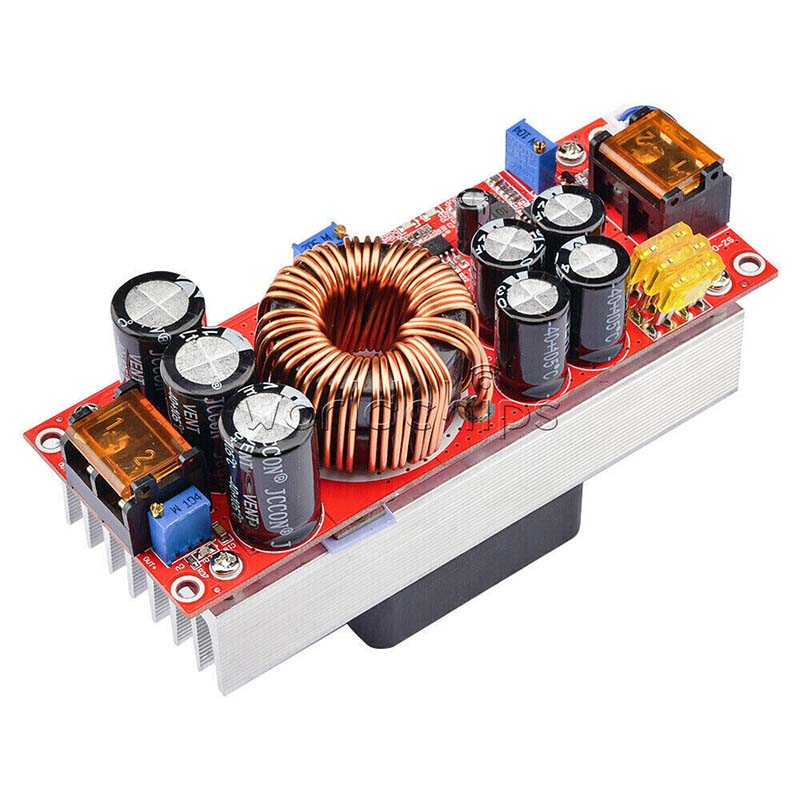
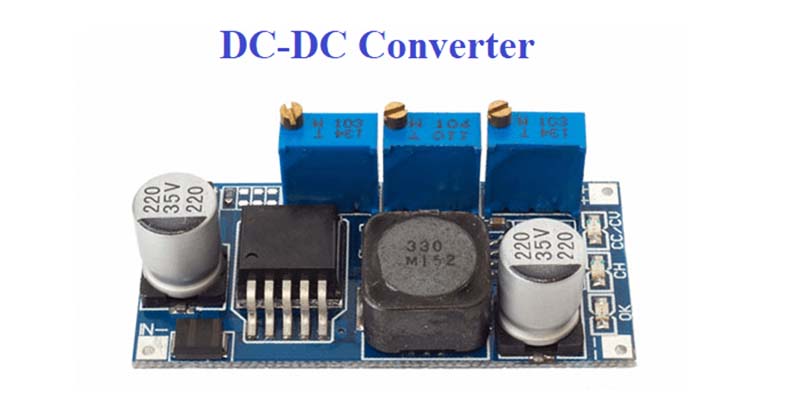
What are DC DC converters? The board-mount DC-DC converter modules consist of a control chip, switching components (MOSFET/IGBT), energy storage inductors, and filter capacitors, using pulse-width modulation (PWM) or pulse-frequency modulation (PFM) to regulate output voltage. They can be categorized into 4 types: step-down (Buck), step-up (Boost), step-up/down (Buck-Boost), and isolated converters, offering high efficiency (70%–95%), compact size, and multiple circuit protection features. They are widely used in power electronics, communication equipment, automotive electronics, and industrial control.
DC-DC Converters Classified
Step-Down (Buck) Converter: Outputs a voltage lower than the input voltage. It has a simple structure and high efficiency, making it the most commonly used step-down regulation solution.
Step-Up (Boost) Converter: Outputs a voltage higher than the input voltage. It is often used in battery-powered or low-to-high voltage boost scenarios.
Step-Up/Down (Buck-Boost) Converter: The output voltage can be either higher or lower than the input voltage, suitable for applications with wide input voltage fluctuations.
Isolated DC-DC Converter: Provides electrical isolation between input and output, offering high safety and strong noise immunity. It is commonly used in high-voltage, high-interference, or systems requiring safe isolation.
What are the Functions of a DC DC Converter Module?
Voltage Step-Up and Step-Down Conversion
The core function of a DC-DC converter module is to flexibly convert DC voltage. It can step down high voltage to low voltage or boost low voltage to high voltage based on the actual power requirements of downstream devices. Some models also support bidirectional buck-boost regulation, effectively solving the mismatch between a single power supply and device operating voltage. This meets the diverse voltage supply needs of various electronic and industrial devices, from low-power to high-power applications.
Stable Voltage Regulation
This function ensures a stable power supply, effectively compensating for input voltage fluctuations, sudden changes in load current, and external environmental interference. It continuously delivers a precise and constant DC voltage, eliminating voltage drift and ripple. Even under complex conditions such as battery discharge or unstable bus voltage, the module maintains stable output, protecting downstream chips, sensors, and other sensitive components from power-related failures or performance degradation.
Electrical Isolation, Overload Protection, and Wide-Temperature Adaptation
These features ensure module safety, durability, and adaptability to harsh environments. Electrical isolation separates input and output, preventing high-voltage interference and leakage, enhancing device safety and noise immunity, especially in industrial and automotive applications. Built-in protections against overcurrent, overvoltage, and overheating quickly respond to abnormal conditions, preventing damage to the module and downstream loads. Additionally, wide operating temperature support allows stable performance in extreme hot or cold environments while maintaining conversion efficiency and extending device lifespan.
Isolated vs Non Isolated DC-DC Converter
The difference between isolated and non-isolated DC-DC converters lies in whether there is electrical separation between the input and output.
An isolated DC-DC converter introduces a transformer to create electrical isolation between the input and output. There is no direct conductive path; energy is transferred across the insulation barrier via magnetic coupling, giving the input and output independent reference grounds. This design provides higher safety, helps reduce electrical noise, and increases flexibility in system design.
Non-isolated DC-DC converter maintains a direct connection between input and output, sharing the same reference potential. While it lacks the safety and noise immunity benefits of isolation, its simpler structure, smaller size, lower cost, and typically higher conversion efficiency make it common in applications where space and efficiency are critical.
When to Prefer an Isolated DC-DC Converter
High safety requirements (e.g., medical, industrial, high-voltage systems)
Input and output operate at different potentials (non-shared ground)
Need to suppress noise or avoid ground loop interference
Complex systems requiring higher design flexibility
If the application involves safety requirements, high interference, or multiple system coupling, choose an isolated DC-DC converter.
When to Consider a Non-Isolated DC-DC Converter
Low-voltage systems (e.g., 5V / 12V / battery-powered)
Space-constrained designs requiring compact size
Cost-limits projects
Applications prioritizing high efficiency and low losses
Input and output can share a common ground
Key Role for DC-DC Converter PCB Design
Power Regulation
A DC-DC converter ensures that different parts of the circuit receive stable and appropriate voltage levels, even when the input voltage varies.
Voltage Conversion
It enables step-down, step-up, or inverted voltage conversion, allowing a single power source to support multiple voltage domains on the PCB.
Efficiency Improvement
Compared to linear regulators, DC-DC converters significantly reduce power loss, making them ideal for energy-sensitive and battery-powered applications.
Power Distribution
They help distribute power efficiently across the PCB, supporting components such as microcontrollers, sensors, and communication modules with different voltage requirements.
DC-DC Converter PCB Design Requirements
Component Placement
Place key components such as the IC, inductor, and capacitors close together to minimize loop area and reduce noise.
Grounding and Layout
Use a solid ground plane to ensure a stable reference and reduce interference. Proper grounding is essential for both performance and reliability.
Thermal Management
Ensure adequate heat dissipation through copper areas and thermal vias, especially in high-current designs.
Trace Routing
Keep high-current traces short and wide to reduce resistance and voltage drop. Avoid routing sensitive signals near switching nodes.
Noise and EMI Control
Minimize switching noise by optimizing loop paths and, if necessary, adding filtering components or shielding techniques.
Applications of DC-DC converter in Electronics
Consumer Electronics
Devices such as smartphones, laptops, and smartwatches rely on battery power, where voltage drops as charge depletes. DC-DC converters stabilize and convert battery voltage to the different voltages required by chips, displays, and sensors, improving power efficiency and extending battery life.
Automotive Electronics
Both traditional and electric vehicles require multiple stable low-voltage outputs for infotainment systems, cameras, radars, and lights from 12V/24V low-voltage or 400V/800V high-voltage platforms. Isolated DC-DC converters also provide electrical separation between high and low voltage systems, enhancing safety.
Industrial Control
Industrial sites often use 24V bus power. PLCs, servo drives, and sensors require various low voltages such as 5V or 3.3V. dc-dc converter for industrial power systems ensure stable power supply under wide input voltage ranges and strong interference, supporting long-term, reliable industrial operation.
Communications and Servers
Communication base stations and servers often use 48V distributed power systems. Multi-stage DC-DC step-down converters reduce high voltage to 12V or around 1V for CPU cores, enabling high-power, high-efficiency, high-current supply while minimizing energy loss and heat.
Renewable Energy and Energy Storage
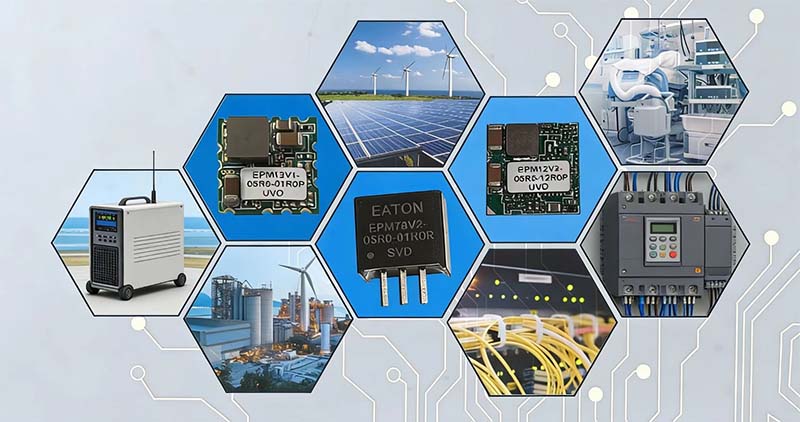
Solar panel output fluctuates with sunlight, and battery voltage varies during charge/discharge. DC-DC converters perform step-up, step-down, or buck-boost regulation, enabling voltage stabilization, charging management, and power matching. Low-voltage storage batteries (e.g., 48V) can connect to DC buses (48–96V), providing efficient, cost-effective charge/discharge control.
Portable Power
Mobile power banks and handheld devices use DC-DC converters to step up single or multiple lithium battery cells to standard outputs like 5V, 9V, or 12V, offering compact, high-efficiency voltage conversion to support fast charging and multi-device power delivery.
DC DC Converters Electronic Components Distributor
Eastech is one of the most experienced suppliers in the global DC-DC converter market. Leveraging deep industry expertise and a mature supply chain, we are a trusted partner for DC-DC power solutions worldwide. Our portfolio includes the most comprehensive range of board-mounted DC-DC converters, covering diverse specifications to meet a wide variety of application needs. Products feature multiple sizes, pin configurations, wide operating temperature ranges, and ultra-wide input voltage ranges. Our offerings include isolated, regulated, unregulated, and non-isolated DC-DC converters, suitable for medical, military, telecom, and other industrial applications.
As an authorized distributor of ADI (Analog Devices, Inc.), we exclusively promote the high-performance LTM4622 μModule DC-DC converters. Leveraging ADI's leading analog power technologies, these modules provide a one-stop, ultra-compact, highly integrated power conversion solution for high-end industrial, communication, and medical applications. The LTM4622 series is a highly integrated onboard power module that combines a switching controller, power MOSFETs, inductors, and all supporting components. It requires only a few ceramic capacitors to form a complete power solution, occupying less than 1 cm² of PCB space for maximum layout efficiency. Key specifications include a 3.6V–20V ultra-wide input voltage range and flexible current configurations, supporting both multi-output and high-power single-output applications.
Finally, our non-isolated DC-DC converters offer the advantages of smaller size and lower cost, making them an ideal alternative to discrete solutions. They can effectively shorten design cycles and accelerate time-to-market. With a compact structure and standard package, these converters save significant PCB space, support close-to-load placement, optimize transient response, reduce voltage drop losses, and minimize electromagnetic interference (EMI).
Each DC-DC power converter comes with a complete technical datasheet, easily accessible through our website, providing comprehensive support for selection and development. For high-bulk production and specialized application requirements, our extensive product portfolio can perfectly meet diverse needs, offering a one-stop solution for all DC-DC power conversion applications.
Related information
- 2026.08.09 What Are Automotive Chips?
- 2026.07.19 What is GDDR Memory?
- 2026.05.05 What are Inertial Measurement Units?