

Available 24/7 at
+86 13632816717

How to Choose Between FPGA and ASIC?
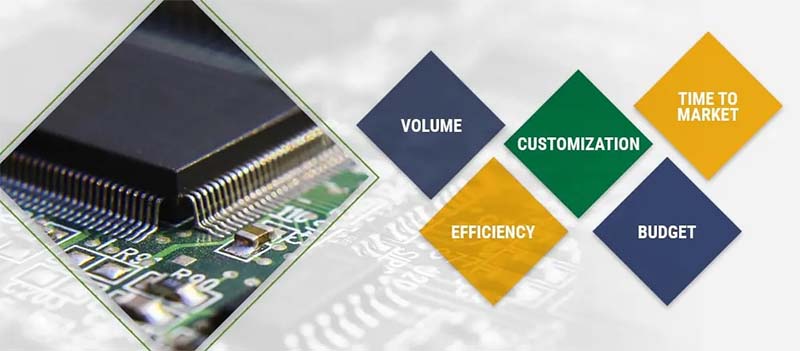
ASIC and FPGA are two of the most representative core chip technologies in the field of electronic components, playing a crucial role in hardware development and system applications. This FPGA vs. ASIC comparison guide provides an in-depth analysis of their key differences across four core dimensions: performance, cost, power consumption, and flexibility, supported by practical application examples. Ultimately, whether ASIC, FPGA, or even integrated SoC architectures are the right choice depends on the specific product positioning and application requirements.
What is Difference between FPGA and ASIC?
What is FPGA (Field-Programmable Gate Array)?
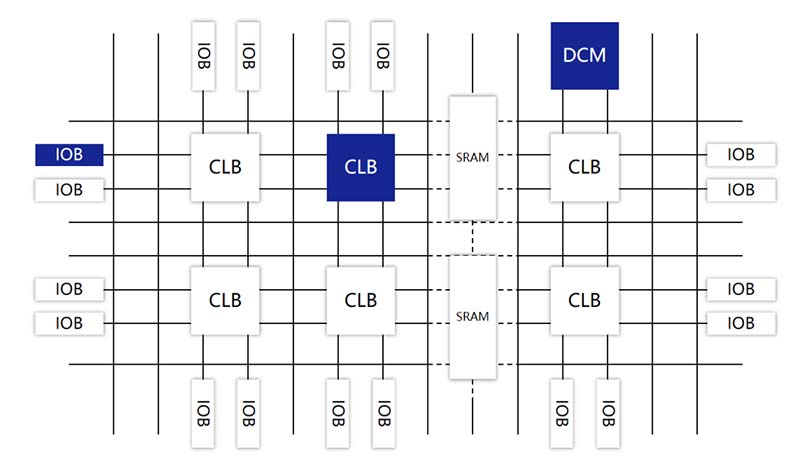
An FPGA, or Field-Programmable Gate Array, is a general-purpose programmable chip with strong flexibility and iterative capability. It consists of three main types of programmable circuitry-Configurable Logic Blocks (CLBs), I/O Blocks, and Programmable Interconnect Resources-along with static memory (SRAM).
It can be repeatedly erased and reprogrammed in the field. Without modifying the hardware circuit board, developers can update algorithms and adjust functional logic online at any time.
Pros: FPGAs have a low barrier to entry during early development and a short production cycle. Even small-batch projects can be easily realized, offering both ease of use and high cost-effectiveness. They are ideal for product prototyping, rapid project development, niche customized scenarios or devices that require long-term online iteration and upgrades.
Cons: Due to architectural limitations, FPGAs have certain shortcomings in extreme computing performance, power efficiency, and chip integration density.
What is ASIC (Application-Specific Integrated Circuits)?
ASIC stands for Application-Specific Integrated Circuit. It is a dedicated chip designed and developed specifically for a particular product or function, and is designed and developed entirely by customization.
Pros: The chip offers extremely high integration density, allowing multiple complex functions to be combined on a single chip. This enables smaller size, lower power consumption, higher computing performance, and lower per-unit cost at mass production. It is widely used in high-end, high-performance devices and mature, high-volume products.
Cons: It cannot be reprogrammed or modified after production. High upfront R&D costs and longer development cycles are required, making it suitable only for large-scale mass production scenarios.
How to Choose Between FPGA and ASIC?
The price difference between FPGA and ASIC mainly stems from the inverse relationship between upfront one-time NRE (Non-Recurring Engineering) costs and per-unit mass production cost. Overall, costs vary significantly depending on shipment volume, process technology, and application scenario.
FPGAs have a higher per-unit purchase price but require no expensive custom R&D or wafer fabrication costs, making the initial investment barrier very low. ASICs, on the other hand, have a low per-unit cost at scale but demand full custom design, IP licensing, simulation and verification, as well as mask and wafer fabrication, resulting in very high NRE and a steep upfront barrier.
If a project requires frequent logic modifications or iterative upgrades, an FPGA allows repeated reprogramming and offers high flexibility and control. If the product is fully defined and intended for long-term mass production, choosing an ASIC maximizes cost efficiency and achieves the best overall price-performance ratio.
FPGA VS. ASIC Features
1. Performance: ASIC is deeply customized for specific functions, delivering high computational efficiency, low latency, and peak performance. FPGA retains programmable redundant architecture, so under the same conditions, their computing performance and processing efficiency are lower than ASIC.
2. Cost: FPGAs do not incur expensive custom wafer (NRE) costs, making initial investment low and suitable for small-batch projects. However, per-unit purchase cost is relatively high, leading to higher total cost for large volumes. ASICs require very high upfront design and wafer (NRE) costs, but per-unit cost in mass production is extremely low, making them suitable only for large-scale shipments to amortize the cost.
3. Power Consumption: Due to reserved programmable logic resources, FPGAs have additional static power consumption, resulting in significantly higher power usage for the same performance. ASIC circuits are streamlined without redundancy, highly integrated, and have inherently low power consumption.
4. Flexibility: FPGA supports repeated in-field programming and online hardware logic modifications, allowing iterative upgrades at any time. ASIC, once fabricated, has fixed functionality with no room for modification, offering no flexibility.
FPGA (Field-Programmable Gate Array) is a semi-custom circuit based on programmable logic technology. FPGA has advantages such as high flexibility and short development cycle, but its hardware implementation is not as stable as ASIC and its power consumption is higher.
ASIC is characterized by requiring a manufacturing process to complete the circuit design. This process is customized and cannot be changed after the design is completed. Therefore, ASIC has high efficiency and stable performance.
FAQs - FPGA vs ASIC, What to Choose?
Q: If a project requires extreme computing performance, ultra-high processing power, and fast signal processing, which should I choose?
A: For high-performance and high-computing-demand scenarios, ASIC is the first choice. ASICs can be deeply optimized for specific algorithms and functions, achieving computing efficiency and signal processing speed far beyond that of FPGAs. FPGAs are limited by their programmable architecture; logic resource scheduling introduces overhead, and peak performance and computational density cannot reach ASIC's ultimate level. They are only suitable for conventional high-performance testing and mid-range deployment needs.
Q: If the product is just a prototype or small-batch trial production, what should I choose ASIC or FPGA?
A: Go with FPGA. FPGAs do not require expensive custom wafer fabrication, keeping initial R&D costs low with no additional mask fees, making them highly cost-effective for small-batch production.
Q: My product requires extremely low power consumption for long-term operation. ASIC vs FPGA: which one is more suitable?
A: Prioritize ASIC. ASICs are fully custom-designed with streamlined, redundancy-free circuits and high integration, enabling extremely low power consumption in mass production. FPGAs, however, retain programmable redundant circuits, resulting in inherent static power loss, and consume significantly more power than ASICs at the same performance level.
Q: The system requires frequent algorithm iteration and feature updates. ASIC and FPGA: which one is suitable?
A: You must choose FPGA. FPGAs support in-field reprogramming and real-time hardware logic modification. Features and algorithms can be upgraded online without changing the circuit board. ASICs, once fabricated, are fixed and cannot be rewritten.
Q: I want both flexible debugging and integrated control while maintaining some high-performance capabilities. How should I choose?
A: Consider combining with a SoC architecture. Use FPGA + SoC for early-stage prototyping and algorithm verification to enable rapid iterative optimization. Once the design is fully finalized and large-scale production is confirmed, transition to ASIC + custom SoC architecture to balance deployment efficiency, performance, power consumption, and mass-production cost.
FPGA Applications and Projects
FPGAs emphasize flexibility, development, iteration, and small-batch production. They are mainly used in scenarios that require reprogrammable logic, frequent updates, niche customization, or rapidly updated protocols.
- Perform high-definition image preprocessing, video encoding/decoding acceleration, and various high-frequency digital signal filtering operations.
- Support real-time computation and personalized function customization for autonomous driving vehicle radars, aerospace telemetry and control systems, and industrial robots.
- Leverage in-field reprogrammability to rapidly iterate hardware logic and debug algorithm solutions, significantly shortening development cycles.
- Widely used in 5G base stations, optical modules, and communication devices, supporting protocol upgrades, signal forwarding, and data encryption processing.
- Enable instrumentation and testing equipment development, meeting niche customization and multi-version debugging needs.
- Applied in edge AI computing acceleration, allowing flexible deployment and modification of various inference models to support intelligent computing across multiple scenarios.
What are the Applications of ASIC?
ASICs focus on fixed functionality, mass production, peak performance, low cost, and low power consumption. They are mainly used for mature, dedicated functions that are finalized once, leveraging large-scale production to amortize R&D costs and achieve lower power consumption, smaller size, and low per-chip cost.
- Integrated into smartphones and wearable devices to perform dedicated image processing and precise whole-system power management.
- Used in high-end network communication equipment, enabling ultra-high-speed, large-volume data forwarding in switches.
- Applied in radar and infrared sensing terminals for fixed-mode low-level data acquisition and dedicated computation.
- Deployed in medical devices such as ECG monitors and portable diagnostic equipment for stable physiological signal analysis and data transmission.
- Used in high-density parallel computing scenarios for fixed algorithms, such as encryption computation or dedicated mining chips.
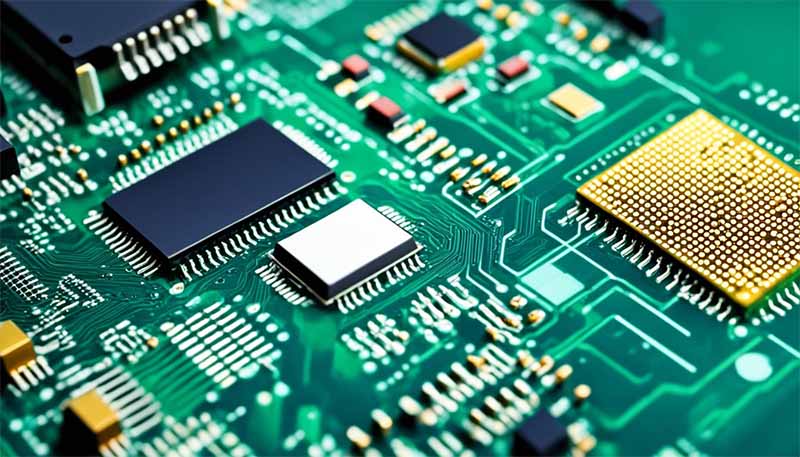
FPGA vs. ASIC vs. SOC
SoC stands for System-on-a-Chip, which integrates multiple computer or electronic system component onto a single chip. These components include the CPU, memory, input/output interface, peripheral function, and many other component. Centered around a processor, SoC expands functionality through software development, balancing general-purpose control with dedicated module, offering high integration and strong versatility.
FPGA focuses on hardware programmability and flexible iteration, making it ideal for development, debugging, and feature update. ASIC is fully custom and fixed, optimized for large-scale mass production to achieve extremely low power consumption and cost. SoC sits between the two, using software to flexibly adapt to different scenario, balancing integration, performance, and versatility, making it a core choice for consumer electronic and smart device.
Top FPGA Chip Companies Market Leaders
The global FPGA market competition is mature and stable. Major brands rely on their self-developed process advantages and technological accumulation to establish differentiated positioning in their respective tracks, fully covering high-end computing acceleration, general industrial control, high-reliability aerospace and defense, and low-power edge applications.
Below is a summary information from leading FPGA manufacturers to help you quickly benchmark your requirements and select efficiently.
|
Brand |
Market Share (2025) |
Core Process |
Application |
Brand Positioning |
|
50%–58% |
7nm/5nm Versal; 16nm/28nm UltraScale+ |
Data center AI acceleration, 5G base stations, aerospace, automotive electronics |
Global leader, benchmark for high-end computing and adaptive ACAP technology |
|
|
25%–30% |
Intel 7 (10nm) Agilex; 28nm Cyclone/Stratix |
Cloud computing acceleration, industrial control, automotive ADAS, core communication networks |
Mainstream mid-to-high-end solution, outstanding advantages in heterogeneous collaboration with CPU |
|
|
Microchip(Microsemi) |
8%–12% |
28nm PolarFire; Non-volatile flash FPGA |
Military/aerospace, high-reliability industry, safety-critical systems |
Focus on high reliability & radiation resistance; support instant startup and anti-single-event interference |
|
Lattice |
5%–8% |
40nm/28nm Nexus/Avant; iCE40 low-power series |
IoT edge devices, consumer electronics, small-scale industrial control |
Specializes in low power & small capacity, balancing cost and lightweight performance |
Eastech provides a one-stop supply and selection service for global FPGA and ASIC, covering leading brand resources to ensure stable delivery and rapid response. We are a trusted partner for your electronic component needs.
For FPGA solutions, we focus on products from leading international vendors such as AMD (Xilinx) and Intel (Altera), offering a comprehensive range of models and reliable stock. Our portfolio supports diverse application scenarios, including high-performance computing, data center, medical equipment, communication device, industrial control, and embedded systems, helping global customers efficiently move from solution selection to stable supply.
Conclusion:
Understanding the difference between FPGA and ASIC is essential for design and procurement decisions. At Eastech, we provide a wide range of FPGA, ASIC, and related semiconductor solutions, helping clients source the right components for their projects. With original factory components and reliable supply, we ensure your electronic systems achieve both performance and efficiency.
Related information
- 2026.08.09 What Are Automotive Chips?
- 2026.07.19 What is GDDR Memory?
- 2026.05.05 What are Inertial Measurement Units?