

Available 24/7 at
+86 13632816717

What is FPGA in Embedded Systems?
What is fpga in embedded systems?A Field Programmable Gate Array (FPGA) is a flexible integrated circuit whose internal structure can be reconfigured after manufacturing. Unlike fixed-function processors, FPGA programming for embedded systems enables hardware-level customization, allowing developers to design and optimize processing architectures tailored to specific applications.
Embedded systems face increasingly complex tasks. AI, IoT and industrial control applications require real-time processing, low latency and high energy efficiency, which traditional hardware architectures fail to satisfy. FPGAs deliver outstanding flexibility and high-speed performance. They are widely applied in automotive ADAS for autonomous real-time decision-making, accelerate signal processing in medical imaging and diagnostic equipment, and support 5G infrastructure and high-speed data transmission in the telecommunications industry to ensure stable and efficient network operation.

Field Programmable Gate Array (FPGA) is a semiconductor component characterized by a reprogrammable architecture that allows hardware to be customized even after manufacturing. Unlike traditional processors or application-specific integrated circuits (ASICs), an FPGA is built from configurable logic blocks (CLBs) connected through programmable routing. This feature enables designers to optimize hardware for specific tasks, delivering higher performance and efficiency.
Six Components of an FPGA Chip
Programmable Logic Blocks (Logic Blocks):
These are the core units that implement user-defined logic functions. Logic blocks form the foundation for customized computation and control within an FPGA.
Input/Output Blocks (IOBs):
IOBs handle signal interaction between the FPGA and external circuits, enabling efficient and reliable data input and output transmission.
Routing Resources:
Routing resources act as the "information bridges" that connect logic blocks and IOBs, ensuring stable and efficient signal flow throughout the FPGA.
Clock Management Blocks:
Often considered the "guardians" of system synchronization, clock management blocks precisely control clock signals, allowing all FPGA operations to run in an orderly and coordinated manner.
Embedded Block RAM:
These on-chip memory blocks provide high-speed data buffering and access, significantly enhancing the FPGA's data processing capability and overall performance.
Configuration Logic:
Configuration logic is responsible for loading and storing configuration data, enabling the FPGA to switch operating modes flexibly and adapt to different functional requirements.

Why is FPGA Important?
The key difference between a field programmable gate array chip and processors such as CPUs, GPUs, or ASICs lies in its unfixed logic connections and layout at the hardware level. Unlike fixed architectures, FPGA logic units and interconnects are not hardwired. Instead, users can program the logic blocks and switch matrices using EDA tools to configure hardware functions and implement application-specific integrated circuits tailored to specific tasks.
In the field of artificial intelligence, FPGAs offer strong advantages in both processing efficiency and flexibility. As AI technologies continue to evolve, field programmable gate array chips are expected to see renewed growth across a wide range of applications, including robotics, speech recognition, image recognition, natural language processing, and expert systems. With the rapid development of 5G, autonomous driving, AI, and big data technologies, FPGA has entered a new opportunity and expansion.
Applications of Field Programmable Gate Array
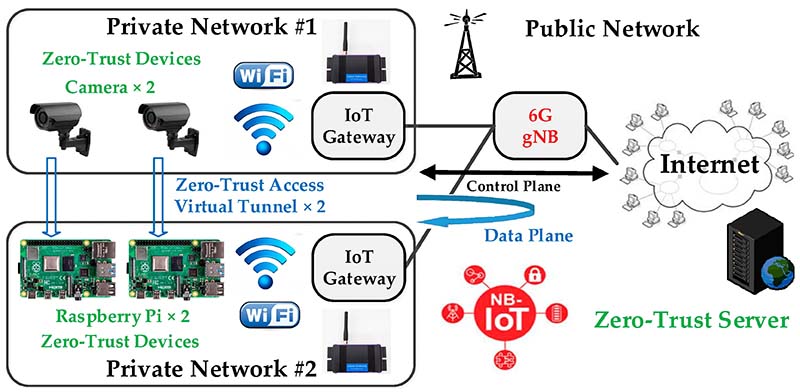
FPGA chips are widely used in wireless communication and wired communication industries, where they support functions such as interface expansion, logic control, data processing, and system-on-chip integration.
Communications
Modern communication systems require high-speed protocol processing, while communication standards and protocols are frequently updated. This makes fixed-function chips less suitable. Thanks to their reconfigurable architecture, FPGAs are often the preferred choice, allowing system functions to be modified and upgraded through reprogramming.
Algorithm Acceleration
FPGAs excel at processing complex and multi-dimensional signals. Their parallel processing architecture makes them well suited for accelerating computationally intensive algorithms, especially in signal processing applications.
Embedded Systems
In embedded systems, FPGAs are often used to build the low-level hardware environment, on top of which embedded software is developed. While many high-level tasks are handled by software, the FPGA provides a flexible and efficient hardware foundation.
IoT applications
FPGAs enable high-speed data aggregation, while their reconfigurable nature supports long-term scalability for smart sensors and gateways, streamlining the overall IoT ecosystem.
Security Monitoring
In security systems, CPUs alone often struggle with multi-channel processing and real-time intelligent analysis. By integrating an FPGA, systems can efficiently handle multiple video streams while enabling advanced detection and analysis functions.
Industrial Automation
The high performance, real-time response, and flexibility of FPGA chips make them widely adopted in industrial automation. For example, in CNC machine servo systems, FPGAs can control multiple motors simultaneously, offering a clear advantage over traditional dedicated chips that typically support only single-motor control.
Automotive Intelligence
In intelligent automotive systems, FPGAs are used to control and drive electric vehicle motor systems and to connect in-vehicle components such as driving systems, dashboards, radar, and ultrasonic sensors. They also play a key role in processing and controlling signals for LiDAR, millimeter-wave radar, and other advanced sensing technologies.
What are the Benefits of FPGAs in Embedded System?
Parallel Computing
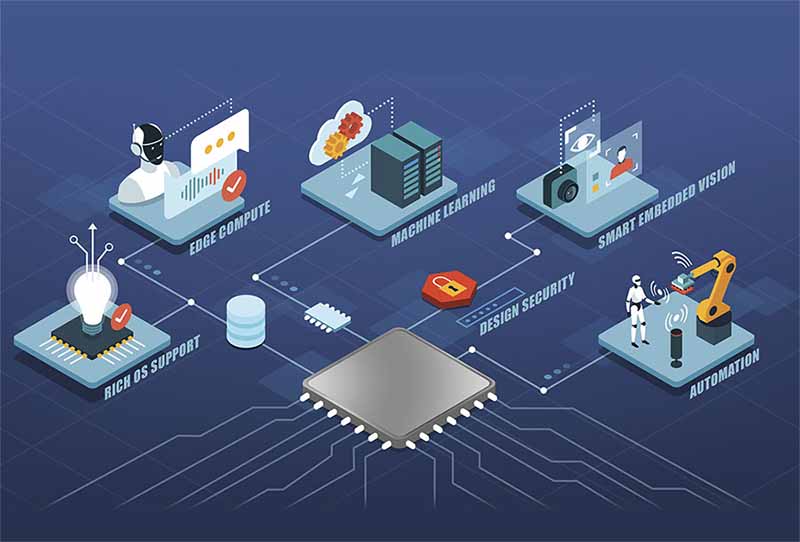
FPGAs support true parallel computing, allowing complex AI algorithms to be divided into multiple tasks and executed simultaneously. This parallelism significantly increases processing speed and overall throughput.
Low Latency and High Throughput
FPGAs enable hardware-level acceleration by implementing algorithms directly in dedicated circuits. This results in low latency and high throughput, which is especially important for real-time data processing, image processing, and speech recognition applications.
Optimization Flexibility
With their reconfigurable and customizable architecture, FPGAs allow developers to optimize both hardware structure and algorithms. This makes it possible to fine-tune AI workloads and achieve more efficient and power-optimized computing performance.

FPGA vs. Microcontroller
Microcontroller (MCU) is essentially a "microcomputer" that integrates a CPU, memory (RAM and ROM), and peripherals such as serial interfaces and GPIOs onto a single chip. Microcontrollers (MCUs) integrate a processor core, memory, and peripheral interfaces. Centered around software code, they perform control and computation tasks; their functionality can be rewritten and upgraded at any time via software programs, offering flexible development and convenient iteration, with a primary focus on general-purpose embedded control tasks.
FPGAs (Field-Programmable Gate Arrays) consist of a vast array of reconfigurable logic blocks and routing resources. They support the repeated erasure and reprogramming of hardware logic, allowing for flexible changes to circuit architecture and functionality to adapt to a wide variety of scenarios.
ASICs (Application-Specific Integrated Circuits) feature a fixed hardware architecture capable of executing only a single, specific, and pre-determined function. Once manufactured, they cannot be reprogrammed or have their logic modified.
FPGA is a reconfigurable hardware platform that allows custom digital circuits to be defined after manufacturing. While a microcontroller relies on a fixed architecture designed to execute software instructions, an FPGA is configured at the hardware gate level. The difference between the two lies in how functionality is implemented: FPGAs are programmed through hardware configuration, whereas microcontrollers are programmed through software instructions.
Programmability
FPGAs are fully programmable, allowing new functions to be implemented by reprogramming the hardware. In contrast, microcontrollers (MCUs) have a fixed architecture and cannot be reconfigured.
Processing Capability
FPGAs excel in high-performance computing tasks such as digital signal processing, image processing, and AI acceleration. MCUs, on the other hand, are generally used for simpler tasks like device control and sensor monitoring.
Flexibility
FPGAs offer greater flexibility, as they can be programmed and reprogrammed to adapt to different applications. MCUs typically run predefined programs stored in internal memory, with limited adaptability.
Development Cycle
Developing for FPGAs usually takes longer because it involves hardware design, verification, and debugging. MCU development is generally faster, requiring mostly software programming and testing.
Cost
FPGAs tend to be more expensive due to the complexity of their design, verification, and testing processes. MCUs are comparatively low-cost and easier to deploy for standard embedded applications.
In conclusion, both FPGAs and microcontrollers are essential components for embedded systems, but they serve different purposes. The main difference lies in the level of customization and complexity. FPGAs allow for higher customization, more complex workflows, and support hardware-level modifications even after deployment.
If a project requires a highly customized hardware accelerator, frequent updates to the design, and strong high-performance parallel processing capabilities, an FPGA is the preferred choice.
For tasks that involve routine sequential control or simple data processing, a microcontroller offers a more cost-effective and efficient solution.
The Leading FPGA Manufacturers
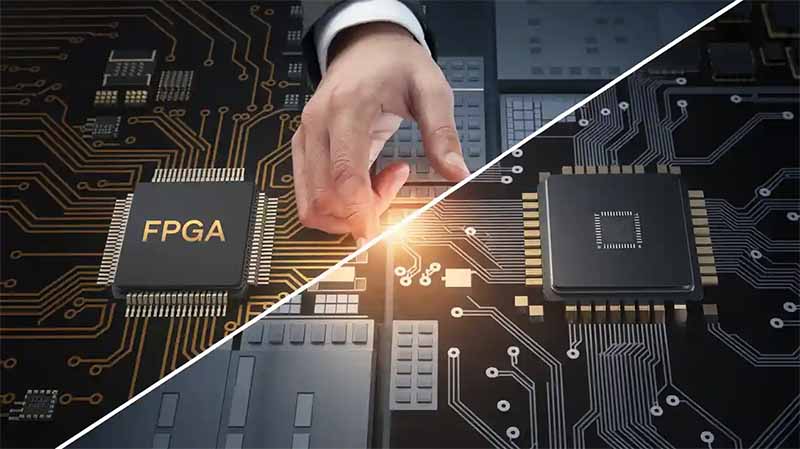
The two leading enterprises in the FPGA industry are AMD (Xilinx) and Intel (Altera). As one of the original innovators of FPGA technology, AMD boasts a solid technical foundation and complete ecosystem, with product lines covering a full range of application scenarios. Intel holds prominent advantages in communication, industrial control and other professional fields. In addition, mainstream influential FPGA manufacturers also include Lattice, Microchip, Efinix and Gowin Semiconductor.
Cost-Prioritized FPGA
Low-end FPGAs feature low power consumption and low logic density, suitable for cost-sensitive basic application scenarios with low functional complexity. Representative products include AMD Xilinx Spartan, Artix-7 and Kintex-7 series, Intel Altera Cyclone series, Lattice Semiconductor Mach XO and ICE40 series, as well as Microsemi Fusion series.
With a streamlined architecture, controllable power consumption and high cost performance, these chips are commonly used in simple logic control, basic signal processing and lightweight embedded design.
High-Performance FPGA
High-end FPGAs are engineered to meet requirements for high logic density, superior performance and high bandwidth. They deliver powerful parallel processing capabilities, extensive high-speed interfaces and abundant large-capacity on-chip resources, capable of handling complex algorithms, large-scale data computing, high-end communication and professional computing scenarios. Mainstream products cover AMD Xilinx Virtex flagship series, Intel Stratix series and the new-generation high-performance Agilex series.
They are widely applied in Iot, data centers, AI acceleration, high-end communication equipment and other cutting-edge fields.
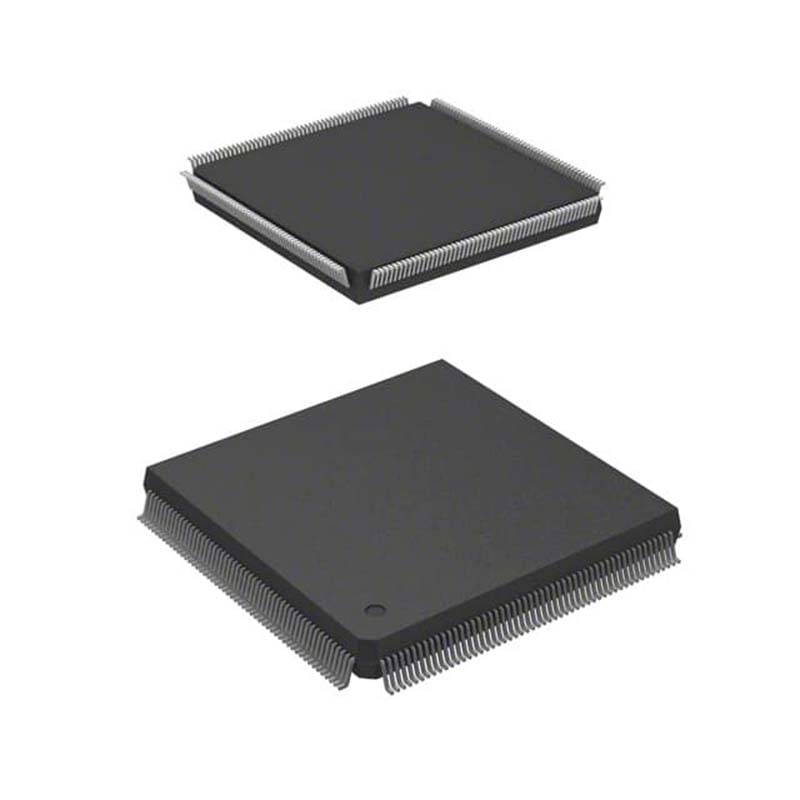
Among these, Microchip has built a strong reputation for high-reliability and radiation-tolerant FPGAs, particularly in aerospace, defense, and communication applications. Its FPGA products combine performance with flexibility, and a representative device is the APA1000-CQ208M from the ProASIC PLUS series, which is widely used in embedded system designs.
APA1000-CQ208M FPGA
Microchip Technology's APA1000-CQ208M is an embedded Field Programmable Gate Array (FPGA) part of the ProASICPLUS family, delivering high integration and flexible programmability. Built on a 0.22μm process, this device runs on a 2.5V supply, supports a maximum operating frequency of 180MHz, and offers a logic capacity of up to 1 million system gates. It comes equipped with 158 user I/O ports and features a 208-pin CQFP package.
The core advantage of the APA1000-CQ208M is its combination of ASIC-level performance and the programmability of non-volatile flash technology. This allows engineers to leverage existing ASIC or FPGA design flows and tools, streamlining the development of high-density electronic systems.
Ideal for diverse applications, this hot FPGA effectively meets the requirements of the networking, communications, computing, and avionics markets.
In summary, FPGAs are highly versatile and powerful components in embedded systems, offering unparalleled flexibility, parallel processing capability, and hardware-level customization. Their ability to be reprogrammed makes them ideal for projects requiring high-performance acceleration, frequent design updates, or complex signal processing. From communications, AI, and industrial automation to automotive intelligence, security, and aerospace, the applications of field programmable gate array are extensive and continue to grow.
Choose high-quality FPGAs directly from original manufacturers with guaranteed first-hand supply. Contact Eastech for a one-stop solution offering reliable electronic component sourcing, product testing, and customized supply plans tailored to your production needs.
Related information
- 2026.09.20 What is Ceramic Packaging Chip?
- 2026.09.13 What is SMD Resistor?
- 2026.09.06 What is Bus Interface IC?

- 2026.08.30 How to Select Supercapacitor?