

Available 24/7 at
+86 13632816717

What is Digital Signal Processors? Important Role in the Age of AI
What is Digital Signal Processors? Digital signal processing chips are often called the "super brains" behind today's electronic devices. You can find DSPs working quietly inside smartphones, cars, industrial machines, and medical equipment, making sure signals are processed quickly and accurately in real time.
Digital signal processors are implemented using dedicated DSP chips that convert real-world signals, such as audio, video, temperature, pressure, or position signals, into digital data for processing and computation. These chips function as high-speed calculators capable of generating complex results efficiently.
An analog-to-digital converter (ADC) first converts analog signals, such as audio or video, into a digital format made up of 1s and 0s. The DSP integrated circuit then processes these digital signals and sends the processed information back to the user through a digital-to-analog converter (DAC).
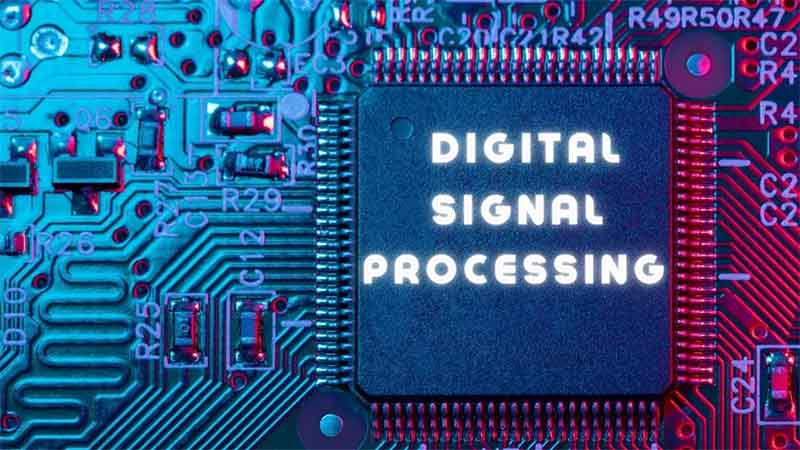
How Do Digital Signal Processors Work?
The core strength of digital signal processor (DSP) chips lies in their highly efficient signal processing capability, which is driven by built-in advanced algorithms and high-speed computing performance. The basic working principle starts with receiving an analog signal, which is converted into a digital signal through an analog-to-digital converter (ADC). The digital signal is then processed by the DSP core using complex operations such as filtering, modulation, encoding, and decoding. Finally, the processed digital signal is converted back into an analog signal through a digital-to-analog converter (DAC) for output.
Sampling
Continuous analog signals are converted into discrete digital signals using an ADC. The sampling frequency must be at least twice the highest frequency of the original analog signal to ensure accurate and distortion-free signal reconstruction.
Processing
The DSP performs algorithm-based processing on the sampled digital signals, including fast Fourier transforms (FFT) and digital filtering. These algorithms are executed through the DSP's internal computing units and specialized instruction sets, enabling functions such as spectrum analysis, noise reduction, and feature extraction.
Output
After processing, the digital signal can either be converted back into an analog signal for output or transmitted in digital form to other systems for further processing or communication.

What Are the Components of Digital Signal Processing Chips?
A DSP chip is made up of several key blocks that work together to handle complex signal processing tasks efficiently.
Arithmetic Unit:
This is the core of the DSP chip and includes basic computing elements such as multipliers and adders. The multiplier can complete multiplication operations within a single instruction cycle, while the adder handles addition. Working together, they enable fast execution of complex mathematical operations.
Memory:
DSP chips typically include both program memory and data memory. Program memory stores the code required for DSP operations, while data memory holds the input signal data and processing results. Some DSP chips also feature high-speed cache to improve data and instruction access speed.
Input/Output Interfaces:
The I/O interfaces allow the DSP chip to communicate with external devices. They receive digital signals from sensors, analog-to-digital converters (ADCs), and other sources, and send processed digital signals to digital-to-analog converters (DACs), displays, and communication modules.
Control Unit:
Often referred to as the "brain" of the DSP chip, the control unit generates control signals based on program instructions. It coordinates the operation of all internal components and manages data flow throughout the chip.
By combining high-speed arithmetic units, dedicated memory, and intelligent control logic, DSPs are designed for fast, efficient, and real-time signal processing, allowing them to handle a wide range of signal processing tasks in real-world applications.
Features of Digital Signal Processors
High-Capacity and Complex Processing Capability
Digital signal processors are capable of handling large-scale and complex processing tasks, including signal computation, filtering, analysis, and transformation. At the same time, they require very little physical space, allowing more functions to be integrated into compact electronic devices.
High Flexibility
Compared with analog signal processing systems, the parameters of digital signal processing systems are typically stored in registers or memory. Modifying these parameters for system tuning or optimization is simple and efficient. This flexibility enables digital signal processors to adapt to a wide range of complex application scenarios.
High Reliability
Digital signal processors use digital components and binary representations of signals. Within certain limits, external interference does not cause changes in digital values. As a result, DSP-based systems offer strong resistance to noise, stable data storage, and high overall reliability.
High Precision
Analog devices generally offer limited data representation accuracy, while digital signal processors can support larger word lengths, such as 64 bits. This allows data precision to reach levels above 10⁻¹⁸, far exceeding that of analog systems.
Dedicated Hardware Multipliers
Digital signal processors are equipped with specialized hardware multipliers that can complete a multiplication operation within a single instruction cycle, greatly improving processing efficiency. In addition, accumulator registers enable the processor to handle the sum of multiple products efficiently.
Dual-Memory Architecture
DSPs typically divide internal memory into two separate spaces-one for program storage and one for data storage. This architecture allows simultaneous access to instructions and data, significantly increasing memory bandwidth and overall processing performance.
What Do Digital Signal Processors Do?
A digital signal processor (DSP) is a specialized microprocessor designed for real-time digital signal processing. It can efficiently perform operations such as signal acquisition, transformation, filtering, detection, and modulation/demodulation. Thanks to their high speed and efficiency, digital signal processors are widely used in communications, audio and video processing, industrial automation, automotive electronics, robot control, motor control and home appliances.
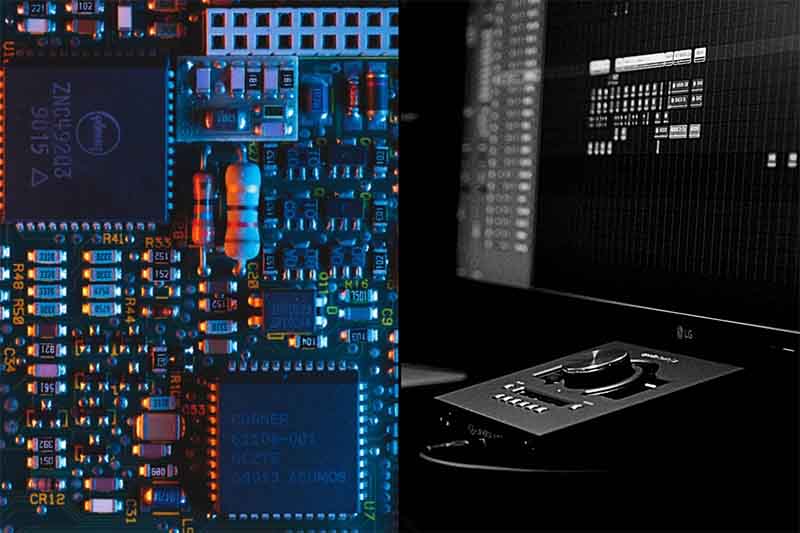
Digital Signal Processing Applications
Communications
In the communications field, digital signal processors are widely used in base stations, mobile phones, modems, as well as analog-to-digital and digital-to-analog conversion systems. DSPs enable real-time processing of communication signals, improving signal quality, reliability, and transmission efficiency.
Audio and Video Processing
In audio and video applications, digital signal processors handle tasks such as audio encoding and decoding, mixing, noise reduction, and video compression, decompression, and enhancement. These capabilities significantly improve the clarity, realism, and overall quality of multimedia content.
Speech Recognition
Digital signal processors can process and analyze voice signals in real time, reducing background noise and improving speech recognition accuracy. They are widely used in smart assistants, voice control systems, and communication devices.
Radar
Digital signal processors can rapidly process radar echo signals to enable target detection, distance measurement, and motion tracking.
Automatic Control Systems
In automatic control applications, digital signal processors are used to achieve real-time control and system optimization. They process signals from various sensors and execute predefined control algorithms to make accurate decisions, enabling precise control of the target system.
Medical Devices
Digital signal processors are widely applied in medical equipment. They support image reconstruction, noise reduction, enhancement, and real-time processing in medical imaging systems such as CT, MRI, ultrasound, and X-ray machines. DSPs are also used to extract and analyze biomedical signals including ECG, EEG, and EMG data.
Industrial Control
In industrial control systems, digital signal processors are one of the core components. In machine vision systems, they handle image acquisition, processing, and analysis for quality inspection, object recognition, and position measurement on production lines. DSPs are also used in industrial robots and CNC machines for high-precision motion control and path planning, as well as for real-time signal processing tasks such as PID control, filtering, sampling, and data processing in industrial automation environments.

Packaging Types of Digital Signal Processors
PGA (Pin Grid Array)
PGA is a pin grid array package, suitable for applications requiring a large number of pins but with moderate heat dissipation requirements. For example, the SM320C40GFS60 uses an SPGA (Shrink Pin Grid Array) package.
QFP (Quad Flat Package)
QFP is a quad flat package, including variants like LFQFP (Low Profile QFP), commonly used for surface-mount technology. An example is the TMS320VC33PGE150, which comes in an LFQFP package.
BGA (Ball Grid Array)
BGA packages, including HBGA (Heat Sink BGA) and FBGA (Fine Pitch BGA), offer high pin counts and excellent electrical performance. For instance, TMS320C6454BZTZA is available in an FBGA package, while TMS320DM640AZDKA4 uses a standard BGA package.
CSP (Chip Scale Package)
CSP is a chip-scale package, very close to the actual chip size, ideal for space-constrained applications. Specific models using CSP are not widely disclosed in public sources.
Other Specialized Packages
Some DSPs may also come in other custom or specialized packaging types, depending on thermal, electrical, and mechanical requirements.
The Top Digital Signal Processor (DSP) Manufacturers in 2026
Several well-known semiconductor companies continue to lead the DSP market in 2026 by developing high-performance processors for communications, automotive, industrial control, and embedded systems. The top Digital Signal Processor manufacturers include Texas Instruments, Analog Devices, Qualcomm, NXP Semiconductors, STMicroelectronics, Infineon Technologies, Microchip Technology, and Renesas Electronics.
For high-performance applications, a highly recommended digital signal processor is the ADSP-21060LCW-160 from Analog Devices Inc. This digital signal processor chip is well-known for its reliable performance and powerful computing capabilities, making it ideal for demanding real-time signal processing tasks in communications, audio/video processing, industrial control, and automotive systems.
Analog Devices Inc. DSP | ADSP-21060LCW-160
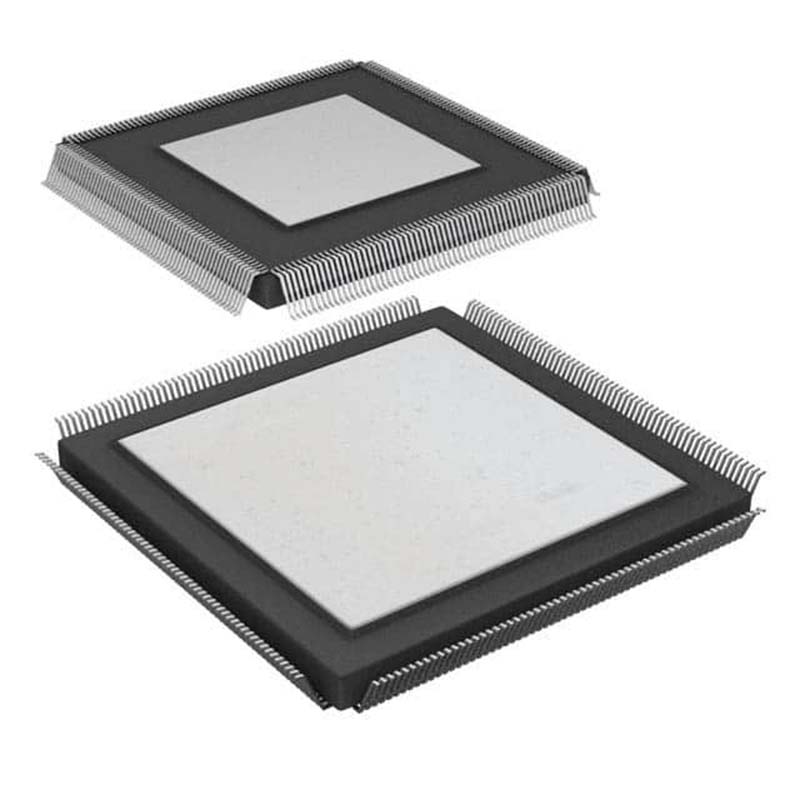
ADSP-21060LCW-160 Digital Signal Processor
The ADSP-21060LCW-160 digital signal processor manufactured by Analog Devices Inc. is an ideal choice for high-speed signal conversion. This DSP processor has an operating temperature range of -40℃to 100℃ and a maximum operating speed of 40 MHz. It features a typical operating voltage of 3.3 V, with a minimum of 3.15 V and a maximum of 3.45 V. Equipped with ROM-less program memory, it is a 32-bit IC DSP controller in a 225-BGA package, clocked at 40 MHz. It is designed to support host interfaces, link ports and serial port interfaces.
Contact us for the latest availability and pricing of the ADSP-21060LCW-160, and access detailed information including its manufacturer, datasheets, pinout diagrams, pin voltages, circuit diagrams, schematics as well as equivalent components.
The TMS320C6678 is an 8-core high-performance DSP with C66x architecture launched by TI, featuring a maximum main frequency of 1.25GHz and supporting both fixed-point and high-speed floating-point operations. It is equipped with abundant high-speed interfaces such as DDR3, SRIO, Gigabit Ethernet and PCIe with powerful computing capacity and strong scalability, widely applied in radar signal processing, mobile communication base stations, high-definition image algorithm operation and high-end industrial measurement and control fields.
The ADSP-21489 is a classic professional floating-point audio DSP with SHARC architecture from ADI, running at 450MHz main frequency. It is built-in with dedicated audio computing accelerators and large-capacity on-chip memory with complete peripheral resources and excellent audio processing performance. It is suitable for the development of various acoustic algorithms and commonly used in car audio systems, professional audio equipment, sound effect tuning, audio noise reduction and civil acoustic electronic products.
More Embedded Solutions In Stock Now!
We've got hot chips and all hard-to-find electronic components you're looking for-one-stop electronic component supplier and distributor.
Last but not least, choosing the right DSP can significantly impact system performance and reliability. For those looking for a proven solution, a strong DSP chip recommend is the ADSP-21060LCW-160, which combines high-speed computing, robust architecture, and versatility to meet demanding processing needs.
Related information
- 2026.09.20 What is Ceramic Packaging Chip?
- 2026.09.13 What is SMD Resistor?
- 2026.09.06 What is Bus Interface IC?

- 2026.08.30 How to Select Supercapacitor?