

Available 24/7 at
+86 13632816717

What is a Microcontroller?
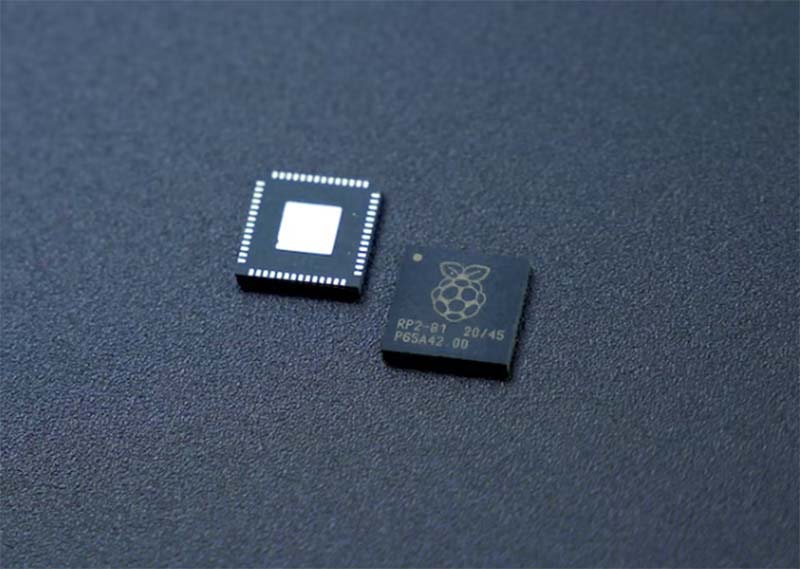
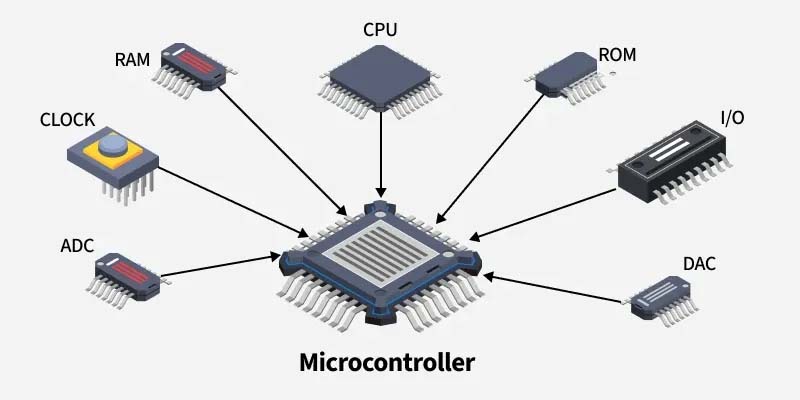
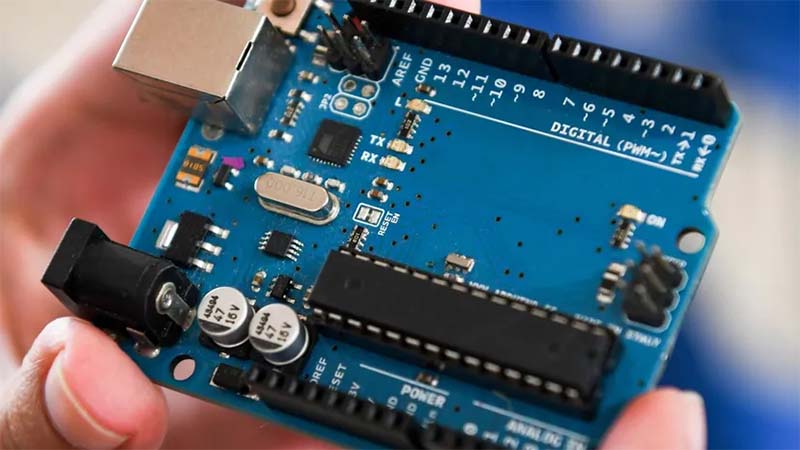
What is a microcontroller? A microcontroller is a single-chip microcomputer that integrates the main components of a small computer onto one chip. An MCU (Microcontroller Unit) combines a central processing unit (CPU), memory, timers, input/output interfaces, and other functional modules into a compact system. It is responsible for coordinating circuit operations, signal processing, peripheral control, logical decision-making, and instruction execution.
What is a microcontroller used for? It is commonly applied to control and monitor various electronic devices and systems, such as household appliances, automotive electronics, and medical equipment. With the rapid development of artificial intelligence (AI), the Internet of Things (IoT), and edge computing, microcontrollers are evolving from traditional control-oriented roles toward more intelligent and efficient applications.
What are the Main Components of a Microcontroller?
Central Processing Unit (CPU):
As the core of computation and control, the CPU executes instructions, performs arithmetic and logical operations, and manages program flow.
Memory:
Program Memory: Typically Flash or ROM, used to permanently store the firmware or application code. Data is retained even when power is off.
Data Memory:
Usually RAM, used to temporarily store variables and intermediate data during program execution. Data is lost when power is removed.
Input/Output Interfaces (I/O):
- General Digital I/O (GPIO): Configurable as input or output, used to connect digital devices such as buttons and LEDs.
- Communication Interfaces: Such as UART, I2C, and SPI, enabling serial data exchange between devices.
- Analog Interfaces: Including ADC (Analog-to-Digital Converter) and DAC (Digital-to-Analog Converter), used for processing analog signals.
Timers/Counters:
Used to generate precise time delays, measure pulse widths, or count external events. They are essential for timing and control applications.
Serial Communication Interfaces:
Such as UART, SPI, and I2C, enabling data communication with other chips or devices and supporting system expansion.
Analog-to-Digital Converter (ADC):
Converts analog signals from sensors or other devices into digital signals for CPU processing.
Clock Circuit:
Provides synchronized timing signals for the entire chip. It typically consists of an oscillator and clock division circuits to ensure coordinated operation of all modules.
Interrupt System:
Manages the priority and response to internal or external events (such as button presses or timer overflows), allowing the microcontroller to handle urgent tasks in real time.
In addition, modern microcontrollers may integrate extra functional modules such as Digital-to-Analog Converters (DAC), Pulse Width Modulation (PWM) outputs, USB controllers, Ethernet interfaces, LCD drivers, or DMA channels to support more diverse and advanced application requirements.
How Does a Microcontroller Work?
The core operating mechanism of a microcontroller:
1. Fetch: The microcontroller retrieves an instruction from program memory.
2. Decode: The instruction is interpreted and translated into machine-level signals that the CPU can understand.
3. Execute: The CPU performs the required operation, such as arithmetic calculations, logical processing, or peripheral control.
4. Store: The result is written back to a register or memory for later use.
This continuous fetch–decode–execute–store cycle enables the microcontroller to process data, control external devices, and respond to system events efficiently in real time.
How Does a Microcontroller Work in an Embedded System?
A microcontroller serves as the central control unit of an embedded system, responsible for executing dedicated tasks and managing specific system functions. Unlike general-purpose computers, it typically operates without a complex operating system, allowing it to run independently with optimized efficiency. By integrating the processor, memory, input/output interfaces, timers, and communication peripherals onto a single chip, a microcontroller delivers a compact design, low power consumption, and reliable real-time performance.
With fast response speed and efficient real-time signal processing capabilities, microcontrollers are ideal for applications requiring high stability and precise timing control. These applications include motor and servo control, real-time sensor data acquisition and processing, as well as communication through serial interfaces, industrial buses, and wireless modules. By coordinating these functions, microcontrollers enable automation, intelligent sensing, and dependable system operation in modern embedded applications.
Applications of Embedded Microcontroller
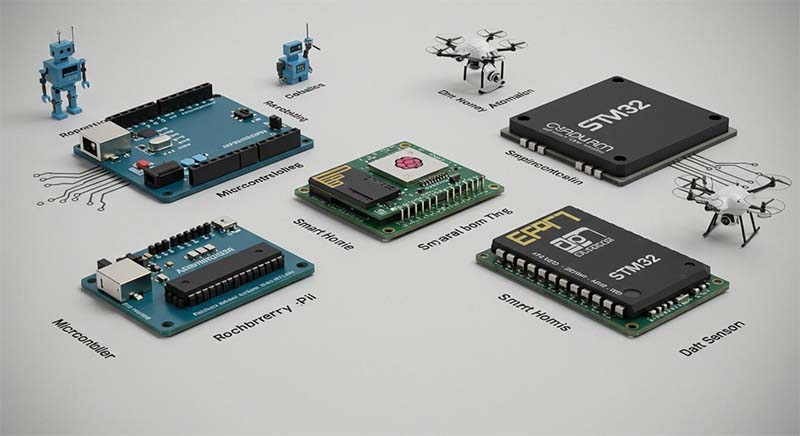
1. Automotive Electronics
Microcontrollers serve as the core control units in automotive electronic systems and are widely used in body control, powertrain management, chassis control, in-vehicle infotainment, and advanced driver-assistance systems (ADAS). They collect sensor data in real time and execute control logic rapidly, ensuring stable, safe, and efficient operation of driving, braking, steering, lighting, and climate control systems. As such, microcontrollers form the foundational hardware support for intelligent vehicles and autonomous driving technologies.
2. Industrial Automation
In industrial automation, microcontrollers play a critical role in precise control and real-time processing. They reliably drive motors, acquire various sensor signals, and control actuators. Microcontrollers are extensively applied in PLCs, servo drives, inverters, industrial robots, smart instruments, and production line control systems, enabling high-precision, high-reliability automated manufacturing and equipment monitoring.
3. Smart Home
Microcontrollers act as the "intelligent core" of smart home devices. In applications such as smart lighting, security systems, home appliances, smart locks, and environmental monitoring devices, they handle data acquisition, local decision-making, network communication, and coordinated control. This enables home devices to perceive, analyze, and respond automatically, delivering a safer, more convenient, and energy-efficient smart living experience.
4. Edge AI
In edge computing and lightweight AI scenarios, microcontrollers provide low-power, compact, and localized intelligent processing capabilities. Without relying on cloud connectivity, they can perform AI inference tasks such as voice recognition, image detection, behavior analysis, and anomaly alerts directly at the device level. They are widely used in wearable devices, intelligent sensors, industrial edge terminals, and IoT nodes, enabling low-latency, privacy-focused, and highly reliable local intelligence.
Beyond these major fields, microcontrollers are also widely used in consumer electronics, medical devices, telecommunications equipment, and new energy systems. They support functions such as battery management, power control, data logging, and system diagnostics, ensuring efficient, reliable, and intelligent operation across diverse applications.
Microcontroller Vs. Microprocessor
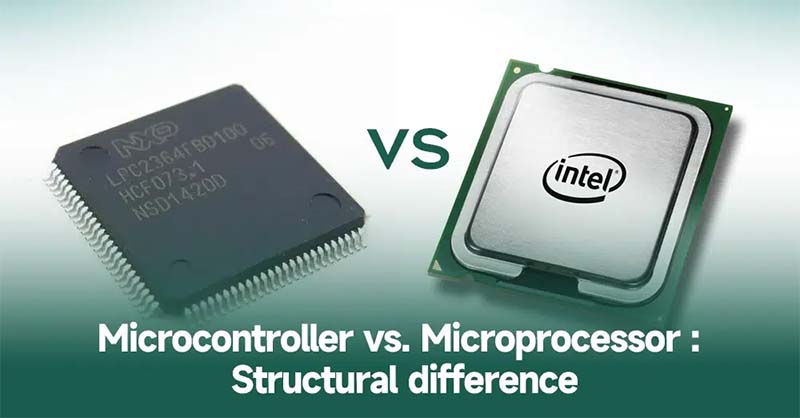
Both are single-chip processors capable of executing computational logic. A defining characteristic of a microcontroller is that it integrates all the necessary computing components onto a single chip-allowing it to operate without requiring additional external circuitry. In contrast, a microprocessor consists primarily of a CPU and relies on several supporting chips to provide memory, serial interfaces, I/O functions, and other essential features.
A Microcontroller Unit (MCU) is essentially a compact computer built on a single chip. Compared to a Microprocessor Unit (MPU), microcontrollers are used more widely in embedded and dedicated control applications. Microcontrollers function independently, while microprocessors are designed to work with external auxiliary devices and supporting hardware.
Performance
Clock Speed:
Microprocessors generally offer higher performance, with clock speeds reaching up to 4 GHz. They are capable of processing large volumes of instructions efficiently, making them suitable for operating systems, complex software, and data-intensive tasks that require significant computing power. In contrast, microcontrollers focus on efficiency and reliability rather than maximum processing power. Their clock speeds typically reach up to around 80 MHz, which is sufficient for their intended applications while effectively reducing power consumption and heat generation. Microcontrollers perform exceptionally well in basic tasks such as sensor data acquisition, actuator control, and hardware management.
Memory:
Microprocessors support larger memory capacities and can be paired with external memory modules, enabling them to handle massive data processing and complex software operations. Microcontrollers, on the other hand, come with limited built-in memory, which is sufficient for predefined applications but not suitable for handling large-scale data or highly complex programs.
Peripheral Interfaces:
Microprocessors offer more flexible input/output (I/O) capabilities and can connect to a wide range of external devices and peripherals, making them ideal for complex systems such as personal computers and servers. However, their reliance on external components may occasionally introduce latency. Microcontrollers have a more limited number of built-in I/O interfaces, which are adequate for dedicated applications. Since their components are integrated on a single chip, they can achieve fast and efficient operation even at lower clock speeds.
Cost
The cost gap between the two is significant. Microcontrollers have a simpler architecture with higher integration and fewer external components, resulting in lower manufacturing costs. Since they include built-in memory and peripherals, they reduce the need for additional hardware, lowering overall system costs.
Microprocessors have a more complex structure and require additional external memory and peripheral components to function properly, which increases the total system cost. However, their high performance and flexibility justify the higher expense, making them well-suited for complex systems and high-end application scenarios.
Eastech Helps Meet Your Microcontroller and Microprocessor Needs
Eastech provides high-performance, low-power microcontrollers from leading global brands, suitable for applications such as smart homes and IoT. Our MCU product portfolio offers device manufacturers a one-stop solution for both wired and wireless application development. With built-in processing units and memory modules, microcontrollers can be programmed to perform logic control, signal processing, and data communication functions efficiently.
The Future of Microcontrollers: Insights on Application
1. Empowered by Third-Generation Semiconductor Technology
Third-generation semiconductor materials, represented by silicon carbide (SiC) and gallium nitride (GaN), are redefining the performance boundaries of microcontrollers at the foundational level. With advantages such as high voltage resistance, low power loss, and high-temperature tolerance, combined with advanced process technologies and emerging memory solutions (such as MRAM and PCM), these materials significantly enhance chip energy efficiency, power density, and environmental adaptability. This enables stronger drive capability, faster response times, and longer service life for applications in automotive electronics, industrial control, and new energy systems, making them a core foundation for high-end intelligent hardware.
2. Deep Integration of AI and Edge Computing
Microcontrollers are evolving from traditional "control execution" devices into platforms capable of local intelligent decision-making. By integrating NPUs, AI accelerators, and lightweight inference engines, they can process voice, vision, and sensor data directly at the edge in real time. Cloud-edge collaborative architectures reduce latency and enhance data privacy, allowing intelligence to operate independently of the cloud. This advancement widely supports industrial inspection, smart home automation, in-vehicle perception, wearable devices, and other edge scenarios, accelerating the transition from concept to real-world implementation of ubiquitous intelligence.
3. Low Power Consumption and High Reliability
To meet the demands of battery-powered systems, long-term unattended operation, and harsh environments, microcontrollers are advancing toward extreme energy efficiency and full lifecycle reliability. Through near-threshold voltage operation, dynamic power management, and multi-level sleep modes, they achieve ultra-low standby current levels. At the same time, compliance with automotive ASIL-D and industrial functional safety standards strengthens anti-interference performance, fault tolerance, secure boot mechanisms, and encryption protection. These improvements ensure long-term stable operation and trusted data security across critical applications.
Finally, from automotive and industrial automation to AI-driven edge computing, microcontrollers continue to evolve toward higher efficiency, stronger security, and smarter performance. When comparing microcontroller vs microprocessor, the key differences in integration level, power consumption, cost, and application focus make each suitable for different system requirements. Choosing the right solution depends on balancing performance needs, system complexity, and long-term design goals.
Related information
- 2026.09.20 What is Ceramic Packaging Chip?
- 2026.09.13 What is SMD Resistor?
- 2026.09.06 What is Bus Interface IC?
- 2026.08.30 How to Select Supercapacitor?