

Available 24/7 at
+86 13632816717

What is Optocoupler in Electronics?
What is optocoupler in electronics? Optocouplers are widely used in electronic circuits to provide signal transmission while maintaining electrical isolation between different parts of a system. By combining a light-emitting component and a light-sensitive receiver, they help protect sensitive circuits from voltage spikes, noise, and potential damage. In this article, we will explore what is a optocoupler used for and why they are often chosen over transistor solutions in many applications.
How Does an Optocoupler Work?
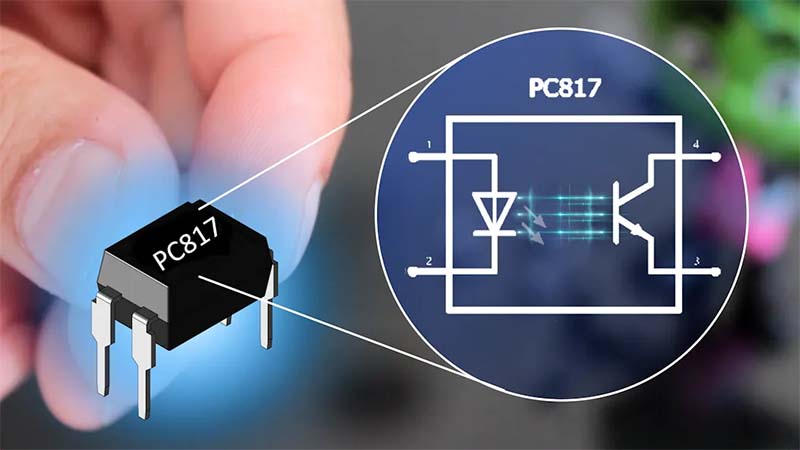
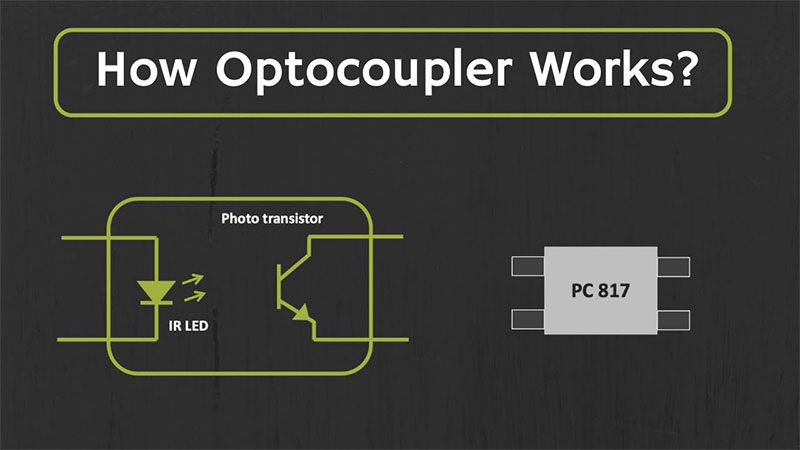
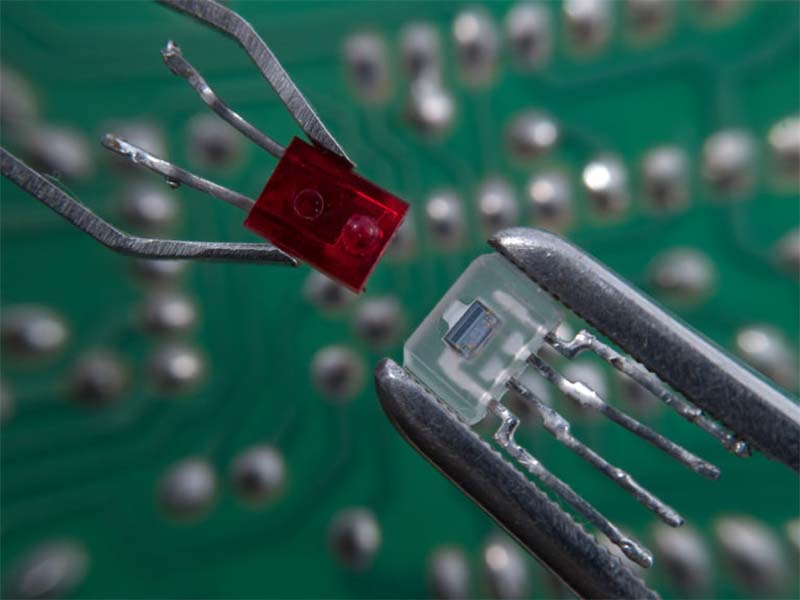
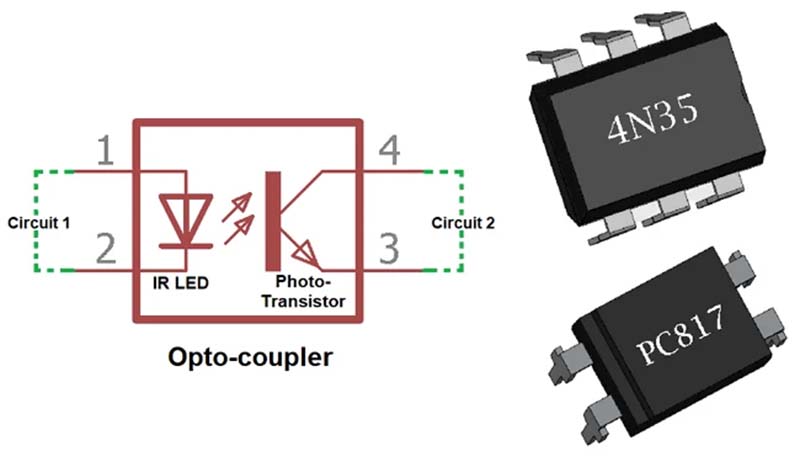
What is optocoupler isolation? An optocoupler mainly consists of a light-emitting diode (LED) and a photosensitive device, such as a photo-transistor, photo-diode, or photo-controlled thyristor. These components are housed together in a single package but have no direct electrical connection. Instead, signals are transmitted between them through light.
1. The input side receives an electrical signal
When a voltage or current is applied to the input side, the internal LED is driven and emits infrared light.
2. Optical signal transmission
The light emitted by the LED passes through a transparent insulating medium and reaches the photosensitive device on the output side.
Since the signal is transferred through light across the isolation barrier, the input and output sides remain electrically isolated at all times.
3. The output side converts the signal back into an electrical signal
When the photosensitive device receives the light signal, it turns on and generates a corresponding output current or voltage.
When the LED turns off, the photosensitive device switches off, and the output returns to its inactive state.
This conversion process - electrical signal → optical signal → electrical signal - enables signal transmission while maintaining reliable electrical isolation between the input and output circuits.
What is a Optocoupler Used For?
Electrical Isolation
An optocoupler provides electrical isolation between the input and output circuits. Since there is no direct electrical connection between them and signals are transferred through light, the high-voltage side and low-voltage side can remain completely isolated.
Signal Transmission
Optocouplers are widely used for transmitting both digital and analog signals while maintaining isolation.
Digital signal isolation: Used for switching signals, pulses, and I/O control signals, such as relay drivers, PLC inputs and outputs, and power supply feedback circuits.
Input powered on → LED turns on → photosensitive device conducts
Input powered off → No light → Output turns off
Linear optocouplers: Used to transmit continuous analog voltage or current signals, such as isolated voltage and current feedback in switching power supplies.
Protection of Control Circuits
When a system experiences surge voltages, voltage spikes, short circuits, or other abnormal conditions, an optocoupler can block dangerous voltages from reaching sensitive control circuits.
For example, when a PLC controls a 220V AC relay, any fault or abnormal condition on the load side will not directly affect the PLC or microcontroller.
Level Conversion
Optocouplers can connect circuits operating at different voltage levels, such as a 3.3V microcontroller and a 24V industrial control system. They enable reliable signal communication between different voltage domains while maintaining electrical isolation.
Noise Reduction
Optocouplers help reduce electrical noise interference and improve signal integrity during data transmission. By using an LED and a photosensitive receiver to create an isolated signal path, they prevent noise from crossing between circuits and ensure more reliable operation.
What Are the Applications of Optical Couplers?
1. Industrial Automation
Optocouplers are widely used in PLC digital input/output modules, industrial control boards, servo motor drive units, inverters, industrial relay drivers, and remote I/O modules.
By providing electrical isolation, optocouplers block high-voltage interference from affecting low-voltage control signals, improving equipment resistance to surge voltages and electromagnetic interference (EMI). They help isolate high-power circuits from sensitive control systems, ensuring safer and more reliable industrial operation.
2. Switching Power Supplies (SMP)
Optocouplers are commonly used in flyback, forward, and LLC switching power supplies, fast chargers, server power supplies, and industrial power systems.
They provide isolated feedback transmission for secondary-side voltage and current regulation, maintain high-voltage and low-voltage isolation between the primary and secondary sides, and transfer protection signals such as over-current and over-voltage alerts. This ensures safe isolation between the AC mains and low-voltage control circuits.
3. Microcontroller Interfaces
Optocouplers are used for MCU/microcontroller I/O isolation, 3.3V/5V controller interfaces with 24V industrial systems, communication between circuits with different voltage potentials, and isolated UART or pulse signal transmission.
They help eliminate ground loop noise, protect control chips from external high voltages and electrostatic discharge (ESD), and improve system reliability.
4. Battery Management Systems (BMS)
In energy storage battery packs, electric vehicle (EV) battery systems, and portable power stations, optocouplers are used to isolate high-voltage battery monitoring signals, balancing control signals, and charge/discharge protection signals.
They provide electrical isolation between high-voltage battery packs and low-voltage control units, improving measurement accuracy while enhancing system safety.
5. Medical Equipment
Optocouplers are used in patient monitors, blood analyzers, portable medical devices, and medical power supplies.
They help meet medical safety isolation requirements by separating patient-connected circuits from high-voltage power sources, reducing the risk of leakage current. At the same time, they minimize electromagnetic interference to ensure stable signal measurement and compliance with medical safety standards.
Can an optocoupler replace a relay?
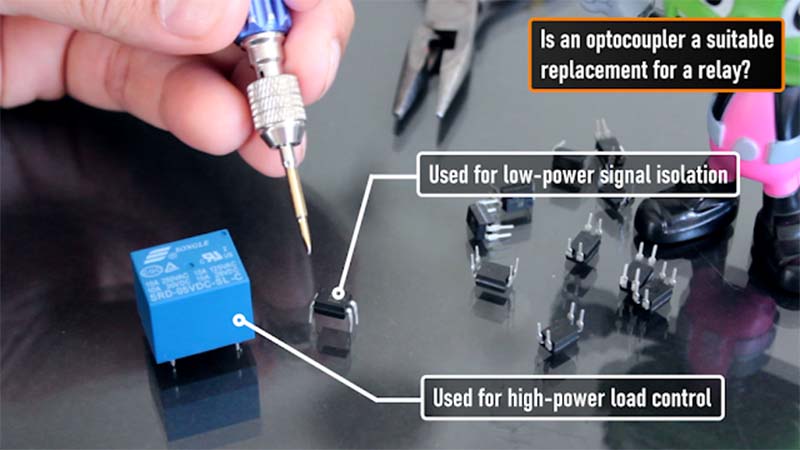
Optocouplers are not a complete replacement for relays. While both provide galvanic isolation between control and load circuits, optocouplers only support tiny low-current loads with semiconductor output, whereas relays handle large high-power currents via metal contacts.
You may use an optocoupler to replace a relay only for low-power signal switching. For high-current AC/DC power loads, relays remain necessary and cannot be substituted by optocouplers.
Why Use Optocoupler Instead of Transistor?
Complete electrical isolation between two circuits
An optocoupler separates the input low-voltage control side and output high-voltage power side with light transmission, blocking high voltage, surge and ground loop interference. A regular transistor shares the same ground and power rail on input and output; high voltage or noise from the load will leak back to the control circuit and damage sensitive chips like MCUs.
Strong anti-interference ability
Noise, common-mode voltage or ground potential difference cannot pass through the optical barrier. Transistors conduct electricity through physical semiconductor junctions, so electromagnetic interference easily distorts control signals.
Wide voltage matching range
The input LED of an optocoupler works at small logic voltages (1.8V/3.3V/5V), while the output side can drive circuits with completely different voltage domains (12V, 24V, AC mains). Transistors require shared reference voltage levels and cannot cross isolated voltage systems safely.
Safe for high-voltage & AC switching scenarios
Optocouplers (triac output types) directly isolate low-voltage logic from AC 110/220V mains. Using ordinary transistors to switch mains creates fatal electric shock risks due to direct electrical connection.
Eliminate ground loop currents
Different circuit modules often have unequal ground potentials, generating circulating leakage current that distorts signals. Optical isolation cuts this conductive path entirely, which transistors cannot achieve.
Simple level shifting without signal back flow
Light only transfers signal one-way (input light → output conduction), no reverse signal crosstalk. Transistors allow reverse current leakage that may interfere with control logic.
Comparison of Optocoupler vs. Transistor
|
Feature |
Optocoupler |
Transistor |
|
Primary Function |
Transfers signals while providing electrical isolation |
Amplifies or switches electrical signals |
|
Electrical Isolation |
✔ Complete galvanic isolation between input and output |
✘ No isolation; input and output are electrically connected |
|
Signal Transfer Method |
Light (LED and photodetector) |
Electrical current through semiconductor junctions |
|
Protection Against High Voltage |
✔ Protects low-voltage circuits from high-voltage exposure |
✘ Cannot isolate or protect against high voltage |
|
Noise Immunity |
✔ Excellent resistance to EMI, voltage spikes, and transients |
Moderate; susceptible to electrical noise |
|
Ground Loop Prevention |
✔ Eliminates ground loops between separate circuits |
✘ Ground loops can occur if grounds are shared |
|
Switching Speed |
Generally slower (varies by type) |
Faster, especially MOSFETs and BJTs |
|
Circuit Complexity |
Slightly more complex because of the isolation stage |
Simpler circuit design |
|
Typical Applications |
SMPS, industrial automation, PLCs, motor drives, medical devices, microcontroller isolation |
Signal amplification, switching circuits, LED drivers, oscillators, digital logic |
How to Choose the Optocoupler and Transistor?
|
Optocoupler |
Transistor |
|
Electrical isolation is required |
Isolation is not necessary |
|
High-voltage and low-voltage circuits need to communicate |
Switching or amplifying signals within the same circuit |
|
EMI, voltage spikes, or ground loops are concerns |
High-speed switching is required |
|
Safety and equipment protection are priorities |
Cost, simplicity, and efficiency are the main considerations |
With a wide range of optocouplers available on the market, selecting the right device depends on factors such as isolation voltage, switching speed, output type, and application requirements. The following optocoupler models from leading manufacturers, including onsemi, Vishay, Broadcom and Toshiba, are widely used in industrial control, power supplies, communication systems, and power electronics due to their reliability and proven performance.
|
Manufacturer |
Models |
Output Type |
Applications |
|
onsemi |
4N25, 4N35, H11L1, MOC3021, MOC3063 |
Phototransistor, Logic Gate, Photo Triac |
Signal isolation, MCU interfaces, SSRs, AC switching |
|
Vishay |
VO617A, VO615A, VO618A, VO2630, VO3120 |
Phototransistor, High-Speed, Gate Driver |
Power supplies, industrial automation, motor drives |
|
Broadcom |
6N137, HCPL-2631, HCPL-3120, ACPL-332J, ACPL-M61L |
Logic Gate, Gate Driver |
High-speed communication, IGBT/MOSFET driving, industrial control |
|
Toshiba |
TLP521, TLP281, TLP2361, TLP250, TLP350 |
Phototransistor, High-Speed, Gate Driver |
SMPS, digital isolation, inverter and motor control |
|
Renesas |
PS2561A, PS2501, PS2701, PS9821 |
Phototransistor, High-Speed |
PLCs, factory automation, communication interfaces |
|
ROHM |
PS2561L, PS2801, BM6101FV-C |
Phototransistor, Gate Driver |
Industrial control, switching power supplies, motor drives |
The Best Optical Coupler Supplier
Eastech provides a comprehensive selection of semiconductor components to meet the needs of different electronic designs and manufacturing requirements. From optocouplers and ICs to memory chips, transistors, and other discrete devices, we work with trusted manufacturers to offer customers dependable component sourcing options.
Summary, optocouplers play an important role in modern electronic systems by providing reliable signal transmission while maintaining electrical isolation between different circuits. Compared with traditional switching components, many designers choose optocouplers when isolation and noise protection are required. Knowing why use optocoupler instead of transistor is essential, as optocouplers can isolate high-voltage and low-voltage circuits, reduce interference, and improve overall system reliability.
Related information
- 2026.09.20 What is Ceramic Packaging Chip?

- 2026.09.13 What is SMD Resistor?
- 2026.09.06 What is Bus Interface IC?
- 2026.08.30 How to Select Supercapacitor?