

Available 24/7 at
+86 13632816717

What is Bus Interface IC?
As electronic systems become increasingly connected and complex, reliable communication between microcontrollers, processors, sensors, and peripheral devices has become essential. Bus interface ICs provide the electrical and communication interfaces needed to connect these components and enable efficient data exchange across different bus architectures. In this article, we will explain how bus interface ICs work, explore their common types and applications, and focus on integrated circuit interface controllers used in aerospace, avionics, and military applications, highlighting leading manufacturers and their products.
What is Bus Interface IC?
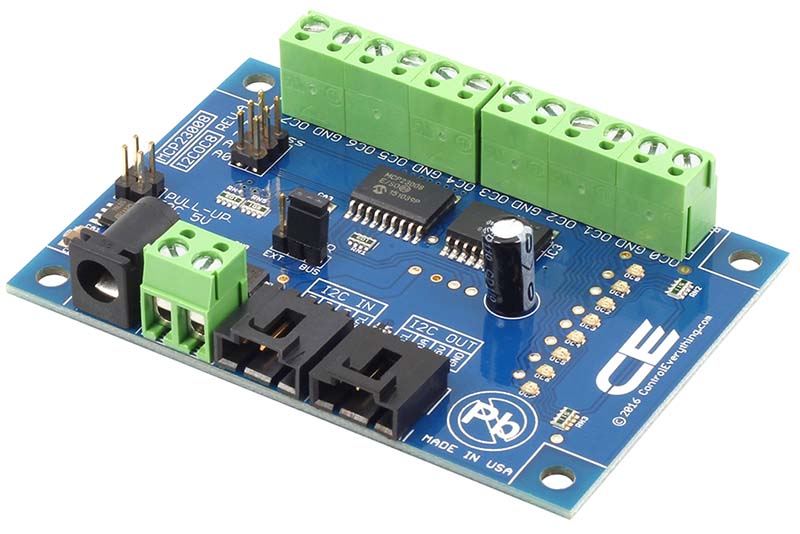
A bus interface IC is an integrated circuit designed to manage communication between electronic devices, microcontrollers, processors, and other components through a shared communication bus. It provides the electrical and logical interface required to transmit and receive data reliably between different parts of an electronic system.
In many electronic designs, different devices may operate with different voltage levels, signal formats, or communication requirements. A bus interface IC helps bridge these differences and ensures that signals can be properly transmitted across the bus.
Depending on the application, a bus interface IC may provide functions such as signal buffering, level shifting, bus transceiving, data transmission, and protocol interfacing.
How Does a Bus Interface IC Work?
A bus interface integrated circuit (IC) typically sits between a system controller and one or more devices connected to a communication bus. It receives signals from one side, processes or conditions them as required, and then sends the corresponding signals to the other side. This enables connected devices to communicate reliably while ensuring that signals meet the required electrical and communication specifications.
How does the Bus Interface Controller Support Data Communication?
Integrated circuit (IC) interface controllers support data communication between devices by managing the electrical signals, communication protocols, timing, and data transfer processes required for reliable information exchange.
Translate communication protocols:
Convert data between protocols such as UART, SPI, I²C, CAN, RS-232, RS-485, Ethernet, and USB.
Manage data transmission:
Control how data is transmitted, received, buffered, and synchronized between connected devices.
Handle signal conversion:
Interface ICs can convert logic-level signals into the electrical formats required by communication buses.
Provide timing and synchronization:
Controllers manage clock signals, baud rates, data timing, and synchronization to ensure devices communicate correctly.
Improve signal integrity:
Transceivers and line drivers help provide suitable voltage levels, drive capability, and noise tolerance, particularly over longer cables.
Support error detection:
Some interface controllers include parity, CRC, fault detection, or other mechanisms to identify communication errors.
In a typical system, a microcontroller, processor, or sensor generates data, while an interface controller or transceiver prepares that data for transmission across the selected communication bus. At the receiving end, another interface IC converts the incoming signals back into a format that the processor or other device can understand.
This makes interface controllers an important link between different electronic devices, enabling reliable communication in applications such as industrial automation, automotive electronics, telecommunications, avionics and embedded systems.
Common Types of Bus Interface ICs
IC bus interfaces, bus controllers, and bus masters provide a communication link between standard parallel-bus microcontrollers or microprocessors and serial buses. They are available in a wide range of configurations and types to support different bus architectures and communication requirements, depending on the communication standard and system requirements. Common examples include:
CAN interface ICs:
Widely used in automotive and industrial networks, CAN typically supports data rates up to 1 Mbps, while CAN FD can reach 5 Mbps or higher depending on the system. CAN interface ICs are commonly used in engine control units, body control modules, battery management systems, industrial controllers, and other distributed control systems.
RS-232 interface ICs:
Commonly used for point-to-point serial communication between computers, controllers, instruments, and other devices. Typical data rates are relatively low, often up to around 115.2 kbps, although some devices support higher speeds. RS-232 is widely used in industrial equipment, measurement instruments, and legacy communication systems.
RS-485 interface ICs:
Designed for reliable differential communication over longer distances and in electrically noisy environments. Typical data rates can reach 10 Mbps or higher over short distances, while lower speeds are generally used for longer cable runs. RS-485 is widely used in industrial automation, PLCs, motor controllers, building automation, and fieldbus networks.
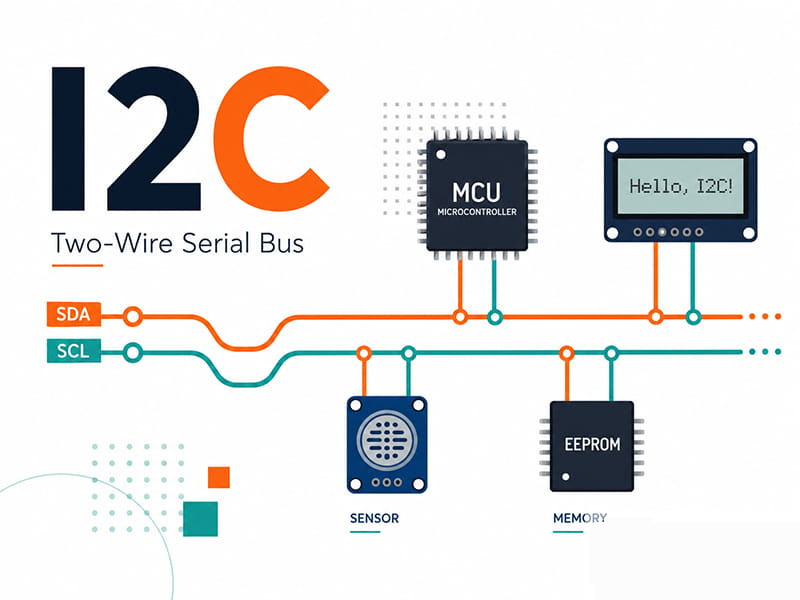
I²C interface ICs:
Used for short-distance communication between integrated circuits and peripheral devices on the same PCB. Standard I²C supports 100 kbps, Fast-mode supports 400 kbps, and Fast-mode Plus can reach 1 Mbps, with some implementations supporting higher speeds. It is commonly used to connect sensors, EEPROMs, touch controllers, display controllers, and other low-speed peripherals.
SPI interface ICs:
Provides synchronous serial communication between controllers and peripheral devices, typically offering higher data rates than I²C. Depending on the implementation and device, SPI speeds can range from several MHz to tens or even hundreds of MHz. SPI is commonly used for flash memory, ADCs, DACs, displays, sensors, and other high-speed peripherals.
USB interface IC:
Provide communication between USB hosts and peripheral devices. USB supports significantly higher data rates than traditional serial interfaces, ranging from 1.5 Mbps for USB Low-Speed to 480 Mbps for USB 2.0 High-Speed, while newer USB standards can reach multi-Gbps speeds. USB interface ICs are widely used in computers, storage devices, industrial equipment, consumer electronics, and external peripherals.
LIN interface ICs:
Designed for low-cost, low-speed communication in automotive electronic systems. LIN typically supports data rates of up to 20 kbps and is commonly used for less demanding vehicle functions such as door locks, power windows, lighting, seat controls, and wiper systems.
PCI interface ICs:
PCI (Peripheral Component Interconnect) is a parallel bus standard designed for high-speed communication between a computer's processor or chipset and peripheral devices. Conventional PCI typically supports 133 MB/s of theoretical bandwidth with a 32-bit, 33 MHz configuration. PCI is commonly found in computer expansion cards and legacy peripheral hardware, while modern systems have largely adopted PCI Express (PCIe) for higher-speed connections.
Some bus interface ICs support both transmitting and receiving functions in a single device. These are commonly known as bus transceivers and are widely used in bidirectional communication systems such as RS-485, CAN, and other bus-based networks.
What's the Difference Between Transmitter, Receivers, and Transceivers?
Bus interface ICs can be broadly categorized according to how they handle data communication. Depending on the application, an interface IC may be designed to transmit data, receive data, or perform both functions. The three common categories are transmitters, receivers, and transceivers.
Transmitter ICs
Transmitting IC is designed to send data from a local controller or electronic circuit to a communication bus or another connected device. It converts digital logic signals from the controller into electrical signals that are compatible with the corresponding bus standard.
Transmitter ICs can provide functions such as signal driving, voltage conversion, and signal conditioning to ensure that data can be transmitted reliably. They are suitable for applications where communication primarily takes place in one direction.
Typical applications include control systems, digital interfaces, communication equipment, and other embedded systems where a device only needs to send information to another circuit.
Receivers ICs
Receiving integrated circuit is designed to receive data from a communication bus or another electronic device and deliver the corresponding logic signals to a controller or digital circuit.
The receiver detects and interprets incoming electrical signals according to the requirements of the communication standard. It may also provide signal conditioning, noise rejection, and other functions to improve the reliability of incoming data.
Receiver ICs are commonly used in systems where a device primarily needs to monitor or obtain information from another device or communication bus.
Transceivers ICs
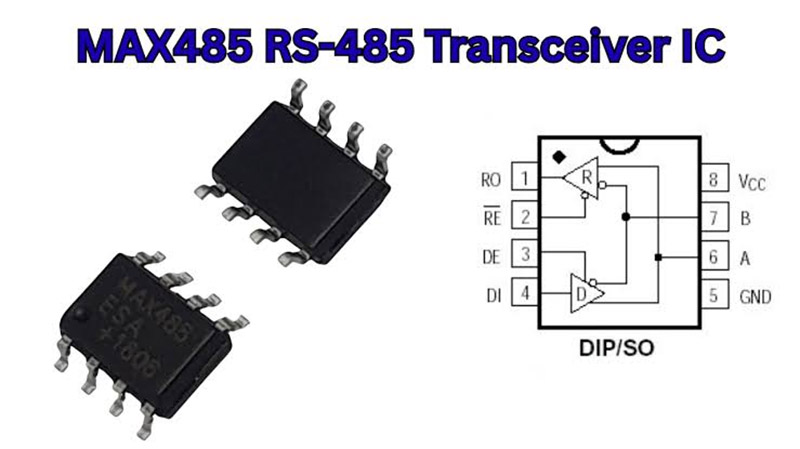
Bus interface transceiver ic combines transmitting and receiving functions in a single integrated circuit. The name "transceiver" comes from the combination of transmitter and receiver.
Unlike a transmitter or receiver, which is generally designed for one direction of communication, a transceiver can both send and receive data. This makes transceivers particularly useful for bidirectional communication between multiple electronic devices.
Many bus interface ICs used in aerospace, military, automotive, industrial, telecommunications, and embedded applications are available as transceivers. Common examples include CAN transceivers, RS-485 transceivers, and RS-232 transceivers.
When selecting a bus interface IC, understanding whether the application requires transmitting, receiving, or bidirectional communication is an important first step. The appropriate device can then be selected based on factors such as the communication protocol, data rate, supply voltage, number of channels, operating environment, and protection requirements.
What Are Bus Interface ICs Used for?
Integrated circuits interface controllers serve as the physical and protocol bridge between processors, sensors, actuators and peripheral modules. They are widely deployed across embedded, automotive, avionics, consumer and communication hardware.
1. Automotive Electronics
Bus interface ICs support communication between ECUs, sensors, and other automotive components. LIN and CAN transceivers are used in body control, powertrain, and chassis systems, while Ethernet, USB, I²C, and SPI interface ICs are used in infotainment and camera systems. EV battery management systems can also use isolated communication transceivers for high-voltage battery packs.
2. Industrial Automation
In industrial automation, CANopen and RS-485 bus ICs are widely used in PLCs, servo drives, frequency inverters, and fieldbus networks. Isolated RS-232/RS-422 transceivers support long-distance communication, while I²C, SPI, USB, and multi-channel transceivers are used in HMI and remote I/O modules.
3. Consumer Electronics
Bus interface ICs connect processors, controllers, sensors, and peripheral devices in consumer electronics. USB, I²C, and SPI interface ICs are commonly found in smartphones, tablets, smart home devices, TVs, and set-top boxes, while low-power serial bus ICs help reduce power consumption in wearable devices.
4. Computing & Peripheral Hardware
Computing systems use bus interface ICs for communication between processors, storage devices, and peripherals. PCIe, SMBus, USB, SATA, and NVMe interface solutions are used in motherboards, storage modules, and external peripherals such as keyboards, mice, and printers.
5. Aerospace, Military, Medical Electronic Devices
Bus interface ICs provide reliable communication in medical, aerospace, and test equipment. Isolated serial bus ICs can be used in patient monitors and diagnostic equipment, while robust interface components and RS-485/CAN transceivers support demanding aerospace and laboratory applications.
6. Robotics & Drones
Robotics and drones use bus interface ICs to connect controllers, motor drivers, and onboard sensors. CAN and SPI interfaces support real-time motor control, while multi-drop bus transceivers can connect IMUs, GPS, LiDAR, and other sensors within the system.
The Best Bus Interface IC Authorized Distributors
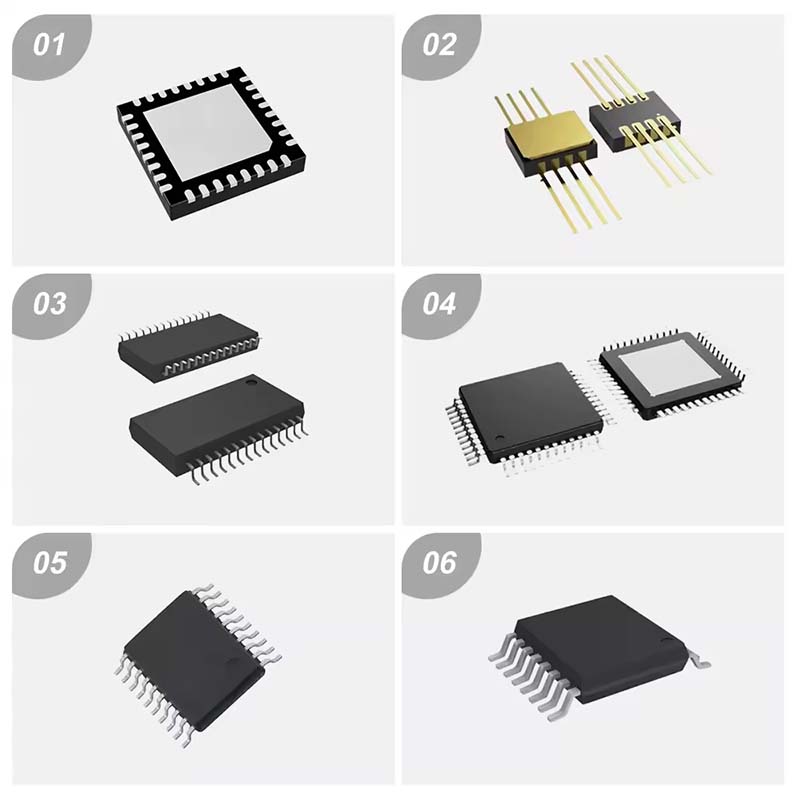
Looking for reliable bus interface ICs for sale? Eastech specializes in B2B electronic component distribution, offering bus interface ICs from leading manufacturers including Microchip Technology, Texas Instruments, Data Device Corporation (DDC), Device Engineering Incorporated (DEI), and HOLT. Our product range covers interface controllers and transceivers for a variety of communication standards, including CAN, RS-232, RS-485, MIL-STD-1553, ARINC 429, ARINC 717, and ARINC 664/AFDX, supporting applications across industrial, automotive, aerospace, and defense electronics.
For aerospace and avionics applications, we can provide interface solutions for MIL-STD-1553B data buses, ARINC 429 avionics communication, and other specialized aircraft communication systems. Manufacturers such as DDC, DEI, and HOLT offer dedicated interface and protocol solutions designed for demanding avionics applications, including aircraft computers, flight control systems, navigation equipment, and other airborne electronics.
Leading Bus Interface IC Manufacturers
To help engineers and procurement teams find the right bus interface ICs more efficiently, we have prepared dedicated articles covering products from leading manufacturers in this field. The following manufacturers are featured in our brand-specific guides:
Device Engineering Incorporated (DEI)
Each dedicated article provides a detailed list of relevant bus interface IC models from the respective manufacturer, including solutions for MIL-STD-1553, ARINC 429, and other avionics and communication applications. Click on the corresponding brand to explore the available models, specifications, and product information.
The models listed in these guides represent only a selection of the bus interface ICs we can supply, as space limitations prevent us from listing all available part numbers and inventory. Whether you need standard, hard-to-find, obsolete, or discontinued bus interface controller ICs, Eastech can assist with part-number sourcing, availability checking, quotations, samples, and alternative or equivalent components to support prototype development, testing, and volume production. If you cannot find the specific part number you need, contact us with your requirements, and we will check availability and provide suitable sourcing or alternative solutions.
Bus interface controllers are important for reliable data communication between microcontrollers, processors, sensors, and peripheral devices across different bus architectures. Understanding their functions, communication methods, and applications can help engineers select the right solution for their specific system requirements. The appropriate interface controller can also help ensure compatibility with the selected communication protocol, system architecture, and operating environment.
Related information
- 2026.08.30 How to Select Supercapacitor?
- 2026.08.23 What is Aluminium Electrolytic Capacitor?
- 2026.08.16 What are BJT and MOSFET Transistors?
- 2026.07.28 What are Programmable Logic Controllers?