

Available 24/7 at
+86 13632816717

What are the Basic Electronic Components for Communication?
The communication industry forms the backbone of connected world, enabling everything from mobile networks and data transmission to IoT and 5G technologies. At the heart of these systems are electronic components for telecom solutions, which ensure stable signal processing, high-speed data transfer, and reliable network performance.
How Do Communication Systems Work?
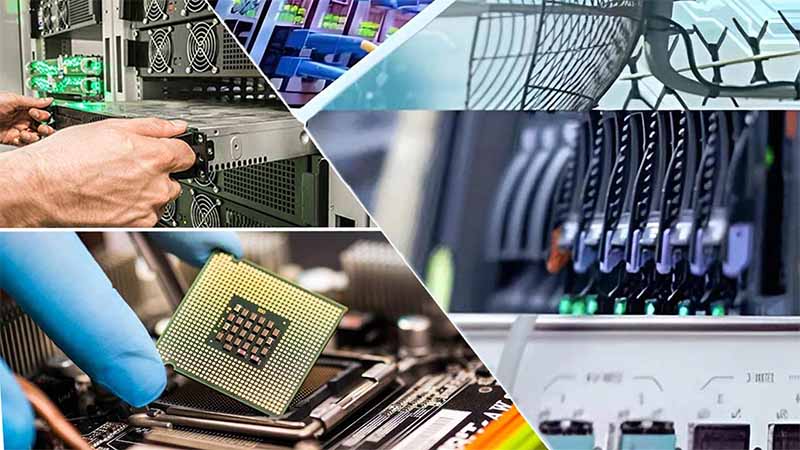
Communication refers to the process of transmitting, receiving, and processing data between two devices. A communication system consists of multiple interconnected components that work together to create a reliable link between the sender and the receiver. These systems rely on essential communication electronic components, such as transistors, capacitors, integrated circuits, and antennas, which form the foundation of devices responsible for signal transmission and reception. Working in coordination, these components enable a wide range of communication technologies, including radio, television, telecommunications, and high-speed data networks.
Digital Communication Systems
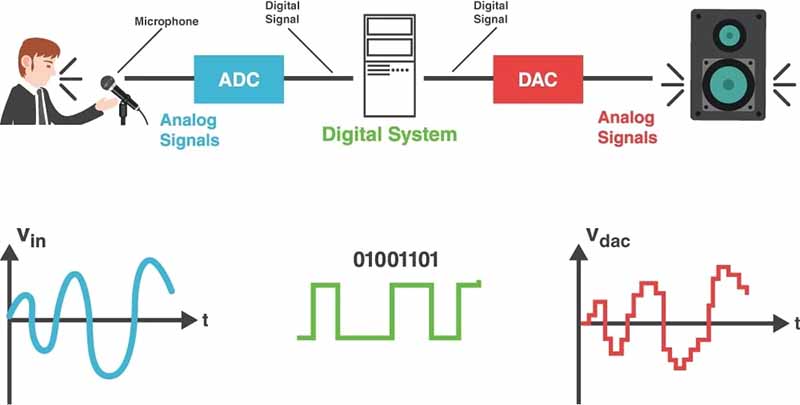
In modern communication networks, digital communication systems transmit information between transmitters and receivers using digital signals. Because digital signals are discrete and non-continuous, they are easier to process, store, and protect against interference, which makes digital communication the dominant approach in today's telecom applications.
Crystal Oscillator
To maintain precise timing, crystal oscillators generate highly stable clock signals that provide a unified operating rhythm for digital circuits and microcontrollers. This timing reference ensures synchronized and orderly operation throughout the entire system.
ADC (Analog-to-Digital Converter)
By converting continuously varying analog signals into discrete digital data, ADCs allow microcontrollers, DSPs, and other digital devices to perform efficient processing, computation, and storage.
DAC (Digital-to-Analog Converter)
Once digital processing is complete, DACs restore digital signals to continuous analog waveforms. These analog outputs are commonly used to drive speakers, displays, and other output devices, enabling the reproduction of sound, images, and visual data.
DSP (Digital Signal Processor)
Designed specifically for high-speed digital signal processing, DSPs handle complex mathematical operations with exceptional efficiency. As a result, they are widely applied in digital communication, speech coding, image recognition, filtering, and other computation-intensive tasks, far outperforming general-purpose microcontrollers in processing speed.
Analog Communication Systems
Unlike digital systems, analog communication systems rely on continuously varying signals to transmit information between transmitters and receivers. Such signals can directly represent sound, images, and other continuous data, which is why analog communication has long been used in traditional broadcasting and early telephone systems.
Operational Amplifier
Within analog circuits, operational amplifiers play a critical role in signal conditioning. They are commonly used for amplification, filtering, comparison, as well as arithmetic operations such as addition and subtraction.
Filter
To improve signal quality, filters are employed to select desired frequency bands while suppressing unwanted noise and interference. This function is essential for maintaining signal clarity in analog communication systems.
Modulator & Demodulator
For efficient wireless transmission, modulators shift low-frequency analog signals onto high-frequency carrier waves suitable for antenna radiation. On the receiving side, demodulators perform the reverse process, recovering the original analog information from the carrier signal.
Oscillator
Providing stable high-frequency carrier signals, oscillators serve as a fundamental building block in transmitter design and are indispensable for modulation and frequency generation.
The Basic Electronic Components for Communication
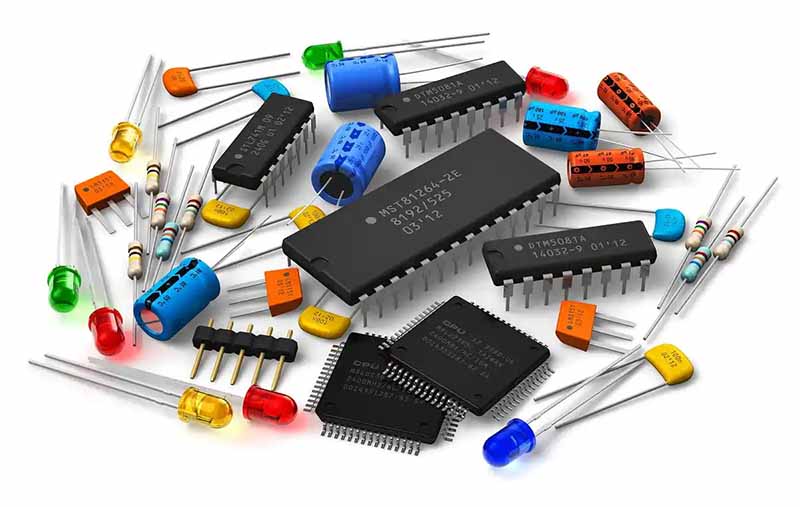
Each module within a communication system relies on specific electronic components to meet requirements such as signal accuracy, timing stability, bandwidth, and noise control. Understanding the role of these components at both the circuit and system levels is essential for building reliable telecom solutions. The following sections introduce communication electronic components and their functions and briefly explain how they contribute to the performance and functionality of communication systems.
Resistor
Resistors serve as fundamental current-limiting elements in circuits, controlling the flow of current while dividing voltage and protecting other components. Their presence ensures circuits operate safely and maintain stable performance.
Capacitor
Capacitors store and release electrical charge, making them ideal for filtering, blocking DC while allowing AC to pass, stabilizing power supply voltages, and reducing signal noise. These functions contribute directly to circuit reliability.
Inductor
Energy is stored in a magnetic field within inductors, which allow DC to pass while opposing AC. Commonly paired with capacitors in filter circuits, inductors help suppress interference, smooth currents, and stabilize signals.
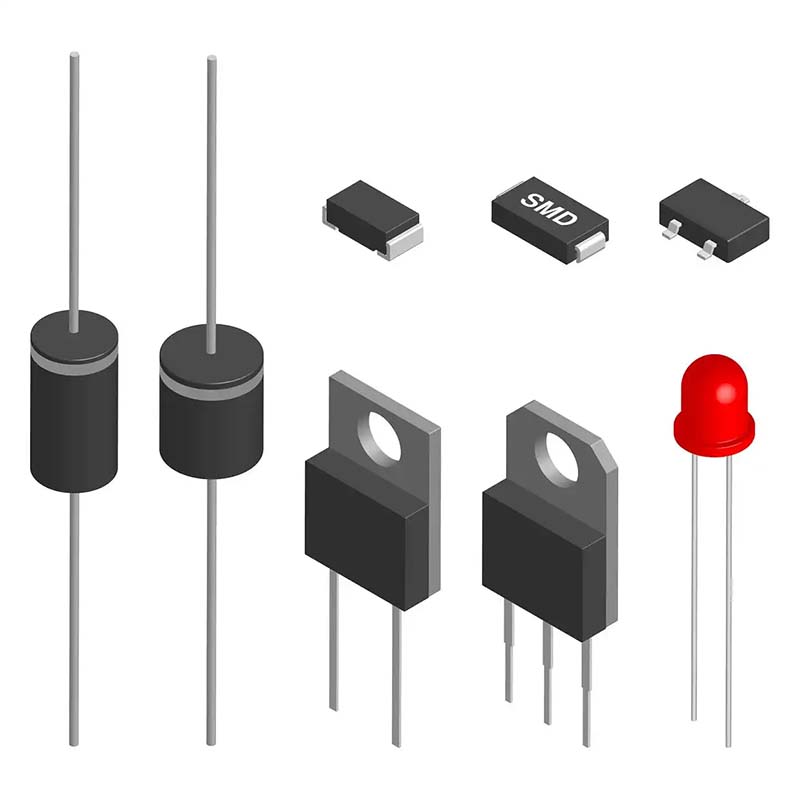
Designed to conduct current in a single direction, diodes are frequently employed for rectification, voltage regulation, signal detection, and protection against reverse power connections, safeguarding downstream circuits.
Transistor
Transistors act as controllable semiconductor devices capable of amplifying weak signals or switching at high speeds. They form a core component in both analog and digital circuits.
By integrating numerous transistors, resistors, capacitors, and other elements onto a single silicon chip, ICs perform complex operations such as computation, control, and storage. They serve as the heart of modern electronic devices.
Switch
Switches control the flow of current by connecting or disconnecting circuits. Manual or automatic operation enables devices to turn on or off or switch between different operating states.
Relay
Relays employ electromagnetic action to allow a small current or low-voltage circuit to control larger currents or high-voltage circuits. They provide isolation, protection, and automation, making them essential in communication and control systems.
RF Interference Filter
High-frequency noise and RF interference are suppressed using RF interference filters, ensuring signals remain clean and stable. These filters prevent external disturbances from compromising communication quality and are key anti-interference components in telecom equipment.
Terminal
Terminals facilitate electrical connections between wires, circuit boards, and external devices. They ensure reliable current and signal transfer while providing secure wiring, fixing, and conduction functions within circuits.
Electronic Components in Communication Applications
1. Optical Fiber Communication Systems
Optical fiber communication systems rely on the coordinated operation of various electronic components. In these systems, electronic components play key roles in receiving, converting, and protecting optical signals, ensuring the integrity and stability of signal transmission.
2. High-Speed Data Transmission Systems
High-performance electronic components enable efficient data transfer in high-speed transmission systems, ensuring both speed and accuracy. In high-frequency communication scenarios, these components facilitate the conversion between electrical and optical signals, minimizing signal attenuation and distortion. Their excellent anti-interference capabilities further reduce noise impact, significantly enhancing overall data transmission quality.
3. Laser Communication Systems
The transmission and reception of laser communication signals require high-precision optoelectronic conversion. Specialized electronic components perform this critical function by accurately converting laser signals into processable electrical signals, which can then undergo subsequent signal processing.
4. Industrial Communication & Automation
Electronic components are widely used in industrial automation, particularly within control systems, sensors, and various communication modules. In devices such as industrial robots, PLCs (Programmable Logic Controllers), and sensor modules, these components handle signal transmission and feedback, ensuring efficient coordination and precise communication between devices within automated systems.
5. Network Communication Equipment
Network devices like routers and switches serve as the central hubs of communication networks. Electronic components within these devices provide electrical isolation between circuits, protecting critical internal components from voltage fluctuations or current overloads. Additionally, they help improve data transmission stability and speed, optimize signal processing efficiency, and ensure reliable operation of network communication equipment.
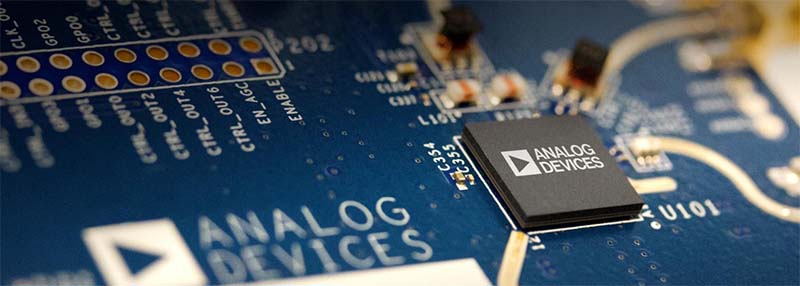
Electronic Components for 5G Communication Applications
The widespread adoption of 5G communication technology and its ability to drive industry transformation rely heavily on the support and reliability of various high-performance basic electronic components for communication.
In industrial IoT scenarios, 5G networks leverage ultra-low latency in the millisecond range and gigabit-level bandwidth to enable real-time coordination between industrial devices, high-speed data transmission, and precise remote control. All of these capabilities depend on the stable operation of specialized electronic components.
Within the healthcare sector, 5G technology integrates closely with cutting-edge innovations such as edge computing and network slicing. This combination overcomes spatial and temporal limitations, providing a solid technical foundation for remote consultations, intelligent diagnostics, and tele-guided surgeries, significantly enhancing accessibility and accuracy of medical services.
In popular 5G application areas such as smart transportation and smart cities, tasks ranging from rapid data transmission and stable signal reception to efficient device coordination rely heavily on the coordinated operation of resistors, capacitors, DSPs, RF interference filters, relays, terminals, and other essential electronic components.
You Professional Electronic Components Distributor for Communications Industry
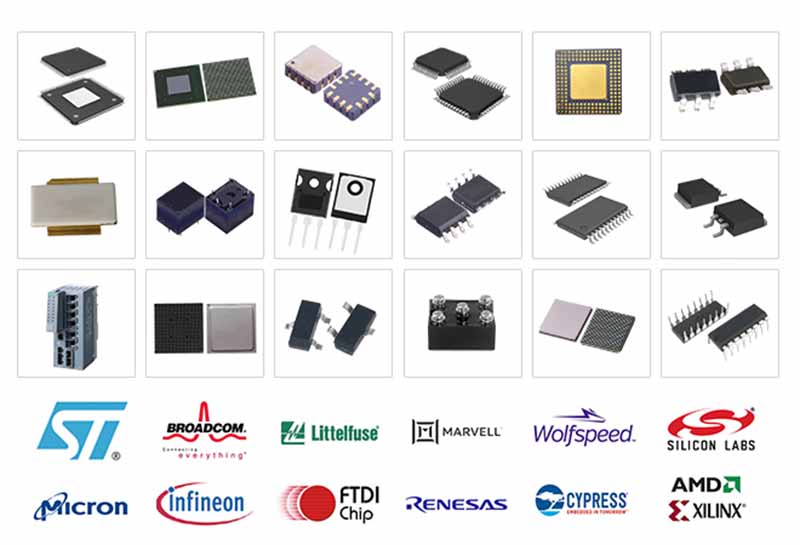
These electronic components have a wide range of applications, commonly used in IoT control, intelligent management systems, security, medical equipment, aerospace, telecommunications, and data communication. Eastech serves as your one-stop supplier for all electronic components and other hardware needs. With 20 years of experience in the component supply chain and a customer satisfaction rate exceeding 99%, we have proven our reliability and expertise.
Our website eastechic.com offers a convenient platform for component sourcing and price inquiries. You can search by brand name or manufacturer part number, add items to an inquiry list, and receive the most competitive quotes from us. We supply components from all major global manufacturers and provide a streamlined, user-friendly web portal that makes it easy to browse, select, and purchase parts. By sourcing from a trusted distributor, you can acquire a wide range of components in one place without the need to order separately from multiple manufacturers.
In summary, understanding the communication electronic components and their functions is essential for designing and maintaining reliable telecom systems. Whether in 5G networks, communication, industrial automation, or smart city applications, the proper selection and integration of these components ensure efficient data transmission, precise control, and uninterrupted operation. Engineers and system designers can contact us for selection and communication electronic component solutions.
Related information
- 2026.08.09 What Are Automotive Chips?
- 2026.07.19 What is GDDR Memory?

- 2026.05.05 What are Inertial Measurement Units?