

Available 24/7 at
+86 13632816717

What are Sensors used for?
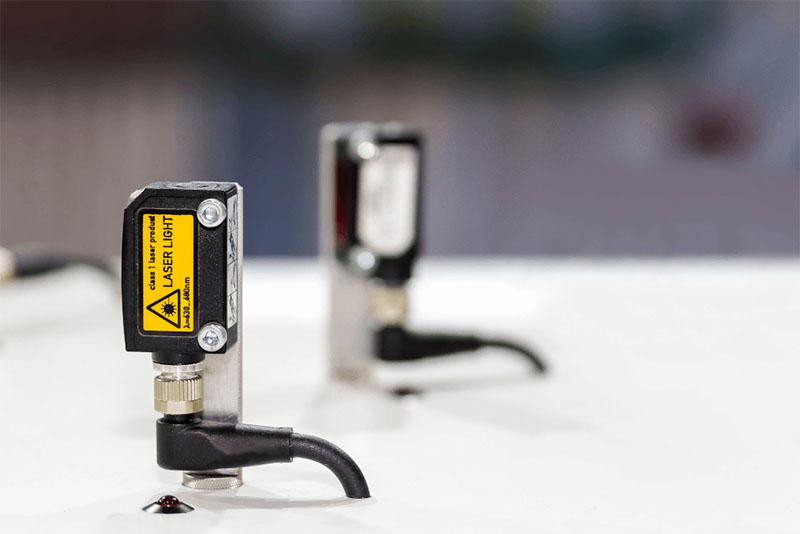
A sensor and transducer, is a device that detects physical information and converts it into electrical signals for transmission, processing, storage, display, and control. Its working principle is based on sensing elements that respond to physical quantities such as temperature, pressure, light, and displacement. These changes are transformed into electrical signals through internal circuits, producing usable output data. This basic understanding helps explain what are the different types of sensors and how they operate in modern technology.
How Does a Sensor Work?
- Detecting Physical Changes
A sensor uses its internal sensing elements to detect changes in the surrounding environment, such as temperature, pressure, light, displacement, or magnetic fields, enabling the initial collection of data.
- Converting Physical Quantities into Electrical Signals
Through material properties or physical effects-such as changes in resistance or voltage generation-the sensor converts non-electrical signals into measurable electrical signals, forming the foundation for system interpretation and processing.
- Signal Output and Processing
The converted signals are then amplified, filtered, or digitized before being transmitted to control systems or devices for analysis, enabling automatic control or data acquisition.
Different Types of Sensors and Their Applications
1. Temperature Sensors
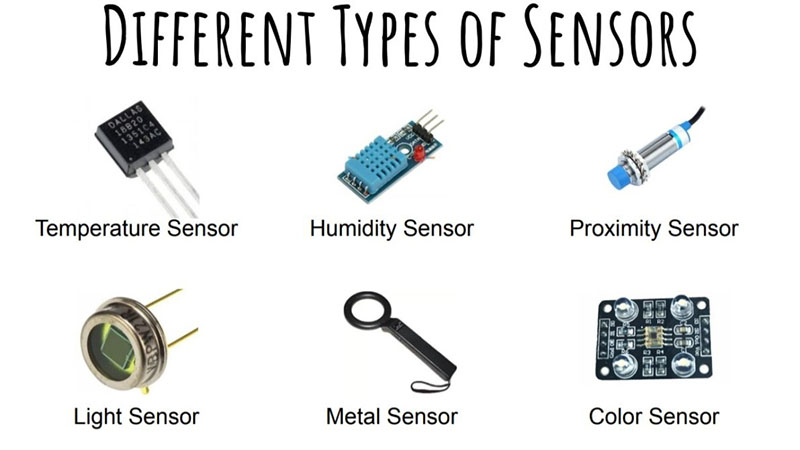
Temperature sensors detect changes in environmental or equipment temperature and convert thermal signals into electrical signals for monitoring and control. They typically operate based on changes in resistance, voltage, or current with temperature variations. These sensors are widely used in household appliances, industrial automation, automotive electronics, and medical equipment, serving as essential components for intelligent control and safety protection.
2. Pressure Sensors
Pressure sensors measure the pressure of gases or liquids and convert pressure variations into readable electrical signals. They work by detecting changes in resistance, capacitance, or deformation of sensing elements. They play a critical role in tire pressure monitoring, industrial hydraulic systems, smart manufacturing, and medical devices, making them key components in fluid control and safety monitoring systems.
3. Light Sensors
Light sensors detect light intensity, illumination changes, or specific wavelengths, converting optical signals into electrical outputs. Based on the photoelectric effect, they are commonly used in automatic brightness adjustment in smartphones, security monitoring systems, optical detection equipment, and smart lighting systems, playing an important role in intelligent terminals and automated devices.
4. Accelerometers and Gyroscope Sensors
Accelerometers and gyroscopes detect motion, orientation changes, and angular displacement. They are typically based on MEMS (Micro-Electro-Mechanical Systems) technology for high-precision measurement. These sensors are widely used in smartphones, drones, robots, wearable devices, and automotive systems, serving as core components for motion tracking, posture recognition, and stability control.
5. Humidity Sensors
Humidity sensors measure relative humidity or moisture content in the air and convert it into electrical signals. Their operation is usually based on changes in capacitance or resistance caused by moisture absorption in materials. They are widely applied in weather monitoring, air conditioning systems, agricultural environmental control, warehouse management, and smart home systems, contributing to environmental regulation and quality control.
6. Biosensors
Biosensors detect physiological signals or specific biochemical substances such as blood glucose, lactate, and heart rate. By combining biological recognition elements with signal conversion devices, they enable accurate monitoring of human health or biological samples. These sensors are essential in medical diagnostics, health management, wearable devices, and life science research, forming a key technological foundation for smart healthcare and remote health monitoring.
What are Sensors Used for?
Industrial Testing and Measurement Equipment
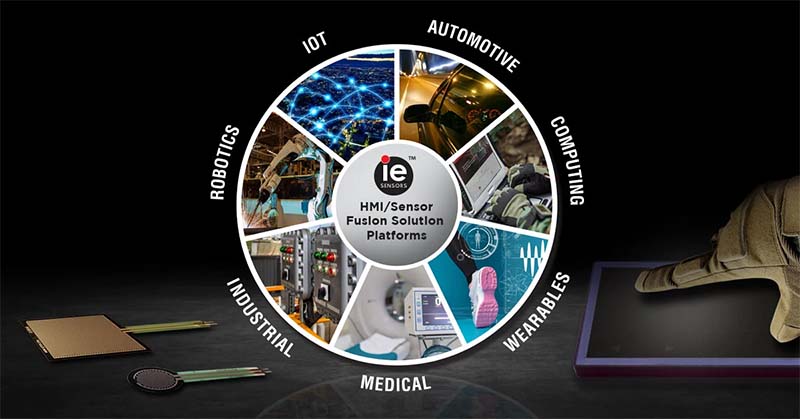
In industrial inspection and testing systems, electronic sensors are essential components for precise measurement and data acquisition. Applications such as temperature, pressure, gas concentration, and vibration monitoring rely on high-performance sensors working together with stable supporting electronic components, including ICs, capacitors, resistors, MCUs, and power management chips.
Smart Home Monitoring Devices
In environmental monitors, air quality detectors, smoke alarms, and other smart home devices, proper integration between sensor modules and peripheral components is critical. High-quality chips and passive components ensure accurate data collection and long-term stable operation.
Medical Testing Equipment
Medical devices require extremely high standards of stability, consistency, and reliability. Equipment such as pulse oximeters, thermometers, and blood glucose monitors depends on precision sensors and robust circuit design. We provide medical device manufacturers with compliant, stable, and traceable electronic components to meet strict quality and safety requirements.
Automotive Testing and Diagnostic Equipment
Automotive diagnostic tools, including OBD scanners, tire pressure monitoring devices, and engine testers, must operate reliably in complex electromagnetic and temperature environments. High-quality chips, power management components, and sensor modules are key to ensuring performance. EASTECH Electronics supports automotive equipment manufacturers with a stable supply chain to guarantee product performance and long-term reliability.
Agriculture and Environmental Monitoring Equipment
In agricultural and environmental monitoring systems, such as soil analyzers, weather stations, and water quality testing devices, the reliability of sensors and control modules directly affects data accuracy and system performance.
What are Sensors Used for in Robotics
In robotic systems, electronic sensors form the foundation for precise control and autonomous operation. They are primarily used to monitor the robot's internal status and external environment, providing real-time data to the control system to ensure stability, accuracy, and safety during movement.
Internal Sensors
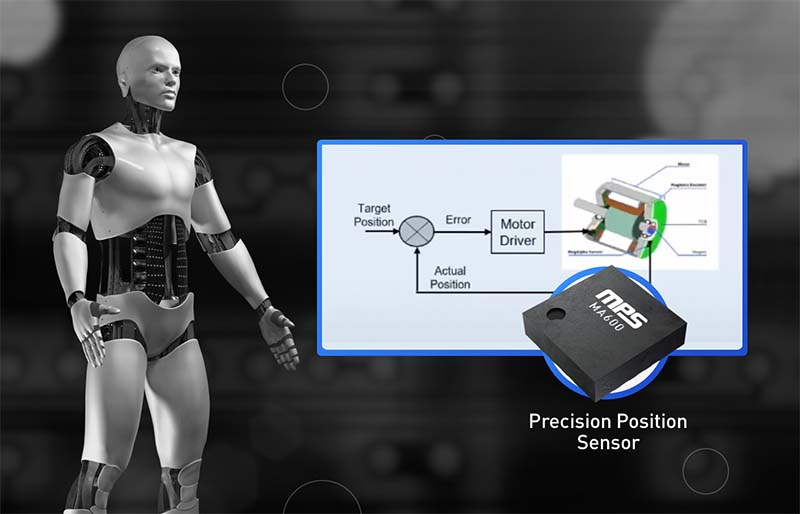
Internal sensors are used to monitor the robot's operational condition and enable closed-loop control.
- Gyroscopes measure angular velocity and directional changes in space, helping maintain posture stability and orientation control.
- Accelerometers detect acceleration along different axes, allowing the system to monitor motion, vibration, and tilt.
- Position Sensors (such as encoders or angle sensors) track joint or actuator movement, playing a critical role in precise positioning and repeatable motion control.
External Sensors
External sensors are used to perceive environmental information and target conditions, providing essential data for path planning, object recognition, and interaction decisions. They enable robots to better adapt to complex environments and achieve autonomous operation.
- Vision Sensors
Vision sensors capture environmental images or 3D spatial data, including 2D cameras and 3D vision systems. Through image processing and algorithm analysis, robots can perform object recognition, navigation, defect inspection, and grasping guidance. Vision systems are a core sensing unit for intelligent perception and autonomous decision-making.
- Force Sensors
Force sensors detect changes in force and torque when a robot interacts with its environment. The most common type is the six-axis force-torque sensor, which enables precise interaction control and safe operation.
- Tactile Sensors
Tactile sensors detect physical properties of objects, such as softness, hardness, and elasticity, allowing robots to better understand surface characteristics during handling tasks.
- Acoustic Sensors
Acoustic sensors collect sound signals for applications such as speech recognition, sound source localization, and environmental audio analysis.
- Distance Sensors
Distance sensors measure the distance between a robot and obstacles or target objects. Common technologies include ultrasonic, infrared, and laser ranging. Real-time distance data enables obstacle avoidance, path planning, and safety protection, making these sensors essential components of mobile robots and autonomous navigation systems.
Robot Sensor Market Growth
Currently, internal sensor technologies in intelligent robots are relatively mature, while external sensors still offer significant room for development and innovation.
Internal sensors are a core component of motion control and feedback systems, directly influencing positioning accuracy, dynamic response, and operational stability. With the growing demand for high-precision tasks and flexible control, higher performance standards are being set for position sensors, speed sensors, and various types of encoders.
External sensors, on the other hand, form the essential hardware foundation for environmental perception and intelligent interaction. They play a vital role in information acquisition and decision support. Vision, force, temperature, and tactile sensors continue to show strong potential in complex scenario recognition, human–robot collaboration, and advanced perception systems, making them a key direction for future performance improvement and competitive differentiation.
What Are the Different Types of Sensors in Iot?
Sensors in IoT applications typically perform three functions:
1. Information Collection
Using sensing elements in contact or non-contact modes, sensors capture real-time environmental parameters such as physical data (temperature, pressure, light), chemical data (gas concentration, pH levels), and biological signals (heart rate, motion status).
2. Signal Processing
The collected analog signals are converted into digital signals, enabling easier analysis, computation, and storage by backend systems or connected devices.
3. Data Transmission
Through wireless communication technologies such as WiFi, Bluetooth, and LoRa, or via wired connections, processed data is transmitted to cloud platforms or local terminals to support remote monitoring and intelligent control.
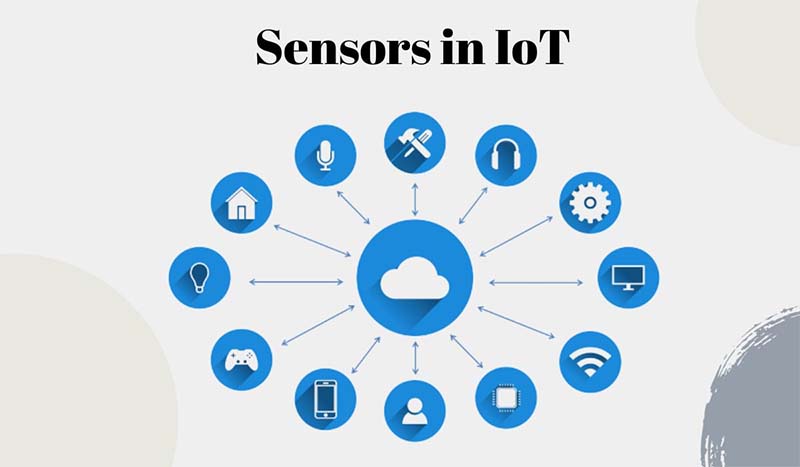
Sensors in Internet of Things(IoT)
1. Smart Home
Temperature and humidity sensors collect real-time environmental data and work with air conditioners, underfloor heating systems, and humidifiers to enable automatic adjustments. Light sensors and motion or presence sensors automatically control lighting brightness and switching, improving comfort and energy efficiency.
2. Industrial IoT (IIoT)
Vibration and temperature sensors monitor the operating status of motors, bearings, and machine tools in real time, enabling early fault warnings and preventing unexpected downtime. Pressure, flow, and level sensors ensure precise control of production parameters, optimize process workflows, stabilize product quality, and improve manufacturing efficiency. Image and vision sensors perform online defect inspection, enabling automated quality control while reducing labor costs and inspection errors.
3. Logistics and Monitoring
In warehousing and logistics, barcode and RFID sensors quickly scan cargo information, automatically recording origin, destination, and product details. Data is updated in real time and uploaded to the cloud, enabling full traceability. Vehicles equipped with positioning, temperature-humidity, and vibration sensors continuously monitor location, cargo conditions, and transport stability, ensuring the safety of cold-chain goods, valuables, and fragile items, while supporting visual logistics management.
4. Smart Cities
- Smart Transportation: Magnetic, radar, and video sensors monitor traffic flow, vehicle speed, and congestion in real time. Data is transmitted to traffic control centers to optimize signal timing, improve traffic flow, and enhance road efficiency.
- Smart Security: Cameras, infrared, and millimeter-wave sensors detect abnormal personnel, vehicles, and intrusion activities, triggering alarms and system integration to enhance public safety.
- Smart Environment and Municipal Management: Air quality, noise, and water level sensors monitor urban environmental indicators. Manhole covers, streetlights, and pipeline sensors track infrastructure status in real time, enabling intelligent inspections and rapid fault response.
Eastechic Electronics focuses on providing one-stop supply solutions for sensors and supporting electronic components. Our core products include various sensing elements, signal processing ICs, as well as connection and control components, primarily serving manufacturers of measurement instruments, testing equipment, industrial meters, and intelligent data acquisition terminals.
Based on customers' real-world applications in environmental monitoring, industrial inspection, smart data collection, and precision measurement, we deliver highly compatible and stable sensor component solutions. Our products help instrument manufacturers achieve more accurate data acquisition, reliable signal conversion, and seamless device connectivity, providing strong hardware support for IoT terminal products.
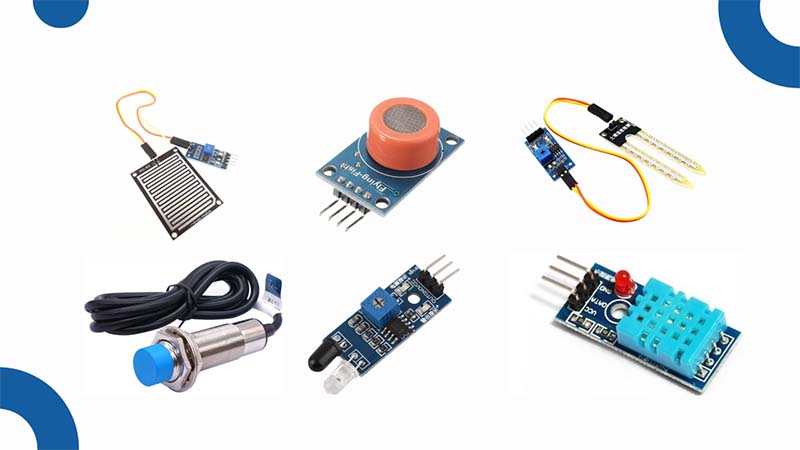
The Bottom Line:
As connected technologies continue to evolve, sensors are becoming more intelligent, integrated, and energy-efficient, driving innovation across automation and data-driven systems. For electronics manufacturers and device developers, selecting the right components is essential to ensuring performance, stability, and long-term reliability. Understanding of what are the different types of sensors in iot helps businesses make better sourcing decisions, optimize product design, and build scalable IoT solutions with high-quality, dependable electronic components.
Related information
- 2026.08.09 What Are Automotive Chips?
- 2026.07.19 What is GDDR Memory?
- 2026.05.05 What are Inertial Measurement Units?