

Available 24/7 at
+86 13632816717

What is the Active and Passive Electronic Components?
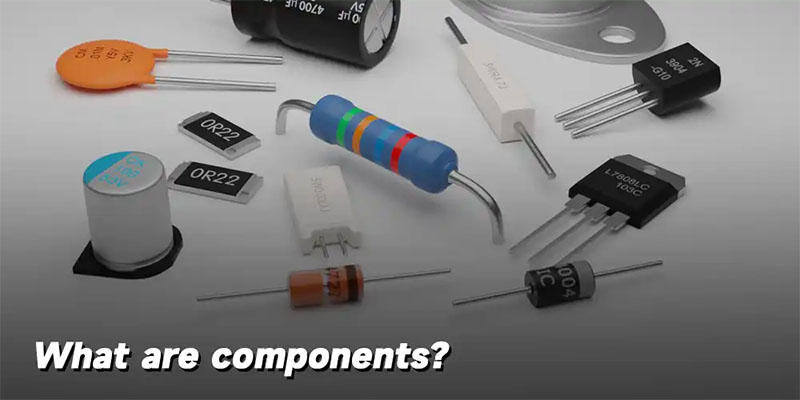
What are active and passive electronic components? Electronic components are the fundamental building units of various circuit systems. According to how they process electrical energy, they can be divided into two main categories: active components and passive components. The key difference between the two lies in whether they can actively control electrical energy: active components can actively regulate input electrical energy by amplifying signals, rectifying current, and converting energy forms, while passive components only passively perform energy consumption, storage, and release functions. Although their roles are different, they work together to form a complete electronic circuit system.
What Are Active Components in Circuits?
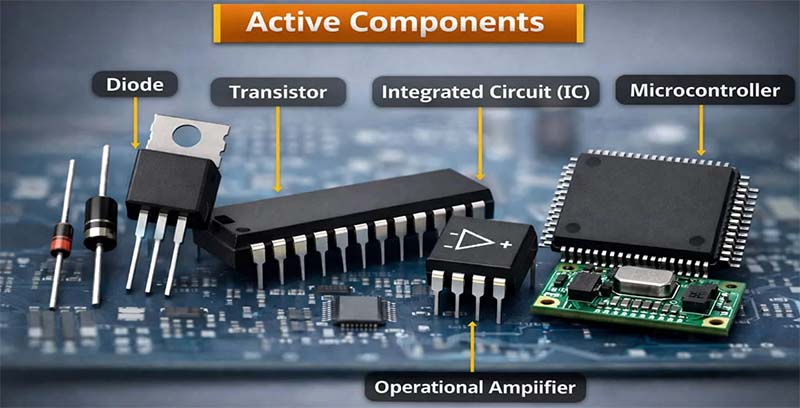
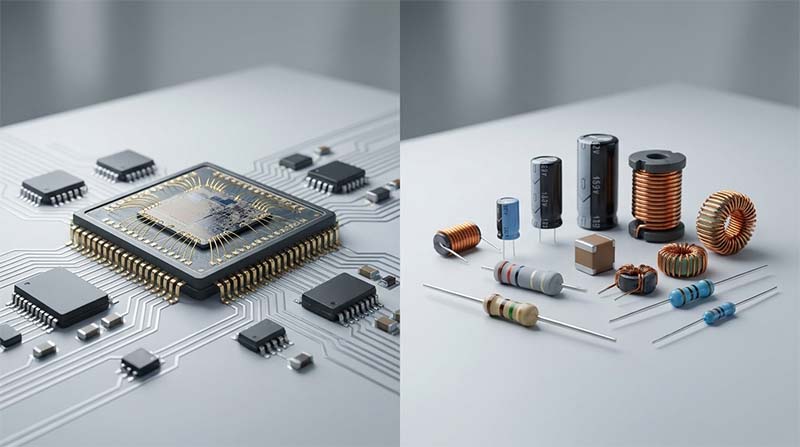
Active components are devices that require an external power source to operate and can control, amplify, or generate electrical signals. They are capable of providing power gain within a circuit and are essential for functions such as signal amplification, switching, and processing. Common examples include transistors, integrated circuits (ICs), diodes, and operational amplifiers.
Integrated Circuit (IC): ICs perform core functions such as signal processing, computation, timing control, and power management. Based on application, they can be classified into analog ICs, digital ICs, and mixed-signal ICs. Chips are the fundamental building blocks of modern electronic systems, enabling high performance, low power consumption, and compact circuit design.
Diode: Conduct electricity in only one direction, widely used for rectification and circuit protection.
Transistor: Key amplification and switching unit, controls large output current via tiny input signals.
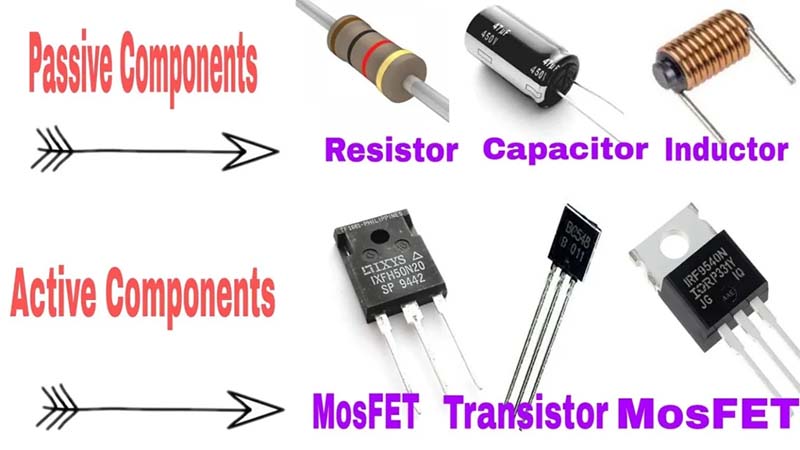
MOSFET & JFET: Both belong to field-effect transistors (FET), a major branch of transistor family. JFET uses junction control to adjust channel current while MOSFET relies on insulated gate voltage to regulate conduction. They serve as high-efficiency switches and signal amplifiers widely in power circuits and analog circuits.
Thyristor: High-power switching component for AC rectification and industrial voltage regulation.
Optoelectronic devices (LED, photo-transistor): Convert between electrical energy and light energy under powered conditions.
What Are Passive Components in Circuits?
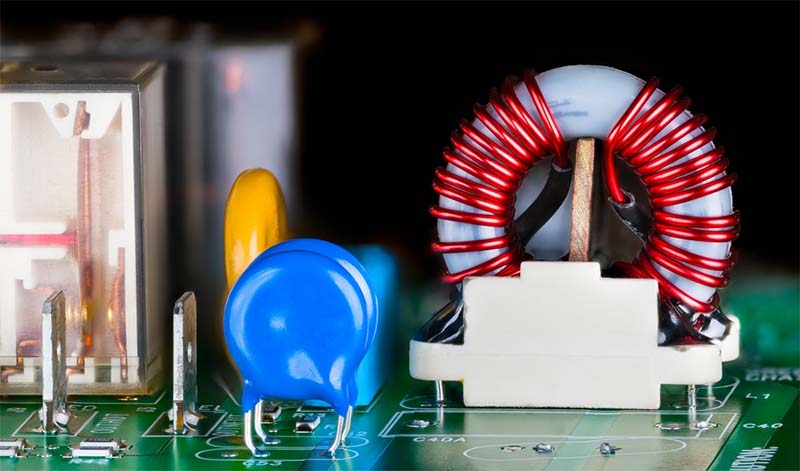
Passive components, do not require an external power source for their basic operation and cannot amplify signals. Instead, they store, transfer, filter, or dissipate electrical energy within a circuit. Typical passive components include resistors, capacitors, inductors, and transformers.
Resistor: One of the most fundamental passive components. It mainly resists and limits the flow of electric current in a circuit, reduces voltage, and consumes excess electrical energy in the form of heat. It is widely used for current limiting, voltage division, and circuit load matching to protect precision electronic devices from over-current damage.
Capacitor: A core energy-storing passive component that can store electrical charge when the circuit is powered on and release stored energy when the voltage drops. It is commonly applied for filtering out signal noise, stabilizing circuit voltage, coupling AC signals, and blocking DC signals, effectively improving the stability and anti-interference ability of electronic circuits.
Inductor: A magnetic energy-storing component made of coiled wire. It resists sudden changes in current in the circuit, can store energy in a magnetic field during current conduction and release it when the current changes. It is extensively used for current filtering, electromagnetic interference suppression, voltage regulation, and signal oscillation in power supply and communication circuits.
Transformer: A passive electromagnetic component composed of primary and secondary coils. It realizes electrical energy transmission and voltage conversion through electromagnetic induction without changing the frequency of the AC signal. It is mainly used for step-up and step-down voltage transformation, electrical isolation, and power transmission in power systems and various electronic equipment.
Thermistor: A temperature-sensitive passive resistor whose resistance value changes significantly with ambient temperature. It can perceive temperature variations in the operating environment and is often used for temperature detection, over-temperature protection, and temperature compensation in intelligent electronic devices and industrial control circuits.
Both active and passive electronic components are fundamental building blocks of electronic systems. Active components perform control and signal-processing functions, while passive components support circuit operation by managing voltage, current, energy storage, and filtering.
Are sensors active or passive electronic components?
Sensors are divided into passive sensors and active sensors instead of falling into a single category.
Passive sensors: No extra power supply needed; they directly generate electrical signals from external physical changes.
Example: Thermistor, piezoelectric sensor. They rely entirely on external stimulus to produce electric output and belong to passive components.
Active sensors: Require an auxiliary working power source to operate and convert measured physical quantities into usable electrical signals.
Example: temperature transmitter, photoelectric sensor with built-in amplifier. Since they need external power to process signals, these are classified as active electronic components.
In short, sensor is a functional module rather than fixed active/passive part, which is determined by whether it needs independent external power to output valid signals.
This Components are Active or Passive?
|
Active components |
Passive components (non-active components) |
|
Diode |
Resistor |
|
Transistor |
Capacitor |
|
Integrated Circuit (IC) |
Inductor |
|
Thyristor |
Transformer |
|
Optoelectronic devices (LEDs, phototransistors, etc.) |
Thermistor |
|
Junction Field-Effect Transistor (JFET) |
Passive sensors (such as piezoelectric sensors, thermistor-type temperature sensors, etc.) |
|
Metal-Oxide-Semiconductor Field-Effect Transistor (MOSFET) |
|
|
Active sensors (e.g., integrated temperature transmitters, amplified photoelectric sensors, etc.) |
|
While both active components and passive components are essential to the operation of electronic circuits, they perform fundamentally different functions. Active components require an external power source and can amplify, switch, or control electrical signals, whereas passive components do not provide gain and primarily store, transfer, or dissipate energy.
Active and Passive Components in Electronics
Roles of Active Components in Circuits
- Signal control and power amplification: Relying on an external power supply, active components amplify weak input signals in magnitude, converting small signals into high-power signals. They serve as the core elements for functions such as amplification circuits and RF transceiver systems.
- Circuit switching control: Using a small voltage or current to drive themselves into conduction or cutoff states, they act as electronic switches to enable circuit start/stop control and timing transitions, forming the foundation of digital logic circuits.
- Electrical energy conversion: They perform AC/DC conversion and voltage step-up or step-down regulation. Working with external circuitry, they enable rectification, voltage stabilization, and inversion, determining the output characteristics of power supply and driving circuits.
Roles of Passive Components in Circuits
- Voltage stabilization and current limiting: They provide appropriate bias voltages for active devices and limit circuit current, preventing over-current damage and ensuring components operate within rated conditions.
- Noise and interference filtering: They filter power supply ripple and high-frequency noise, clean power and transmission signals, and reduce distortion caused by amplification noise in active devices.
- Energy storage and delay shaping: They temporarily store electric and magnetic field energy, forming RC and LC networks to achieve signal delay, waveform shaping, and resonant frequency selection, optimizing signal transmission quality.
- Impedance matching and isolation: They adjust circuit impedance for proper matching between stages, block AC/DC components where needed, and reduce signal reflection and transmission loss.
What are the Difference Between Active and Passive Electronic Components
Active components serve as the core control unit of circuits, which amplify signals, switch current and convert electric energy with external power supply. Passive parts act as auxiliary conditioning units to shape operating conditions for active devices.
Active elements change the magnitude or on-off state of electrical signals, yet their unstable output contains clutter, voltage fluctuation and excessive current. Passive components then adjust voltage, restrict current, filter stray interference and store transient energy to stabilize the working environment for active chips.
In practical applications: active devices determine the circuit's core functions like amplification, logic operation or power conversion; passives calibrate operating bias, smooth power supply and match impedance. Without passives, active components face over-current damage, signal distortion and frequency offset; without active components, passive combinations cannot accomplish signal gain or electric power regulation. The two coordinate to turn raw input electricity into qualified target output signals.
|
Active Components |
Passive Components |
|
Require external power or input signals for normal operation and can actively control energy flow |
Operate without external power supply and only passively respond to input signals |
|
Capable of active signal processing including amplification, modulation and switching |
Only perform passive processing such as signal attenuation, filtering and delay; cannot amplify signals |
|
Typical devices: BJT, MOSFET, operational amplifier, MCU, LED |
Typical devices: resistor, capacitor, inductor, diode, transformer, crystal oscillator |
|
Function for circuit control, amplification, driving and signal processing |
Function for current limiting, filtering, energy storage, voltage division and impedance matching |
|
Change operating status and output characteristics via control signals |
Fixed inherent characteristics; vary passively with input signals without active regulation capability |
|
Generate power dissipation and many produce noticeable heat |
Minimal power loss with negligible heat generation |
Active Components in Modern Electronic Systems
They enable logical computation and data processing by relying on transistors and various integrated circuits to build computing cores that perform signal operations, logical decisions, and data interpretation.
They manage power supply output by using power management chips and voltage regulation active devices to dynamically adjust voltage and current, optimize power distribution, and stabilize power delivery levels.
They control current direction and signal routing by using diodes and power transistors to define current flow direction, regulate circuit switching, and enable signal switching as well as reverse-current protection.
They support embedded intelligent driving functions, acting as core processing units in embedded systems to interface with peripheral circuits, enabling sensor signal acquisition and actuator control.
Applications of Active Components in Electronics Systems
1. Consumer electronics
Main control chips in smartphones, smartwatches, and Bluetooth earphones rely on active components for system-level computation. PMIC power chips manage battery charging and discharging voltage. On-board diodes prevent reverse charging current, while MOSFETs control power switching for screens and speakers. Embedded system chips interface with touch and heart-rate sensors, and drive vibration motors and audio output units.
2. Industrial control systems
PLC controllers rely on active components to perform programmable logic operations. Dedicated voltage regulator ICs provide stable power to transmitters and servo controllers. Power semiconductors control the switching of electromagnetic valves and contactor circuits. Embedded control boards collect temperature and pressure sensor data and drive inverters and production line actuators for start/stop operations.
3. Medical instruments
ECG and ultrasound equipment use specialized signal processing chips to interpret bioelectrical signals. Medical-grade voltage regulation active modules ensure stable power supply for precision diagnostic units. Switching active components are used to route multi-channel acquisition signals. Infusion pumps and ventilators use embedded chips to collect flow and pressure data and drive pumps and valves in real time.
4. Electric vehicles and autonomous driving systems
Vehicle control unit (VCU) and MCU chips compute vehicle status and battery parameters. BMS power management active components distribute high-voltage power and control battery cell charging and discharging. Power transistors and rectifier devices prevent high-voltage reverse current and control motor circuit switching. Onboard embedded controllers receive radar and vision sensor data and drive braking and steering actuators.
The Best Active and Passive Electronic Components Supplier
The stability of PCB hardware, embedded systems, industrial automation, and consumer electronics largely depends on component quality and supply chain reliability. As a professional semiconductor and electronic components distributor, Eastech focuses on providing reliable, original components for hardware R&D and mass production.
We understand that electronic circuits are built through the coordinated operation of active and passive components. Active components are responsible for logic computation, signal control, power regulation, and system driving, forming the functional core of electronic products. Passive components handle voltage stabilization, filtering, current limiting, and signal optimization, ensuring stable circuit operation. Eastech carefully selects all materials to guarantee your electronic system performance and high reliability.
Eastech distributes a wide range of products, includes integrated circuits, memory chips, memory modules, converters, transistors, diodes, bipolar transistors, power modules, and other active semiconductor devices, as well as a full range of passive components and related non-electronic supporting materials, enabling one-stop procurement.
To address common industry challenges such as material shortages and end-of-life (EOL) components, we provide stable inventory support and alternative sourcing solutions, effectively reducing supply disruption risks and ensuring continuous, stable R&D and production for our customers.
Final word, understanding active and passive components in electronics provides a foundation for designing and analyzing modern electronic systems. In practical applications, these components are not used in isolation but are combined to achieve signal processing, power regulation, communication, and control functions across complex circuits. From consumer electronics to industrial systems, their coordinated use enables higher efficiency, stability, and functionality in increasingly compact and intelligent designs.
Related information
- 2026.09.20 What is Ceramic Packaging Chip?
- 2026.09.13 What is SMD Resistor?
- 2026.09.06 What is Bus Interface IC?
- 2026.08.30 How to Select Supercapacitor?