

Available 24/7 at
+86 13632816717

What is High Bandwidth Memory?
As AI model training, real-time inference, advanced graphics, and scientific simulations become increasingly complex, computing systems must process larger datasets at much higher speeds. Today, performance depends not only on processing power but also on how quickly data can be accessed and transferred. This growing demand has made High Bandwidth Memory technology, delivering the high memory bandwidth and efficiency needed to eliminate data bottlenecks and support next-generation AI and high-performance computing workloads.
What is High Bandwidth Memory?
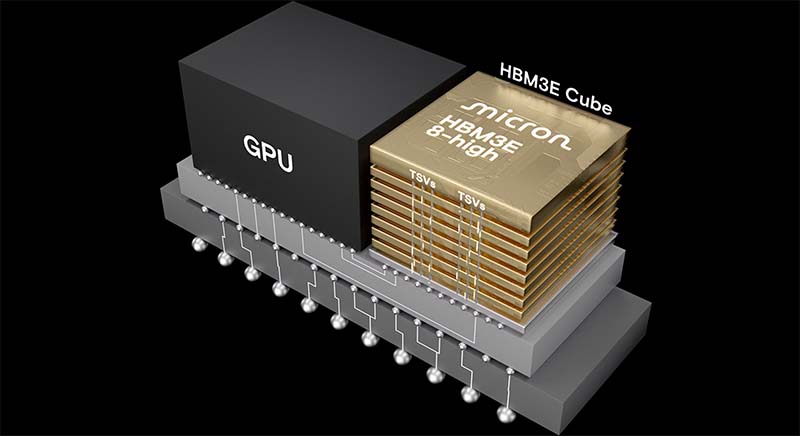
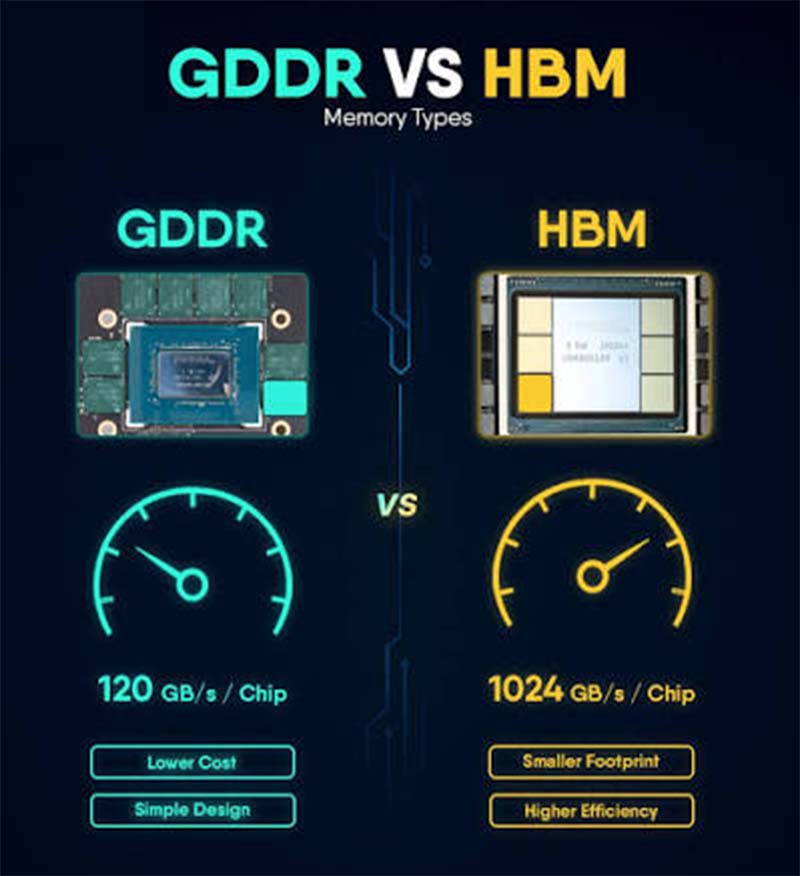
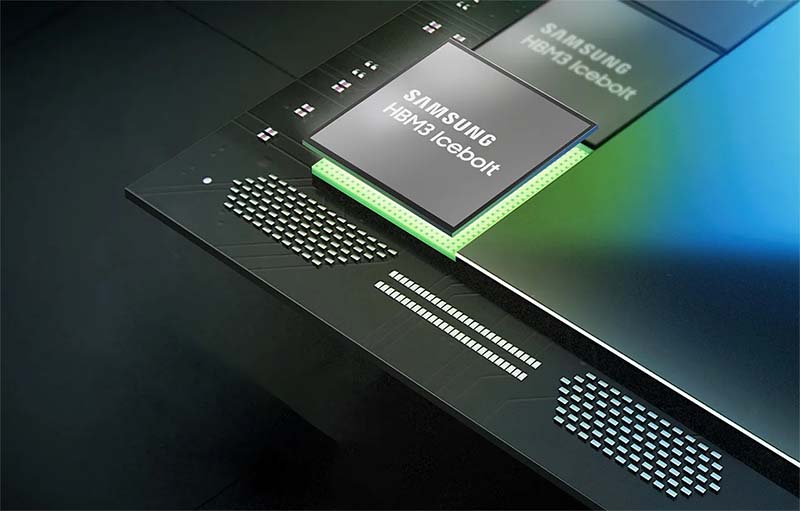
High Bandwidth Memory (HBM) is an advanced memory technology designed to deliver significantly higher data transfer speeds and greater bandwidth than traditional memory such as GDDR. By stacking multiple DRAM dies vertically and connecting them with Through-Silicon Vias (TSVs), HBM provides exceptional performance while consuming less power and requiring a smaller footprint.
Unlike conventional memory placed around the processor, HBM is mounted close to the GPU or processor on the same package and connected through a silicon interposer. This design shortens signal paths, increases memory bandwidth, and improves energy efficiency, making it ideal for data-intensive workloads.
Is Higher Memory Bandwidth Better?
Yes, higher memory bandwidth is generally better, especially for workloads that need to move large amounts of data between memory and the processor. Memory bandwidth refers to the amount of data that can be transferred between memory and the CPU, GPU, or AI accelerator each second. Higher bandwidth allows processors to access data more quickly, reducing bottlenecks and improving overall system performance.
Advantages of Higher Bandwidth Memory
Exceptional Memory Bandwidth
HBM delivers significantly higher bandwidth than traditional memory technologies, enabling processors to transfer large volumes of data more efficiently.
Lower Power Consumption
Thanks to its 3D-stacked architecture and shorter data paths, HBM provides more bandwidth per watt, reducing overall system power usage.
Compact Form Factor
Multiple DRAM dies are stacked vertically, allowing HBM to achieve high capacity while occupying much less board space than conventional memory.
Reduced Latency
Located close to the processor and connected through a silicon interposer, HBM minimizes signal travel distance, helping reduce memory access latency.
Improved AI and HPC Performance
HBM eliminates memory bottlenecks, allowing GPUs and AI accelerators to maintain higher utilization during AI training, inference, and scientific computing workloads.
Enhanced Scalability
Newer generations such as HBM3 and HBM3E offer increased bandwidth and capacity, supporting larger AI models and more demanding data-intensive applications.
Higher Memory Bandwidth Type
|
|
HBM |
HBM2/HBM2E |
HBM3/HBM3E |
HBM4/HBM4E |
GDDR |
DDR5 |
|
Max Pin Transfer Rate |
1Gbps |
3.6Gbps |
Up to 9.6Gbps |
Up to 16Gbps |
Up to 20Gbps |
Up to 8.8Gbps |
|
Max Capacity |
16Gbps |
Up to 36Gbps |
Up to 64Gbps |
Up to 64Gbps |
Up to 16Gbps |
Up to 64Gbps |
|
Max Bandwidth |
128Gbps |
461Gbps |
1229Gbps+ |
4096Gbps+ |
Up to 800Gbps |
120Gbps |
|
Applications |
High-end GPUs, AI accelerators |
Graphics cards, some AI inference |
General computing, servers |
|||
What Does High Bandwidth Memory Do for AI?
In artificial intelligence (AI), High Bandwidth Memory (HBM) plays a critical role by providing the massive memory bandwidth needed to keep AI processors supplied with data. Instead of increasing computing power alone, HBM helps eliminate memory bottlenecks, allowing GPUs and AI accelerators to process large AI models more efficiently.
Accelerates AI training:
Large language models (LLMs) and deep learning networks require constant access to enormous datasets. HBM delivers high-speed data transfer, reducing idle time for GPUs and shortening training times.
Improves AI inference:
During real-time inference, HBM enables AI accelerators to quickly retrieve model parameters and input data, resulting in faster response times and lower latency.
Handles larger AI models:
Modern AI models contain billions of parameters that require substantial memory capacity and bandwidth. HBM allows processors to efficiently manage these large models without becoming limited by memory performance.
Increases parallel processing efficiency:
AI workloads rely on thousands of GPU cores working simultaneously. HBM provides sufficient bandwidth to feed these cores with data, maximizing hardware utilization.
Reduces power consumption:
Compared with traditional memory technologies, HBM delivers more bandwidth per watt, making AI servers and data centers more energy efficient.
As AI models continue to grow in size and complexity, HBM has become a key technology in modern AI hardware. It is widely integrated into high-performance GPUs and AI accelerators used for generative AI, large language models, computer vision, autonomous driving, and scientific computing.
What is High Bandwidth Memory Used For?
High Bandwidth Memory (HBM) is primarily used in applications that require extremely fast data transfer and high computing performance. By providing significantly higher memory bandwidth than traditional DRAM and GDDR memory, HBM helps processors handle massive amounts of data with lower power consumption and reduced latency.
Applications of High Bandwidth Memory
Artificial Intelligence (AI): Accelerates AI training and inference by supplying GPUs and AI accelerators with the bandwidth needed to process large language models (LLMs), deep learning algorithms, and generative AI workloads.
High-Performance Computing (HPC): Supports complex scientific simulations, weather forecasting, molecular modeling, and engineering analysis that require rapid access to large datasets.
Data Centers and Cloud Computing: Improves the performance of AI servers, cloud infrastructure, and large-scale computing platforms by enabling faster data processing.
Professional Graphics and Visualization: Powers advanced graphics cards used for 3D rendering, CAD, animation, virtual production, and visual effects, where large graphics datasets must be processed efficiently.
Super-computing: Delivers the memory bandwidth required by the world's fastest supercomputers for research, national security, and advanced scientific applications.
Networking and Telecommunications: Enhances the performance of high-speed networking equipment, data processing units (DPUs), and next-generation communication infrastructure.
HBM is commonly integrated into high-end GPUs, AI accelerators, and advanced processors from leading manufacturers.
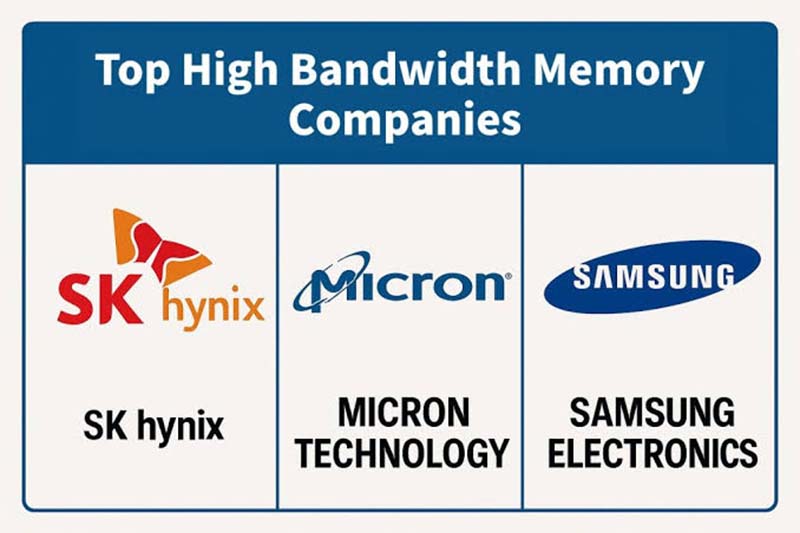
Leading HBM Manufacturers
The High Bandwidth Memory (HBM) market is dominated by three global memory leaders: SK hynix, Samsung Electronics, and Micron Technology. Together, they supply the majority of the world's DRAM and NAND flash memory, serving industries ranging from consumer electronics and enterprise storage to cloud computing and automotive systems.
As demand for AI computing continues to accelerate, these companies have expanded their portfolios beyond conventional memory to include advanced High Bandwidth Memory (HBM) solutions. Their latest HBM products are designed to deliver the high bandwidth, low latency, and power efficiency required by AI accelerators, data center GPUs, and high-performance computing (HPC) platforms, making them key suppliers in the rapidly growing AI infrastructure market.
We are a trusted global distributor of electronic components, specializing in integrated circuits, memory chips, storage devices, and professional computing hardware. With extensive industry experience and a reliable global supply network, we provide authentic products, competitive pricing, and responsive technical support to customers across a wide range of industries.
Our product includes DRAM, NAND Flash, SSDs, GPUs, processors, electronic components, and advanced memory solutions such as high bandwidth memory module products for AI, high-performance computing (HPC), data centers, and enterprise applications. We work with global leading manufacturers to help customers source both current-generation and hard-to-find components efficiently.
Final word, high bandwidth memory technology has become a core enabler of modern AI, high-performance computing, and data-intensive workloads. By significantly increasing data transfer rates and reducing latency, it delivers the performance required by today's most demanding applications. With leading semiconductor companies increasingly integrating HBM into advanced GPUs and accelerators, the high bandwidth memory module is no longer just an innovation-it is a foundational component driving the future of computing performance.
Related information
- 2026.09.20 What is Ceramic Packaging Chip?
- 2026.09.13 What is SMD Resistor?
- 2026.09.06 What is Bus Interface IC?

- 2026.08.30 How to Select Supercapacitor?