

Available 24/7 at
+86 13632816717

What is an RFID Chip?
With the rapid growth of automation and smart identification systems, RFID technology has become an essential part of modern electronics. But what does the RFID chip do? An RFID chip enables wireless identification and data exchange by storing and transmitting information through radio frequency signals, allowing objects and assets to be tracked efficiently without physical contact.
What is an RFID chip?
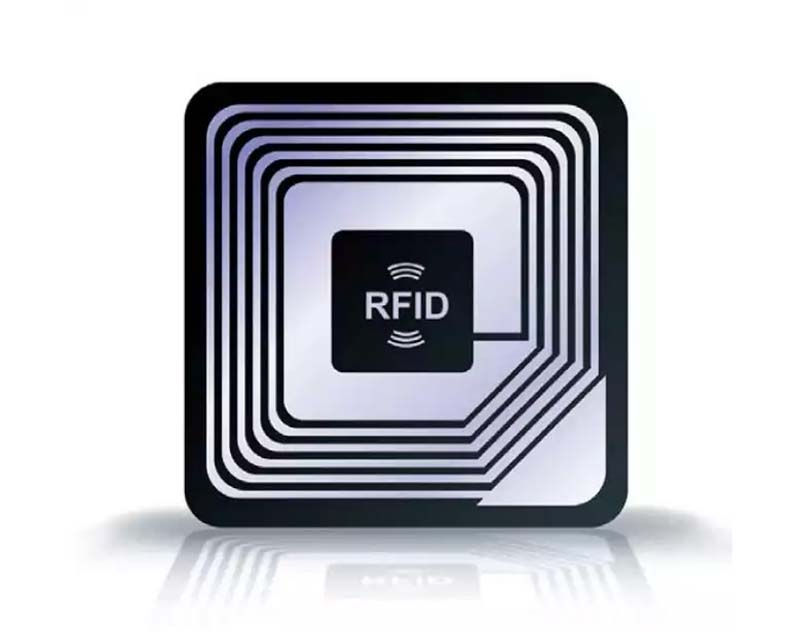
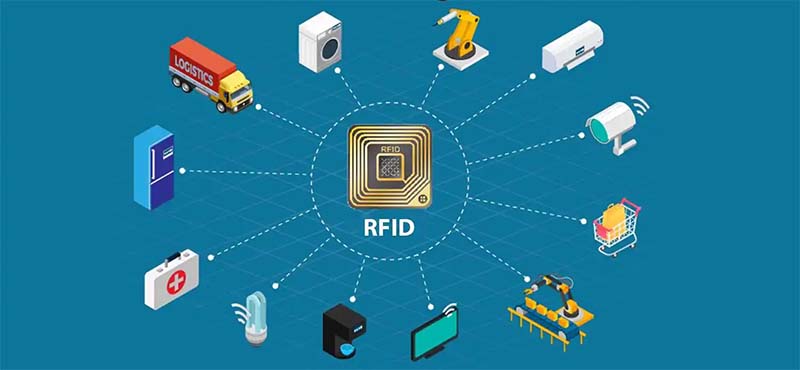
An RFID chip is a small electronic integrated circuit used in radio frequency identification systems to store and transmit data wireless. RFID chips are the integrated circuits (ICs) found inside RFID tags or labels. They work together with an antenna to communicate with RFID readers through radio waves, enabling automatic identification, tracking, and data collection without physical contact. RFID chips are widely used in inventory management, access control, logistics, retail, healthcare, and smart manufacturing applications due to their efficiency, durability, and ability to support real-time tracking.
How RFID Systems Work?
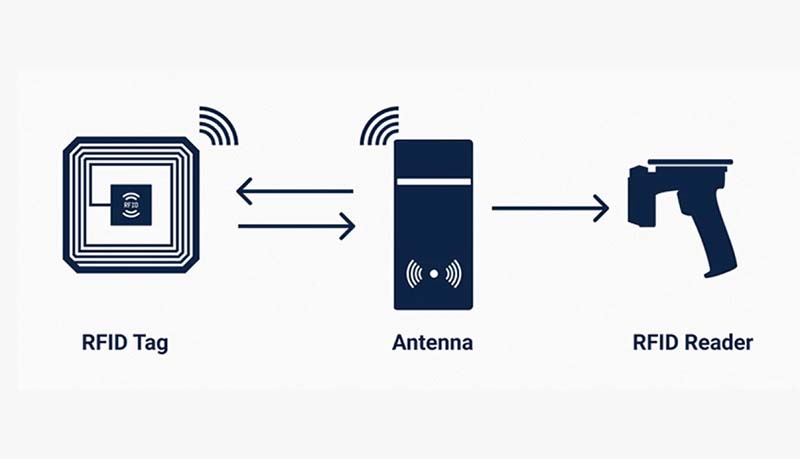
An RFID tag is a tracking system that uses smart barcode technology to identify objects. RFID stands for Radio Frequency Identification, and RFID tags operate using radio frequency technology. These radio waves transmit data from the tag to a reader, which then sends the information to an RFID computer system.
RFID works by using radio waves to automatically identify and exchange data between an RFID tag and an RFID reader without direct contact. An RFID system mainly consists of three parts: an RFID chip, an antenna, and an RFID reader. The RFID chip stores digital information, while the antenna enables wireless communication.
When the RFID reader emits a radio frequency signal, the antenna inside the RFID tag receives the signal and activates the RFID chip. The chip then sends back the stored data, such as a product ID, serial number, or tracking information, to the reader. The reader processes this information and transfers it to a computer system for monitoring, identification, or data analysis.
What is RFID Tags
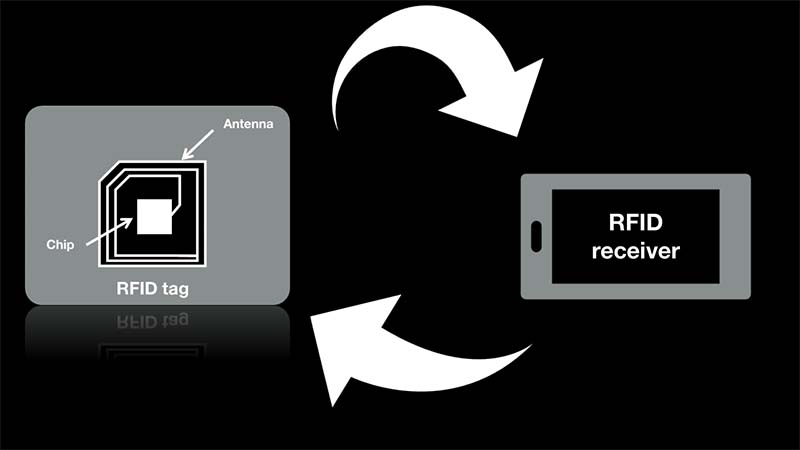
RFID tags are responsible for storing and transmitting data in an RFID system. Each tag contains an RFID chip and an antenna. When the tag enters the electromagnetic field generated by an RFID reader, it receives energy or a communication signal from the reader. The RFID chip then activates and sends the stored information, such as a product ID, serial number, or tracking data, back to the reader through radio waves. Depending on the type of tag, RFID tags can be read-only, read/write, passive, active, or semi-passive, allowing them to support identification, tracking, authentication, and inventory management applications.
What is RFID Reader
RFID readers are devices that communicate with RFID tags to collect and process data. The reader generates radio frequency signals through its antenna to detect nearby RFID tags. Once a tag responds, the reader receives the transmitted data, decodes the information, and sends it to a computer system or database for further processing. RFID readers can also perform functions such as tag authentication, data writing, filtering duplicate reads, and managing communication with multiple tags simultaneously. They are widely used in logistics, warehouse management, retail, access control, and industrial automation systems.
What are the Three Types of RFID Frequencies?
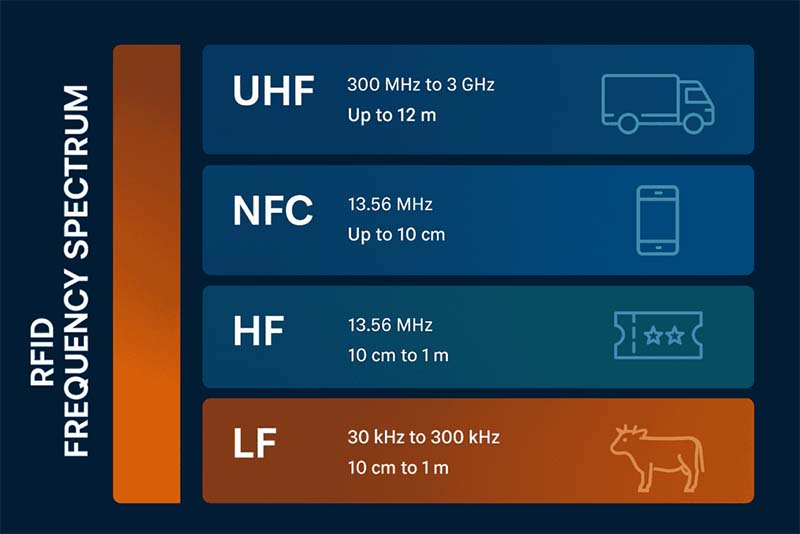
Low Frequency RFID (LF, 30–134 kHz)
Low Frequency RFID systems typically have a short read range, usually within a few centimeters up to around 10 cm, making them a close-range identification technology. The reading speed is relatively slow, but the signal is highly stable and can still operate reliably in environments with water, human body interference, or light metal exposure.
Common applications include animal identification (such as ear tags), vehicle immobilizers, and access control systems-situations that require high reliability but do not need long reading distances. LF systems are relatively simple in structure and have low tag and reader costs, but the coil antenna size is relatively large, which imposes certain limitations on physical design.
High Frequency RFID (HF, 13.56 MHz)
High Frequency RFID systems generally operate within a read range of 5 cm to 30 cm, making them short- to medium-range identification systems with moderate reading speed and stable data exchange capability. Their resistance to environmental interference is moderate; performance may decline near water or metal, but overall remains balanced.
As a result, HF RFID is widely used in smart card applications such as transit cards, metro cards, access control cards, electronic payments (NFC), library management, and medical wristbands. HF systems are well-developed and widely adopted, with medium-sized tags and mature design, making them one of the most commonly used RFID frequency bands.
Ultra-High Frequency RFID (UHF, 865–960 MHz)
Ultra-High Frequency RFID offers the longest read range, typically from 1 meter up to 10 meters or more depending on power and environmental conditions. It also provides very fast reading speeds and is suitable for scenarios requiring simultaneous identification of large numbers of tags.
UHF RFID is widely used in logistics and warehousing, supply chain management, retail inventory, asset tracking, and container management, especially in environments requiring high-volume and high-efficiency scanning. However, UHF is more sensitive to metal and liquids, resulting in relatively weaker environmental adaptability.
UHF systems require more advanced technical design and more complex antenna structures, but benefit from low tag costs at scale, making them ideal for industrial and commercial large-scale deployments.
What is RFID Chip Used For?
Warehouse RFID Handheld Scanner
RFID is widely used in handheld scanning devices in the warehousing and logistics industry for fast identification of product tags, inventory counting, and tracking inbound and outbound goods. Compared with traditional barcode scanning, RFID can read multiple tags at once, significantly improving warehouse management efficiency and accuracy.
RFID Access Control System
In office buildings, factories, schools, and similar environments, RFID access control devices authenticate identity and automatically unlock doors by recognizing employee cards or IC cards. This system enhances security and also supports attendance tracking and permission management.
RFID Retail Anti-Theft System
The retail industry commonly uses RFID anti-theft gates and electronic tags for merchandise management and loss prevention. RFID technology not only reduces product theft but also enables real-time inventory tracking and supports cashierless retail applications.
RFID in Automotive Electronics System
The digital transformation of the automotive industry includes the use of RFID chips to track components on production lines. Other applications of RFID in the automotive sector include vehicle identification and automated toll collection systems.
RFID Medical Asset Tracking System
The healthcare industry uses RFID tags to track medical equipment, medicines, and patient information. For example, hospital devices such as infusion pumps, wheelchairs, and patient monitors can be tracked and managed in real time through RFID systems, improving operational efficiency and safety.
RFID Manufacturing Tracking System
In smart manufacturing and industrial automation, RFID is used for tracking production line equipment and workpieces. The system can automatically record production processes, workflow status, and quality information, helping companies improve production transparency and automation levels.
RFID Frequently Asked Questions
Q1: What are the components of an RFID system?
Answer: Four core components: RFID tags, readers, antennas, and management software. Tags store unique ID data; readers transmit radio signals; antennas enhance signal coverage; software enables data collection and system integration.
Q2: What is the difference between RFID and barcode?
Answer: Barcodes require line-of-sight scanning and can only be read one at a time. They are low-cost but easily damaged. RFID supports bulk reading, non-line-of-sight identification, and rewritable data, but comes at a higher cost. The choice depends on the application scenario.
Q3: What is the difference between active and passive RFID?
Answer: Passive tags have no battery, are low-cost, and have a long service life but a short read range. Active tags have a built-in battery, support long-range real-time positioning, but are more expensive.
Q4: Can RFID tag data be modified?
Answer: Yes. Mainstream UHF tags (EPC Gen2 protocol) have memory divided into TID, EPC, user, and reserved banks. The TID is a factory-assigned unique code and cannot be changed. The EPC and user memory banks can be rewritten multiple times. Some one-time programmable read-only tags are permanently encoded at the factory and cannot be modified.
Q5: Can RFID connect with ERP, WMS, and MES systems?
Answer: Yes. Mainstream RFID devices support SDK development, serial ports, network ports, and TCP/IP protocols. They can seamlessly integrate with various industrial management systems to enable automatic data upload, inventory synchronization, inbound/outbound tracking, and asset traceability.
Q6: Why do metal and liquid interfere with RFID?
Answer: Metal reflects radio waves, while liquids absorb signals. For such environments, anti-metal and waterproof RFID tags should be used.
Q7: Can mobile phones read RFID tags?
Answer: Mobile phones only have built-in NFC reading functionality (HF high-frequency), which can read NFC tags, access cards, and transportation cards; they cannot directly read UHF ultra-high frequency RFID tags.
Top RFID Chip and Manufacturers 2026
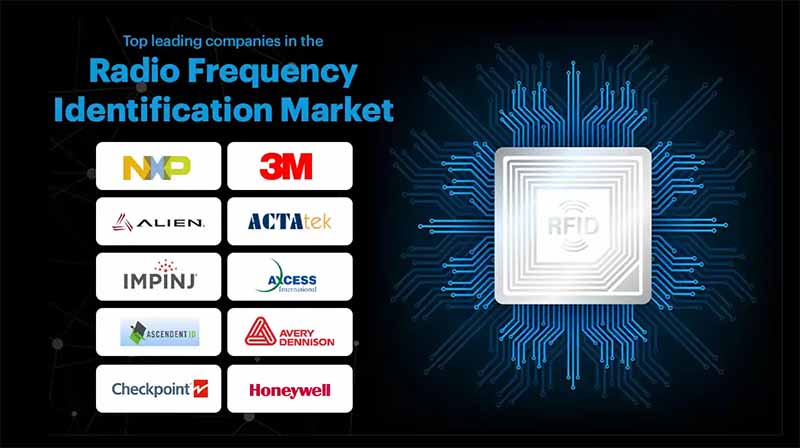
Impinj: Global leader in RAIN RFID technology, Impinj specializes in UHF RFID chips, tags, and reader solutions.
NXP Semiconductors: A major global RFID and NFC chip manufacturer. Its MIFARE series is widely used in access control cards, transit cards, payments, and identity authentication. It is also a key chip supplier for many RFID tag manufacturers.
Alien Technology: Alien Technology is a leading RFID technology provider dedicated to delivering solutions for asset management, supply chain optimization, and access control. The company offers a full range of products, from RFID tags to antennas and readers, all known for high performance and reliability.
Zebra Technologies: A leading manufacturer of industrial-grade RFID readers and devices, widely used in warehousing, industrial automation, retail inventory, and logistics systems.
Texas Instruments: Texas Instruments is also an important player in the RFID field, particularly strong in RFID reader ICs, NFC chips, and low-frequency (LF) RFID transceivers. Its products are widely used in industrial control, automotive electronics, access control systems, medical devices, and near-field communication applications.
Eastech is a Leading RFID IC Supplier
Eastech is working in close cooperation with leading global RFID chip manufacturers, specializing in the distribution of a full range of RFID chips and reader ICs. Our portfolio covers UHF, HF, and LF frequency bands, including tag chips, transmitter/receiver ICs, RF amplifiers, low-frequency identification components, and related RF and communication integrated circuits. We are a key global supplier of core RFID components. We provide customers with flexible multi-brand and multi-model selection support, helping to shorten development cycles and reduce procurement risks.
At the same time, Eastech has strong global sourcing and inventory management capabilities, enabling rapid response to industrial-grade, consumer-grade, and customized project requirements. Against the backdrop of rapid RFID adoption across applications such as smart warehousing, industrial automation, retail digitization, and IoT devices, we not only supply components but also provide selection recommendations and alternative solutions tailored to customer project needs, ensuring system stability and cost optimization.
Summary, understanding what is RFID chip used for helps clarify its importance in modern tracking and identification systems, where it enables efficient data collection, asset management, and automation across various industries. RFID chip hardware continues to advance with higher integration, improved read accuracy, and wider application compatibility, making it a core component in smart logistics, industrial IoT, and digital supply chain solutions.
Related information
- 2026.08.09 What Are Automotive Chips?
- 2026.07.19 What is GDDR Memory?

- 2026.05.05 What are Inertial Measurement Units?