

Available 24/7 at
+86 13632816717

The Best Electronic Components in 2026
Driven by the accelerating trends of artificial intelligence, expansion of big data center infrastructure, automotive electrification and intelligence, and the upgrading of industrial automation, the global demand landscape for electronic components is undergoing a transformation. Based on the latest industry data and market dynamics, this article systematically reviews and forecasts the best electronic components online store 2026, with a focus on key categories including semiconductors, relays, and sensors.
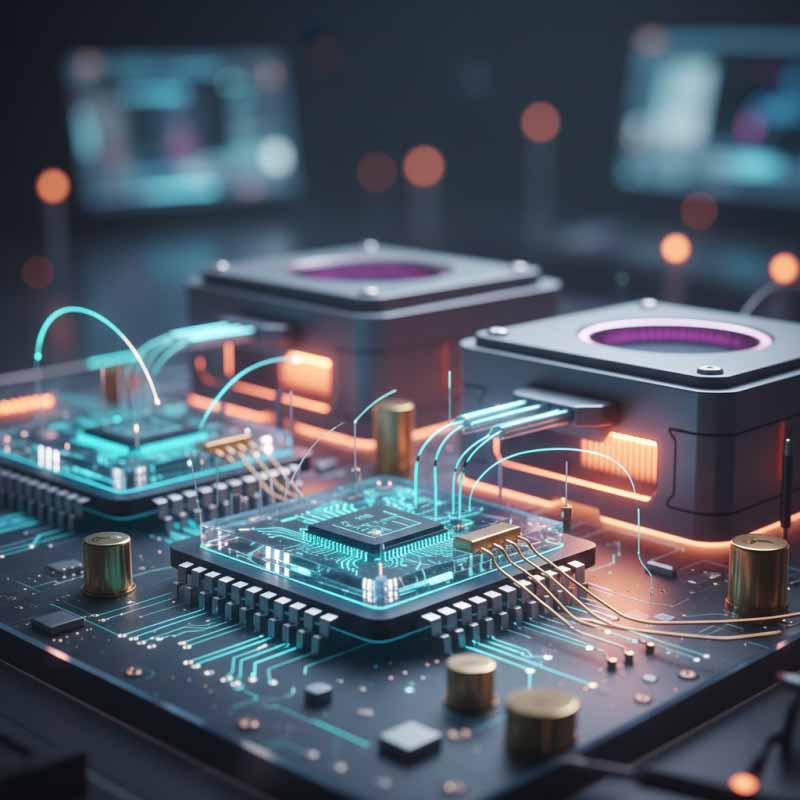
Artificial intelligence and Internet of Things applications have become the core driving forces behind the development of the semiconductor industry. According to industry statistics, approximately 30% of the demand for electronic components is directly driven by smart terminal devices.
At the same time, supply chain fluctuations and shortages of key raw materials still constrain the industry's ability to achieve stable and sustainable growth. For component suppliers, distributors, and EMS manufacturers, proactively identifying high-demand categories, optimizing certification processes, and strengthening supply chain strategies and inventory planning have become critical to gaining a competitive edge.
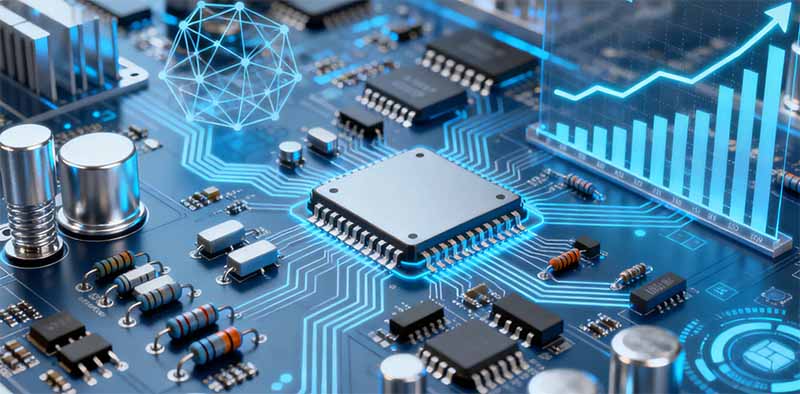
2026 Best Electronic Components for Innovative Technology
As the core control unit of smart hardware and embedded systems, MCUs play a central role in computing and instruction scheduling across smart homes, industrial control, automotive electronics, and IoT terminal devices. With the continuous advancement of device intelligence and connectivity, high-integration, low-power, and high-performance MCUs will maintain strong long-term demand in automotive electronics, industrial automation, and consumer electronics.
Driver ICs
Serving as the critical bridge between the main control unit and power devices, driver ICs are widely used in motor control, display panels, power systems, and automotive electronic control applications. Driven by trends such as vehicle electrification, industrial servo systems, and the proliferation of smart home appliances, demand for high-voltage, highly reliable, and compact integrated driver ICs continues to grow, making them essential components for ensuring stable and efficient device operation.
FPGA (Field-Programmable Gate Array)
With their programmable logic architecture and flexible iteration capabilities, FPGAs are indispensable in applications such as AI acceleration, communication base station signal processing, industrial real-time control, and automotive autonomous driving domain controllers. By 2026, as computing power demands increase and hardware customization accelerates, high-capacity, low-latency, and highly integrated FPGAs will sustain rapid growth in high-end computing and industrial control sectors.
Power Management ICs (PMIC / DC-DC / LDO)
The power architectures of AI servers, communication base stations, and automotive electronics are becoming increasingly complex, directly driving demand for high-efficiency, multi-channel, and precise power management ICs. Meanwhile, rising requirements for low power consumption and longer battery life in mobile devices and IoT applications continue to expand the use cases for PMICs, DC-DC converters, and LDO regulators. Industry data indicates that starting from 2026, specific power management ICs will experience explosive growth, becoming a key growth category over the next decade.
Power Devices: MOSFETs, IGBTs
The overall expansion of power demand continues to drive steady growth in the power device market. MOSFETs, with their excellent switching performance, maintain strong demand in low to medium power and high-frequency switching applications. IGBTs, on the other hand, dominate in medium- to high-voltage motor drives and inverter systems. With the widespread adoption of electric vehicles, the expansion of industrial variable-frequency equipment, and the development of new energy infrastructure, the market size for both types of power devices is expected to grow steadily.
Connectors
The deployment of 5G/6G communication networks, increasing demand for high-speed interconnects in AI servers, and stringent requirements for high-speed signal transmission in automotive domain controllers and smart cockpits are collectively driving rapid growth in connector demand. Under the influence of three core sectors-communications, automotive, and data centers-high-frequency, anti-interference, and high-density connectors will continue to enjoy strong market momentum over the long term.
Sensors (Temperature Sensors, Pressure Sensors, Photoelectric Sensors, Hall Effect Sensors, Inertial Measurement Units, etc.)
Sensors have become deeply integrated into advanced driver-assistance systems (ADAS), industrial IoT, smart homes, and wearable devices, serving as the core components for environmental perception. Market growth is reflected not only in expanding demand but also in the transition toward higher precision, multi-dimensional sensing, and intelligent functionality. Among them, automotive-grade and industrial-grade sensors demand higher standards in environmental adaptability, long-term reliability, and professional calibration services, highlighting significant growth potential in the market.
Passive Components: MLCCs, Inductors, Precision Resistors
Core end devices such as AI servers, communication base stations, and electric vehicles are equipped with massive quantities of passive components, often reaching tens of thousands per unit. MLCCs (Multilayer Ceramic Capacitors), with their high-frequency adaptability, high-temperature resistance, and strong reliability, are in particularly high demand in advanced electronic applications. Inductors and precision resistors are indispensable in power filtering and signal conditioning, supporting stable overall market growth.
Relays, Switches, and Transformer Modules
The widespread adoption of industrial automation, along with the upgrading of smart buildings and smart homes, continues to drive long-term demand for relays and control switches. Transformer modules play a critical role in infrastructure such as EV charging stations, photovoltaic inverters, and communication power systems. Driven by energy transition and industrial intelligence, demand for these components is expected to grow steadily.
Specialized Packaging and Development Modules
To shorten product development cycles and reduce risks, end customers increasingly prefer highly integrated, application-ready modular components. These include packaged power modules, signal conditioning modules, and function-integrated modules. Modular development components effectively simplify design processes and accelerate time-to-market, making 2026 a significant milestone for their widespread adoption in electronic component applications.
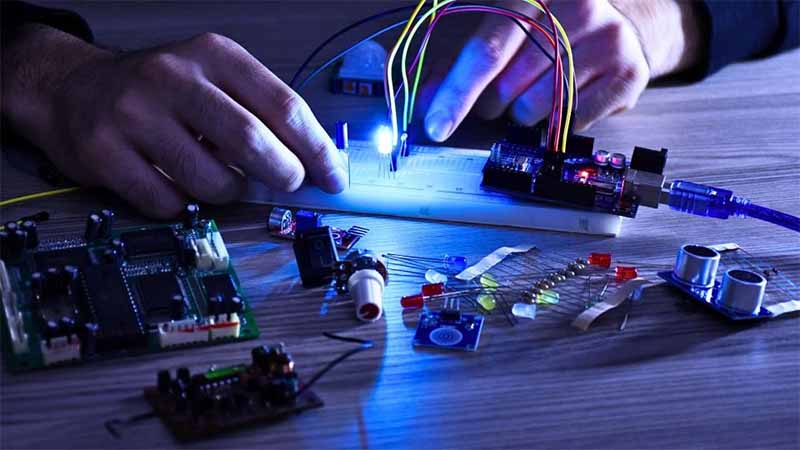
Which Industries are Driving the Development of Electronic Components?
Internet of Things, Artificial Intelligence, and Data Centers
The continuous surge in AI computing power, the large-scale expansion of data centers, and the maturation of the Internet of Things ecosystem together form the core engine driving demand for electronic components. AI servers, cloud computing equipment, smart gateways, and massive IoT terminals create rigid demand for high-performance processors, high-speed interfaces, large-capacity passive components, and high-precision power management ICs-further accelerating the growth of the best electronic components in 2026.
Automotive Electrification and Increasing Complexity of In-Vehicle Electronics
The global transition toward automotive electrification is accelerating, with rapid adoption of three-electric systems, smart cockpits, and autonomous driving domain controllers, making in-vehicle electronic architectures increasingly complex. New energy vehicles are driving exponential demand for power devices, automotive-grade MCUs, high-voltage connectors, and high-precision sensors. The continuous integration of intelligent functions is further boosting the usage of automotive chips, memory, and passive components, establishing the automotive sector as a major growth driver in the electronic components market.
Industrial Intelligent Manufacturing
The advancement of industrial intelligent manufacturing and production line automation is accelerating the adoption of industrial control systems, robotics, servo systems, and smart sensing devices. Industrial applications are placing significantly higher demands on components with high reliability, strong stability, and wide temperature tolerance. Categories such as industrial-grade MCUs, driver ICs, sensors, relays, and connectors continue to benefit, supporting steady long-term growth of electronic components in the industrial sector.
Edge Intelligence
The rapid proliferation of edge intelligence is shifting data processing and decision-making from the cloud to end devices, with widespread applications in smart homes, wearable devices, in-vehicle edge computing, and industrial on-site control. Edge devices are driving strong demand for low-power, compact, and high-performance chips, as well as miniaturized sensors and integrated modules. This trend is pushing electronic components toward miniaturization, low power consumption, and higher integration, opening up entirely new incremental market opportunities.
Emerging Material Technologies in the Electronic Components
The electronic components industry is currently undergoing a new wave of rapid transformation, where continuous breakthroughs in new materials are laying a solid foundation for diversified innovation in electronic components. Frontier materials represented by organic semiconductors are attracting increasing attention, offering outstanding advantages such as ultra-thin profiles and flexibility. These properties are opening up entirely new application spaces for wearable devices and flexible integrated electronics.
Nano-materials also demonstrate significant growth potential. Thanks to their unique physical and chemical properties, they can effectively enhance the overall performance of miniaturized packaged products, driving electronic components toward higher levels of integration and improved reliability.
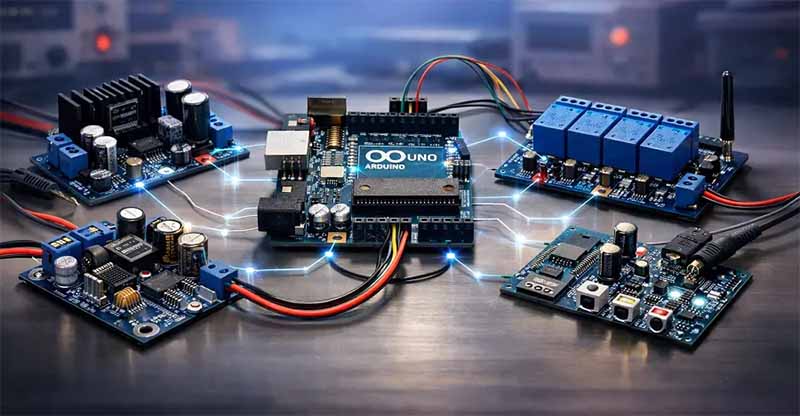
What Should Electronic Component Distributors Do in 2026?
1. Stabilize Supply and Reduce Volatility Risks
Faced with price increases from original manufacturers and unstable supply conditions, distributors need to diversify sourcing channels to avoid single-source dependency risks. For core components, a multi-source strategy should be adopted, including primary supply models and alternative replacement models. At the same time, long-term supply agreements should be signed and reasonable safety inventory levels planned to lock in pricing and production capacity in advance. Digital tools should be used to monitor supply availability, lead times, and pricing in real time, enabling early risk alerts and ensuring supply stability.
2. Focus on High-Value Products and Upgrade Product Structure
In 2026, the industry is characterized by a "high-end shortage and low-end oversupply" pattern, requiring distributors to prioritize high-value product segments. Key focus areas include automotive-grade and industrial-grade components, as well as power devices, sensors, and high-end passive components related to AI servers. Efforts should also be made in domestic substitution and supply of scarce or obsolete components. By aligning with demand from AI, drones, and IoT applications, distributors can optimize product selection and improve profit margins.
3. Strengthen Technical Services
Competing solely on price is no longer sustainable. Distributors need to provide upstream technical support by building engineering teams that offer component selection guidance, alternative design solutions, and BOM optimization services. A deep understanding of customer application scenarios-such as industrial control and agricultural drones-enables the delivery of customized solutions. This shift from a "product supplier" to a "technical partner" significantly enhances competitiveness.
4. Improve Efficiency
Distributors should accelerate digital transformation by using systems to manage inventory, orders, and customer data, enabling fast information retrieval and precise stocking. At the same time, inventory turnover must be strictly controlled to avoid capital stagnation and maintain healthy cash flow.
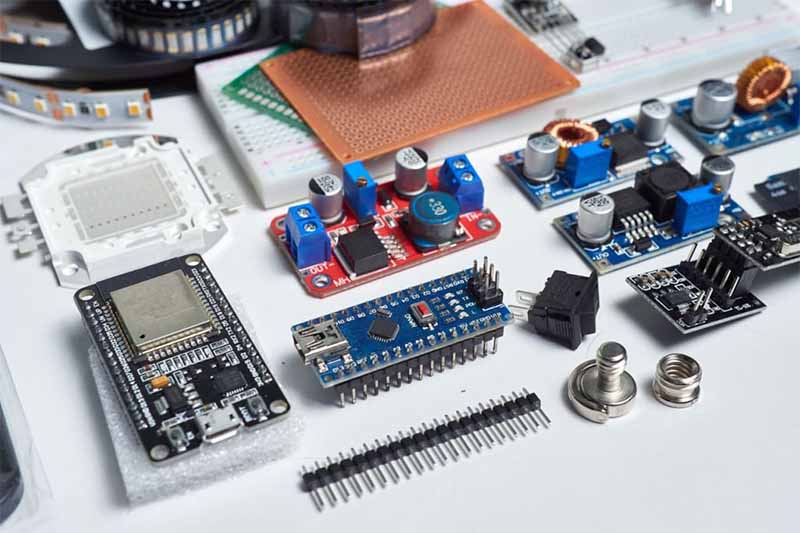
Eastech: Best Buy Electronic Components
Comprehensive coverage of electronic components with one-stop procurement: from core IC chips, FPGAs, and modules to fundamental resistors, capacitors, diodes, and connectors, we provide a complete ecosystem spanning semiconductors to passive components. In addition to component distribution, we also offer PCB and PCBA services, helping your projects move rapidly from design schematics to finished products.
Global Service Network
Europe & Americas: eastechic.com
Localized support for key markets:
Russian-speaking regions (eastechic.ru),
Türkiye (eastechic.tr),
Brazil (eastechic.com.br)
Where to Buy Scarce Electronic Components?
For obsolete, shortage, or long-lead-time electronic components, we leverage years of industry experience and a globalized supply chain network to establish dedicated sourcing channels. This enables us to quickly locate original manufacturers, authorized distributors, and reliable spot inventories, effectively resolving material challenges in both R&D and mass production stages.
We strictly control sourcing quality to ensure that every component is 100% genuine, minimizing risks such as refurbished or substandard parts. Our end-to-end service covers the entire process from inquiry, quotation, and sourcing to stocking and logistics delivery, providing a seamless procurement experience.
Whether you are working on small-batch prototyping or large-scale production, Eastech offers flexible purchasing solutions and fast-response mechanisms. We simplify procurement workflows, shorten delivery cycles, and deliver a truly worry-free, secure, and reliable one-stop electronic component supply chain service.
In summary, from AI servers and automotive electronics to industrial automation and edge intelligence, demand for high-performance semiconductors, passive components, and advanced modules will keep expanding. For distributors, having access to reliable sourcing best electronic components kits and providing technical support is essential to staying competitive.
Related information
- 2026.09.06 What is Bus Interface IC?
- 2026.08.30 How to Select Supercapacitor?
- 2026.08.23 What is Aluminium Electrolytic Capacitor?
- 2026.08.16 What are BJT and MOSFET Transistors?