

Available 24/7 at
+86 13632816717

Automotive Electronic Component Solution at Eastech
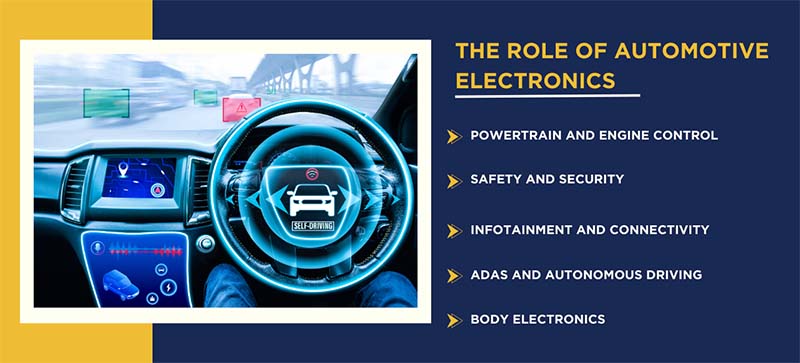
Electronic components for automotive are vital for modern vehicles, ensuring smooth operation of electrical systems while enhancing functionality, safety, and overall performance. As the automotive industry rapidly evolves, applications such as electric vehicles (EVs) and autonomous vehicles (AVs) are driving the fastest growth. Modern cars are adopting advanced vehicle architectures to meet increasing demands for computing power and in-vehicle network bandwidth, making reliable automotive electronics more important than ever.
What are the Key Electronics Components in Vehicle?
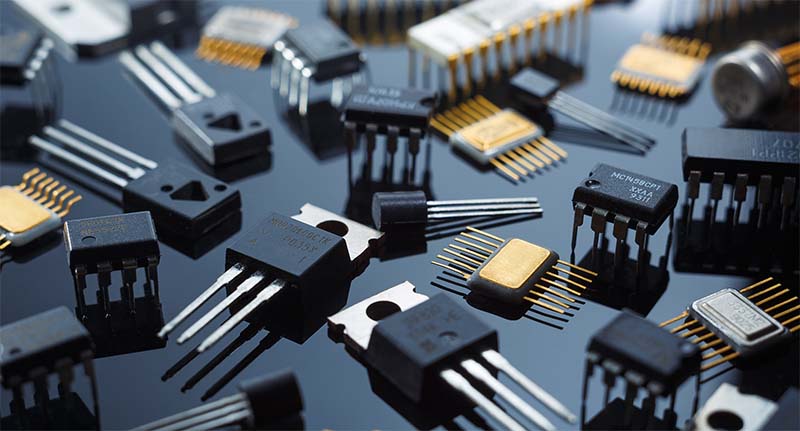
Electronic components are used in almost every aspect of modern vehicles. Advanced Driver Assistance Systems (ADAS), electric power-trains, and infotainment systems all rely heavily on precise electronic components. As autonomous vehicles continue to develop, the demand for reliable automotive electronics is only expected to grow.
Integrated Circuits (ICs)
The brains behind vehicle electronics, controlling everything from engine management to infotainment.
Connectors
Ensure stable electrical connections between components.
Resistors
Regulate current flow in circuits.
Capacitors
Store and release energy as needed in electronic circuits.
Diodes
Including rectifier diodes, Schottky diodes, Zener diodes, and light-emitting diodes (LEDs), typically labeled as "D" in schematics.
Transistors
Also called bipolar junction transistors (BJTs), these amplify weak signals or act as electronic switches.
Field Effect Transistors (FETs)
Voltage-controlled devices with high input resistance, low noise, low power consumption, wide dynamic range, and easy integration.
Relays and Switches
Electrically control high-power circuits safely.
Electronic Control Units (ECUs)
Act as the "brain" of vehicle systems, processing signals from sensors and managing actuators.
Sensors
Detect environmental or vehicle conditions such as temperature, pressure, speed, or proximity.
Fuses and Circuit Breakers
Protect circuits from over-current.
Wires and Cables
Transmit power and signals throughout the vehicle.
Power Supplies and Batteries
Provide stable energy to all electrical systems.
Automotive Electronic Components Applications
Electronic components play a critical role in modern vehicle solutions, enabling essential functions ranging from safety to comfort. These automotive electronic components, from advanced driver assistance systems (ADAS) to infotainment, ensure vehicles operate efficiently and reliably.
Onboard Chargers
Efficiently manage charging for electric vehicles, ensuring battery safety and performance.
Sensors
Designed for ADAS, engine control, and cabin systems, including temperature, proximity, current, and motion sensors.
Infotainment Systems
Include displays, audio components, and connectivity solutions for entertainment, navigation, and in-vehicle communication.
Power Management Solutions
Comprise voltage regulators, DC-DC converters, and battery management circuits, designed to optimize energy efficiency and load balancing.
Lighting Systems (LED & OLED)
Automotive-grade lights for indicators, interior controls, headlights, and ambient lighting.
Cable Assemblies
Custom automotive wiring harnesses with electromagnetic interference (EMI) shielding, flexible routing, and high vibration resistance.
LCD Displays
Sunlight-readable displays and touchscreens for infotainment systems, digital dashboards, and HVAC interfaces.
Communication Systems
Advanced connectivity solutions enabling efficient data transfer between vehicles and their environment, enhancing traffic management and safety protocols.
Advanced Driver Assistance Systems (ADAS)
Automotive vision technologies are key for ADAS and autonomous driving, relying on high-speed, low-latency data processing.
Radar, and Camera Systems
Core sensing technologies for environment perception, including surround-view cameras and body control modules (BCM).
LED Lighting and Keyless Entry Systems
Enhance vehicle safety, visibility, and user convenience.
Active Components (Microprocessors & FPGAs)
Programmable logic and computing cores for vehicle control units and digital interfaces.
Power Supplies and Rechargeable Batteries
Energy storage and conversion solutions for both conventional and electric vehicle subsystems.
Crystals & Oscillators
Timing and frequency devices used in ECUs, GPS systems, and infotainment processors.
FPGAs - Automotive Electronic Component Solution
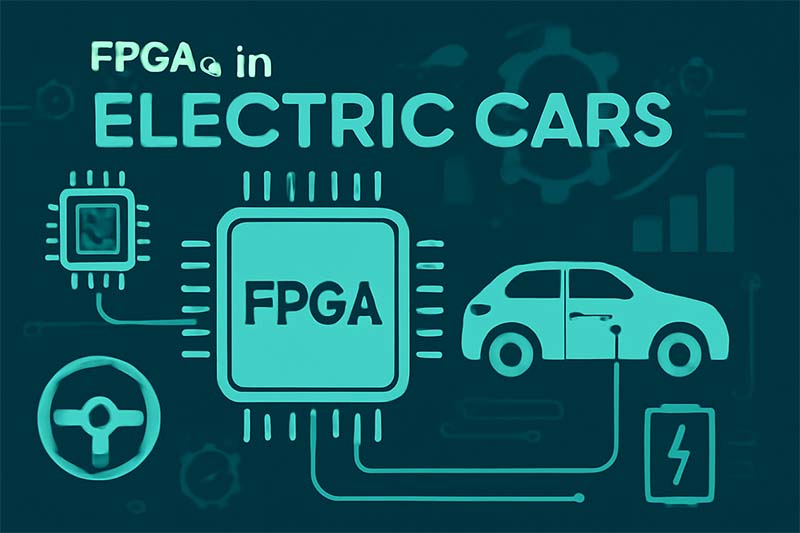
Field Programmable Gate Arrays (FPGAs) are semiconductor devices that can be configured and reconfigured after manufacturing to implement custom digital logic functions. Thanks to their parallel processing, low latency, and reconfigurability, FPGAs are well-suited for the rapid iteration and functional safety requirements of modern automotive electronics.
1. Advanced Driver Assistance Systems (ADAS) & Autonomous Driving
- Sensor Data Fusion & Preprocessing: Integrates multi-source sensors such as cameras, radar, and LiDAR for real-time object detection, tracking, and environmental perception, supporting L2+ and higher autonomous driving. For example, the Xilinx Zynq UltraScale+ MPSoC‑EV can process four camera streams via GMSL links for pedestrian/vehicle detection and surround-view stitching.
- Interface Bridging & High-Speed Interconnects: Aggregates data from 14+ sensors using high-speed interfaces like MIPI, GMSL, and DisplayPort, ensuring low-latency data transfer and protocol conversion for multi-vendor component compatibility.
- Functional Safety & Hardware Root of Trust: Provides tamper-proof security modules, supports configuration image encryption verification and ECU trust-chain startup, protecting against cloning and tampering while meeting ISO 26262 functional safety standards.
2. Intelligent Cockpit & Display Control
- Multi-Screen Interaction & Video Processing: Drives central consoles, digital dashboards, and heads-up displays (HUD), enabling video scaling, local dimming, and split-screen display for enhanced visual quality and energy efficiency.
- Camera Monitor Systems (CMS): Handles image scaling, segmentation, and stitching for low-latency, high-quality displays, improving functional safety, reducing drag, and minimizing blind spots.
3. New Energy Vehicles & Power-train Control
- Motor & Inverter Control: Low-power FPGA architectures enable precise motor drive and torque control, optimizing energy conversion for hybrid and electric vehicles.
- Charging Systems: Supports onboard chargers (OBC) and DC fast charging through protocol conversion, power regulation, and safety monitoring, suitable for high-voltage platforms up to 800V.
FPC - Automotive Electronic Component Solution
Flexible Printed Circuits (FPCs) are thin, bendable circuit boards made from flexible insulating materials, designed to interconnect electronic components in compact or movable assemblies. Often referred to as the "flexible neural network" of automotive electronics, FPCs provide lightweight, high-density interconnections in complex vehicle architectures.
1. Battery Management Systems (BMS)
- Cell Monitoring & Balancing: Conforms to complex battery pack shapes, enabling voltage and temperature acquisition, as well as cell balancing for 70–90 cells per vehicle. Supports high-voltage platforms up to 800V, ensuring safety and extending battery life, with a per-vehicle value of approximately $40–50.
- Module-to-Module Interconnects: Replaces traditional wiring harnesses, reducing wire length from 1.5 km to 100 m, cutting weight by 80%, improving assembly efficiency, and reducing failure rates.
2. ADAS Sensors & In-Vehicle Displays
- Camera & Radar Modules: Connects image sensors to processing units, minimizing module size while maintaining high-speed signal transmission. For L3-level vehicles, 25–30 FPCs per car are typically used for ADAS applications.
- Display Connections: Transmits signals and power to central consoles, instrument clusters, and ambient lighting, supporting curved or irregular screens, enhancing cockpit integration and design flexibility.
3. Body & Lighting Systems
- Airbag & Chassis Control: Provides vibration-resistant and temperature-tolerant connections in ABS/ESP and seat sensors, ensuring rapid response under emergency conditions.
- LED Lighting Control: Integrates LED driver circuits for adaptive front lighting systems (AFS) and dynamic ambient lighting, adjusting beam angle/brightness and improving nighttime driving safety and interior aesthetics.
PCB - Automotive Electronic Component Solution
Printed Circuit Boards (PCBs) are rigid or semi-rigid boards that provide mechanical support and electrical connections for electronic components through conductive pathways etched onto non-conductive substrates. Serving as the "skeleton" of automotive electronics, PCBs handle electrical connections, heat dissipation, and mechanical support for critical vehicle systems.
1. Core Control Units (ECU/TCU/ACU)
- Engine Control Unit (ECU): Integrates microprocessors, sensor interfaces, and power drivers to precisely control fuel injection, ignition timing, and emissions, meeting ISO 16750 environmental reliability standards.
- Transmission Control Unit (TCU): Manages automatic transmission shift logic and clutch control to ensure smooth performance and fuel efficiency.
- Airbag Control Unit (ACU): Processes collision signals within milliseconds to deploy airbags, using high-reliability materials and redundant design, compliant with AEC‑Q100 automotive-grade certification.
2. Intelligent Driving & Domain Controllers
- Radar / LiDAR Control Boards: Process RF signals and echo data to support adaptive cruise control (ACC), automatic emergency braking (AEB), and other ADAS functions. HDI and buried/blind via technology increase routing density for compact designs.
- Domain Controllers: Centralize ADAS, cockpit, and body domain data using 8–16+ layer high-density multilayer PCBs. Integrate high-speed SerDes and power management modules to support software-defined vehicle architectures.
3. New Energy & Lighting Systems
- Motor Controllers & Inverters: PCBs with ceramic or metal cores meet the high thermal dissipation requirements of SiC/GaN devices and the insulation/temperature needs of 800V high-voltage platforms.
- LED Automotive Lighting Boards: Drive headlights, tail lights, and ambient light arrays, supporting dynamic lighting modes. Aluminum-core PCBs (MCPCBs) improve heat dissipation and extend LED lifespan.
Ongoing supply chain disruptions, extended lead times, and the rapid adoption of electric vehicles and advanced driver assistance systems (ADAS) have significantly increased demand for specialized automotive-grade components.The automotive industry hard to find electronic components - including automotive ICs, power semiconductors, sensors, and connectors-are essential to maintaining production continuity and meeting strict quality standards.
To overcome the challenges of electronic component shortages and soaring prices, automotive manufacturers increasingly rely on experienced and trusted partners. Eastech is your stable, compliant, and traceable component solutions.
Leading Automotive Electronic Component Suppliers
We provide automotive original equipment manufacturers (OEMs) with high-performance, safe, reliable, and long-lasting electronic components. Our certified solutions support electric vehicle (EV) platforms, Advanced Driver Assistance Systems (ADAS), infotainment systems, and power electronics. Designed to withstand harsh automotive environments, our components meet strict production and quality requirements.
Comprehensive Component Portfolio
In response to ongoing and critical component shortages, we position ourselves as a dependable supply solution. With extensive inventory and a broad range of automotive electronic components, we are able to meet urgent production demands in a timely manner-helping customers avoid potential manufacturing disruptions and supply chain dependencies.
Quality Assurance
Committed to the highest industry standards, we continuously invest in advanced inspection technologies and quality control processes. Every component undergoes rigorous testing to ensure compliance with automotive-grade reliability, performance, and safety requirements.
On-Time Delivery
With fast order processing and responsive logistics coordination, we ensure on-time delivery to help customers complete projects on schedule and within budget.
Related information
- 2026.08.09 What Are Automotive Chips?
- 2026.07.19 What is GDDR Memory?
- 2026.05.05 What are Inertial Measurement Units?