

Available 24/7 at
+86 13632816717

What Are MEMS Motion Sensors?
Among the various sensing technologies, MEMS-based motion sensor ICs are widely used because they offer compact size, low power consumption, high sensitivity, and reliable performance. From accelerometers and gyroscopes to integrated IMUs and other motion-sensing ICs, these devices provide the data needed for accurate motion detection and control. This article introduces the main types of motion sensors, explains how they work, and highlights the best motion sensors ic from leading manufacturers.
What Are MEMS Motion Sensors?
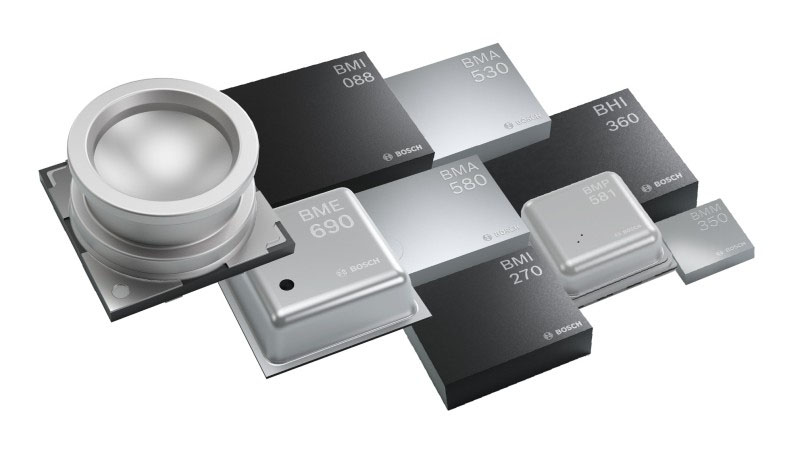
MEMS motion sensors are miniature electronic devices that use Micro-Electro-Mechanical Systems (MEMS) technology to detect and measure movement, acceleration, rotation, and changes in orientation. They combine tiny mechanical structures with electronic circuits on a semiconductor chip, providing accurate motion detection in a compact and low-power package.
Common MEMS motion sensors include accelerometers, gyroscopes, and inertial measurement units (IMUs). Accelerometers measure linear acceleration and changes in velocity, while gyroscopes detect angular velocity or rotational movement. IMUs typically combine multiple sensing functions, such as a 3-axis accelerometer and 3-axis gyroscope, to provide comprehensive information about an object's motion and orientation.
How Does a MEMS Sensor Work?
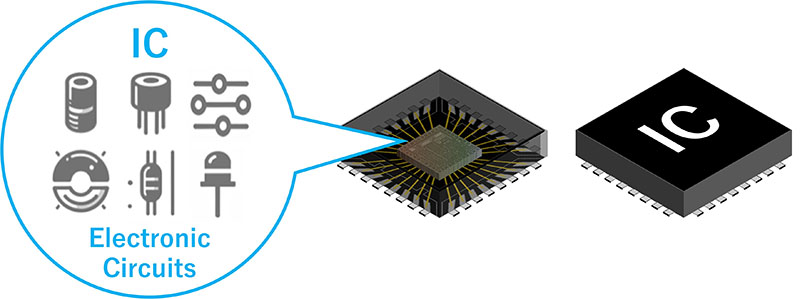
MEMS motion sensors are miniature devices that integrate mechanical structures and electronic circuits at the microscale. MEMS technology enables the development of various sensors and actuators that detect physical stimuli and convert them into usable electrical signals. Depending on their design, MEMS sensors can measure parameters such as pressure, motion, gas concentration, humidity, flow, sound, and magnetic fields.
For motion sensing applications, MEMS sensors detect changes in the movement of microscopic mechanical structures inside the device. For example, in a MEMS accelerometer, an internal proof mass moves relative to the surrounding sensor structure when the device experiences acceleration. This movement causes a measurable change in capacitance or another electrical property, which is then processed and converted into an analog or digital output signal. This allows MEMS motion sensors to accurately detect acceleration, vibration, tilt, rotation, and other forms of movement.
Types of Motion Sensors
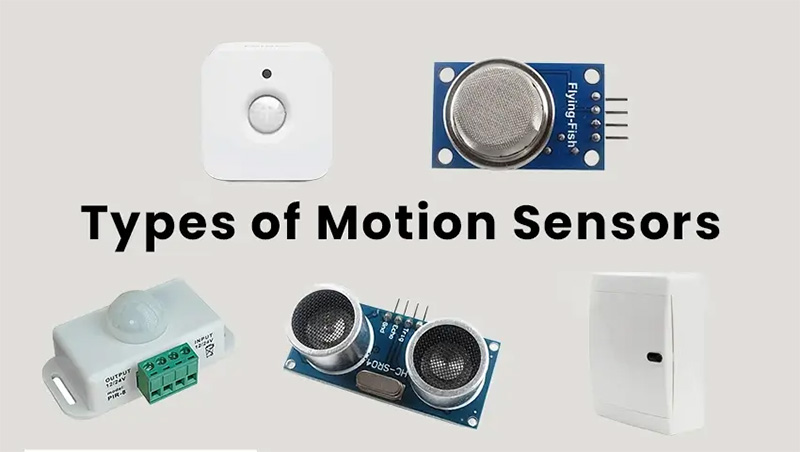
Different motion sensors use different technologies to detect movement, acceleration, vibration, rotation, or changes in position. The most common types include PIR sensors, accelerometers, gravity sensors, vibration sensors, rotation sensors, and Hall-effect sensors.
Passive Infrared Sensors (PIR)
PIR sensors detect movement by sensing changes in infrared radiation emitted by objects, especially the human body. A typical PIR device uses a pyroelectric sensing element and signal-processing circuit.
Accelerometers
Accelerometers are one of the most common types of MEMS motion sensors. They measure linear acceleration along one or more axes and can also be used to detect vibration, shock, and tilt.
MEMS accelerometers typically contain a microscopic proof mass suspended by flexible structures. When the sensor experiences acceleration, the proof mass moves relative to the surrounding structure. This displacement changes the capacitance between microscopic electrodes, and the integrated signal-processing circuit converts the capacitance change into a measurable electrical output.
Common accelerometer ICs include 1-axis, 2-axis, and 3-axis devices, with 3-axis accelerometers being widely used in modern electronics. Important specifications include measurement range, sensitivity, noise density, bandwidth, output data rate, offset, temperature stability, and power consumption.
Gravity Sensors
Gravity sensors detect the direction of gravitational acceleration to determine device orientation or tilt. They are usually implemented using MEMS accelerometers combined with software algorithms.
Vibration Sensors
Vibration sensors detect mechanical vibration and shock in electronic or mechanical systems. MEMS accelerometers are commonly used for vibration measurement because they can provide high sensitivity and wide bandwidth.
Rotation Sensors
Rotation sensors measure angular velocity and rotational movement. MEMS gyroscopes use vibrating microscopic structures and the Coriolis effect to detect rotation.
Hall-Effect Sensors
Hall-effect sensors detect magnetic fields and can be used to detect the position, movement, or rotation of magnetic objects. Hall-effect ICs are available with digital or analog outputs.
Which Sensor is Used for Motion Detection?
Different types of sensors can be used for motion detection depending on what type of movement needs to be measured. In MEMS motion sensing, accelerometers, gyroscopes, and IMUs are the most common solutions.
What are the Different Types of MEMS Sensors?
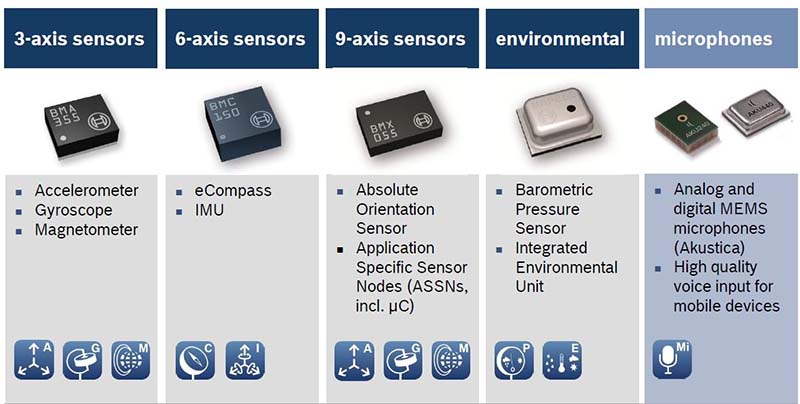
MEMS sensors are available in a wide range of types, with each sensor designed to detect specific physical parameters. Depending on the application, MEMS technology can be used to measure motion, pressure, sound, temperature, and other environmental conditions. The following table summarizes the most common types of MEMS sensors and their typical functions and applications.
|
Sensor Type |
What It Measures |
Applications |
|
MEMS Accelerometer |
Linear acceleration, vibration, and tilt |
Smartphones, wearables, automotive systems |
|
MEMS Gyroscope |
Angular velocity and rotation |
Navigation, drones, robotics, cameras |
|
MEMS IMU |
Acceleration and angular motion |
Autonomous systems, drones, industrial equipment |
|
6-Axis IMU |
3-axis acceleration + 3-axis rotation |
Motion tracking, AR/VR, robotics |
|
9-Axis IMU |
3-axis acceleration + 3-axis rotation + magnetic field |
Orientation and navigation systems |
What Does Motion Sensors Do?
In MEMS-based motion sensing systems, different sensors perform different functions. Accelerometers measure linear acceleration and can also be used to detect tilt and vibration, while gyroscopes measure angular velocity and rotational movement. When combined in an inertial measurement unit (IMU), these sensors can provide more comprehensive information about an object's movement and orientation.
Motion sensors are widely used in smartphones, wearable devices, automotive electronics, drones, robotics, navigation systems, cameras, and industrial equipment. They enable functions such as screen orientation, image stabilization, motion tracking, navigation, vehicle safety, vibration monitoring, and gesture detection.
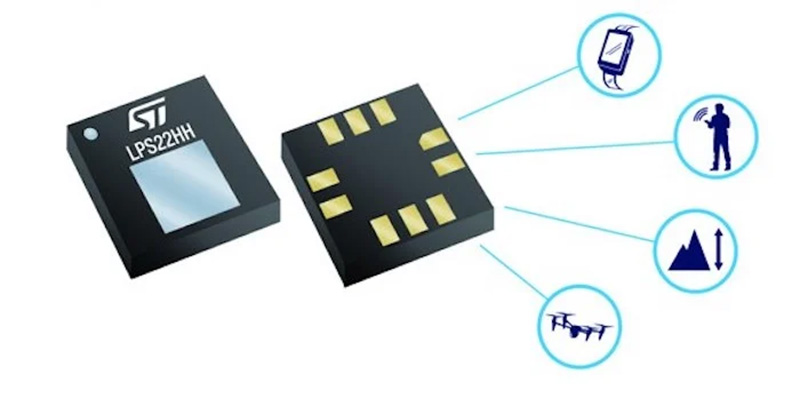
Where Are MEMS Motion Sensors Used?
Smartphones and Mobile Devices
MEMS motion sensors are widely used in smartphones and tablets to detect device movement, orientation, and rotation. They support functions such as automatic screen rotation, motion-based controls, gaming, and activity tracking.
Wearable Devices
In smartwatches, fitness trackers, and other wearable devices, MEMS accelerometers and gyroscopes monitor body movement and physical activity. They enable step counting, activity recognition, gesture detection, and motion tracking.
Automotive Systems
MEMS motion sensors play an important role in modern automotive electronics by detecting vehicle acceleration, rotation, and movement. They are used in applications such as electronic stability control, rollover detection, navigation, and advanced driver assistance systems (ADAS).
Drones and UAVs
Drones use MEMS accelerometers and gyroscopes to measure changes in orientation and movement. The motion data helps flight-control systems maintain stability, control altitude, and perform precise maneuvers.
Robotics
MEMS motion sensors provide robots with real-time information about acceleration, rotation, and orientation. This information supports motion control, navigation, balance, and interaction with the surrounding environment.
Industrial Equipment
In industrial applications, MEMS motion sensors can monitor vibration, acceleration, and mechanical movement in machines and equipment. They are commonly used for condition monitoring, predictive maintenance, and equipment fault detection.
Cameras and Image Stabilization
MEMS gyroscopes can detect unwanted camera movement and provide motion data for image stabilization systems. This helps reduce blur and improve image quality in smartphones, digital cameras, and other imaging devices.
Navigation and Inertial Systems
MEMS accelerometers and gyroscopes are key components in inertial navigation systems. They measure changes in acceleration and rotation to help determine the movement, position, and orientation of vehicles, drones, and other devices.
AR, VR, and Gaming Devices
MEMS motion sensors enable real-time tracking of head and controller movements in augmented reality (AR), virtual reality (VR), and gaming systems. They help provide responsive motion tracking and immersive user experiences.

Leading Motion Sensor IC Manufacturers
The market for motion sensor ICs includes several leading semiconductor manufacturers offering MEMS-based accelerometers, gyroscopes, IMUs, and other motion-sensing solutions. When selecting the best motion sensors IC for a specific application, factors such as sensing accuracy, power consumption, package size, operating range, reliability, and application requirements should be considered.
TDK offers a broad range of MEMS accelerometers, gyroscopes, and IMUs, with a strong focus on high integration, low power consumption, and compact sensor packages. Its motion sensor portfolio includes solutions with integrated sensing and signal-processing functions, helping reduce external components and simplify system design. TDK also provides products covering different combinations of acceleration and angular-rate sensing, allowing engineers to balance performance, size, and power requirements.
Analog Devices is particularly recognized for its high-precision MEMS inertial sensors. Compared with many general-purpose motion sensors, ADI's products often emphasize low noise, low bias drift, high stability, and accurate measurement over time. These characteristics make ADI a strong choice when evaluating motion sensor ICs where measurement accuracy and long-term stability are more important than achieving the lowest possible power consumption or cost.
Bosch Sensortec focuses heavily on highly integrated, compact, and low-power MEMS sensors. Its portfolio includes accelerometers, gyroscopes, and multi-axis IMUs, with many devices integrating multiple sensing functions into a single package. Bosch also emphasizes efficient power management and advanced embedded features, making its solutions attractive for designs where small size, low power, and sensor integration are key selection criteria.
STMicroelectronics
STMicroelectronics offers a wide range of MEMS motion sensors covering different measurement ranges, noise levels, output data rates, and power modes. Its product portfolio provides engineers with considerable flexibility when selecting between low-power operation and higher-performance motion sensing. ST also offers multi-axis sensors and IMUs with integrated processing features, enabling different levels of motion detection and orientation estimation.
Texas Instruments (TI)
Texas Instruments approaches motion sensing from a broader analog, signal-conditioning, and embedded processing perspective. While TI is not primarily known for having the same breadth of standalone MEMS motion sensors as TDK, ADI, Bosch Sensortec, or ST, its analog and mixed-signal technologies can complement MEMS sensors by providing accurate signal acquisition, conditioning, power management, and processing.
There is no single best motion sensors IC for every application. The right device depends on factors such as acceleration range, gyroscope range, sensitivity, noise performance, power consumption, operating temperature, package size, communication interface, and cost.
The Best Motion Sensors Integrated Circuits
Selecting the right motion sensor IC depends on factors such as sensing accuracy, measurement range, noise performance, power consumption, integration, package size, and overall system requirements. To help engineers and buyers quickly identify suitable solutions, we have selected a range of popular motion sensor ICs from leading manufacturers, including TDK, Analog Devices (ADI), STMicroelectronics, and Bosch Sensortec. The featured products cover a variety of MEMS technologies, including accelerometers, gyroscopes, inertial measurement units (IMUs), and pressure sensors, ranging from compact low-power devices to high-precision inertial sensors.
If you are looking for a specific part number or cannot find the sensor IC you need, EASTECH also offers a broader range of MEMS sensors and motion sensor ICs from leading manufacturers. Contact us to explore more available models and sourcing options.
|
TDK Corporation |
Analog Devices Inc. |
|
ICM-40609-D |
ADIS16500 |
|
ICM-42688-P |
ADIS16470 |
|
ICM-45686 |
ADIS16501 |
|
ICM-42670-P |
ADIS16550 |
|
ICM-20602 |
ADIS16545 |
|
ICM-20948 |
ADIS16547 |
|
ICM-20689 |
ADIS16446 |
|
ICM-42605 |
ADIS16486 |
|
ICM-42607-P |
ADXL345 |
|
ICM-42607-C |
ADXL355 |
|
ICM-20649 |
ADIS16488 |
|
ICP-20100 |
ADIS16490 |
|
MPU6509 |
ADXRS453BRGZ-RL |
|
IIM-42653 |
ADXL357BEZ-RL7 |
|
IIM-42351 |
ADXL355BEZ-RL7 |
|
HAL888UT-K |
ADXL345BCCZ-RL7 |
|
ICS-41351 |
LSM6DSV32XTR |
|
MPU-6000 |
LSM6DSV16XTR |
|
ICM-40627 |
LSM6DS3TR-C |
|
HAL1501UA |
BMI088 |
|
CH201-00ABR |
BMI270 |
|
ICM-42370-P |
BMP388 |
|
|
BMP280 |
Finally, MEMS motion sensors have become essential components in modern sensing and motion-control systems. By detecting acceleration, rotation, orientation, and other changes in movement, these sensor ICs provide reliable motion data for a wide range of electronic applications. Understanding what does motion sensors do also highlights the important role of MEMS technology in achieving compact designs, low power consumption, and accurate motion measurement. As MEMS technology continues to advance, motion sensor ICs are expected to support increasingly sophisticated applications across consumer electronics, automotive, industrial, and IoT systems.
Related information
- 2026.09.20 What is Ceramic Packaging Chip?
- 2026.09.13 What is SMD Resistor?
- 2026.09.06 What is Bus Interface IC?