
Available 24/7 at
+86 13632816717

How to Choose the FPGA in Artificial Intelligence?
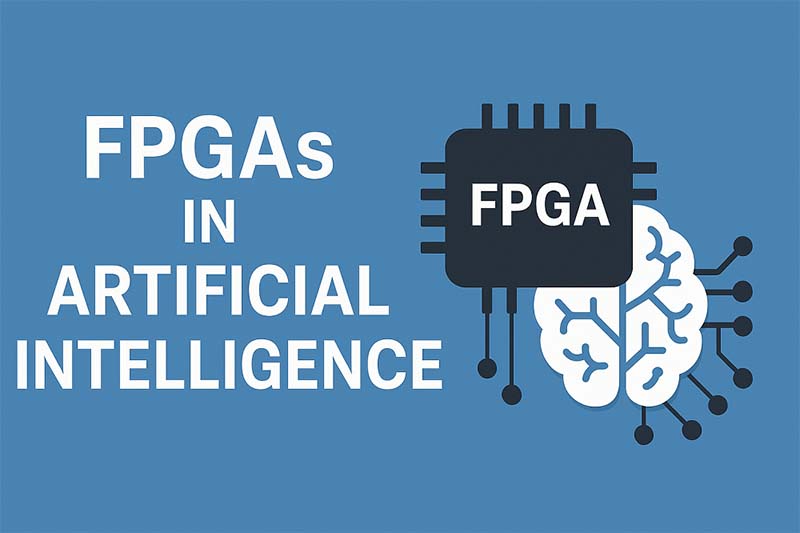
With continuously evolving and increasingly complex algorithms, as well as the rapid explosion of massive data, the market demand for high-performance, application-specific computing hardware is experiencing explosive growth. In the increasingly diversified AI hardware landscape, FPGA stands out as a highly competitive and high-quality alternative due to its high performance and high flexibility. Industry forecasts indicate that by 2030, the global artificial intelligence FPGA market size will reach 13 billion USD, demonstrating significant growth potential. This article provides a comprehensive discussion about FPGA for artificial intelligence training.
What Do FPGA Do in Artificial Intelligence Applications?
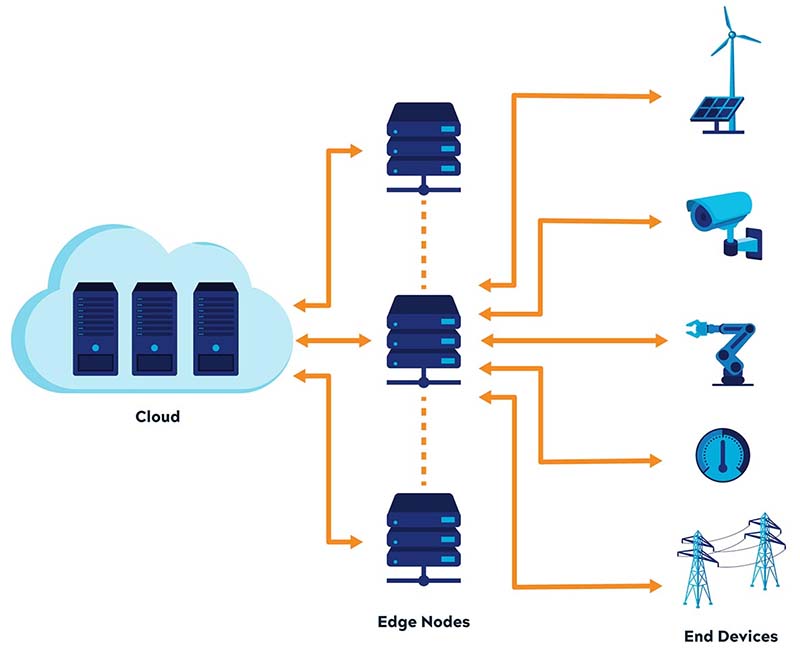
FPGA is a highly efficient and reconfigurable AI inference accelerator and a core component of edge computing. It can be customized on demand to build hardware computing architectures that adapt to various deep learning models. Working in heterogeneous synergy with GPUs for training and inference tasks, FPGA offers both low latency and high energy efficiency. It also enables rapid AI algorithm prototyping and accelerates the deployment of customized hardware solutions.
Why Use FPGA for Machine Learning?
FPGA offers unique advantages in deep learning applications. Compared with CPUs, GPUs, or ASICs, it achieves a strong balance between flexibility and energy efficiency, making it especially suitable for inference acceleration and edge computing scenarios.
1. Low Latency and High Parallel Computing Power
FPGA uses a hardware-level parallel architecture that can customize data paths based on model structure, enabling true pipeline processing and parallel computation. In real-time inference tasks such as vision detection and speech recognition, it significantly reduces latency while improving throughput.
2. Flexibility and Reconfigurability
FPGA supports on-demand reconfiguration of logic resources, allowing optimization for different deep learning models such as CNNs, RNNs, and Transformers. Unlike ASICs with fixed architectures, FPGA can more flexibly adapt to algorithm updates and multi-scenario requirements, extending system lifecycle.
3. High Energy Efficiency
At the same performance level, FPGA generally delivers better energy efficiency. It is particularly suitable for power-sensitive environments such as edge devices, embedded systems, and industrial applications, helping reduce overall power consumption and thermal costs.
4. Strong Custom Acceleration Capability
FPGA can perform hardware-level optimization for specific operators such as convolution, matrix multiplication, and quantized computation. It also supports low-precision computing (INT8, FP16, etc.), improving computational efficiency while maintaining accuracy.
5. Excellent System Integration Capability
Modern FPGAs integrate high-speed interfaces such as PCIe, DDR, and Ethernet, enabling seamless integration with existing systems. They also support collaboration with CPUs and GPUs to build heterogeneous computing architectures.
FPGA vs GPU for Deep Learning
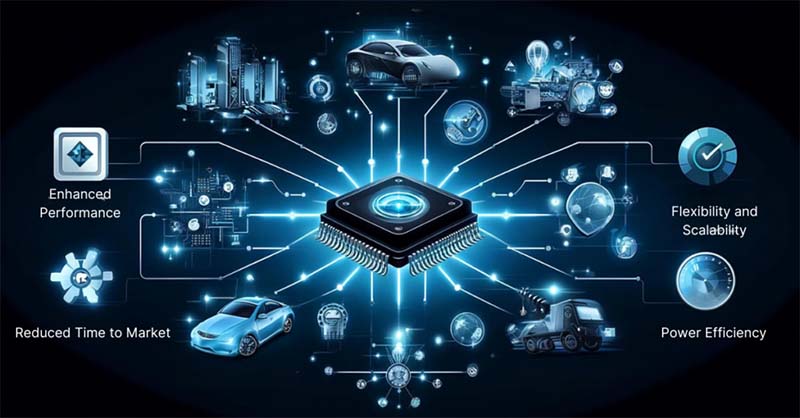
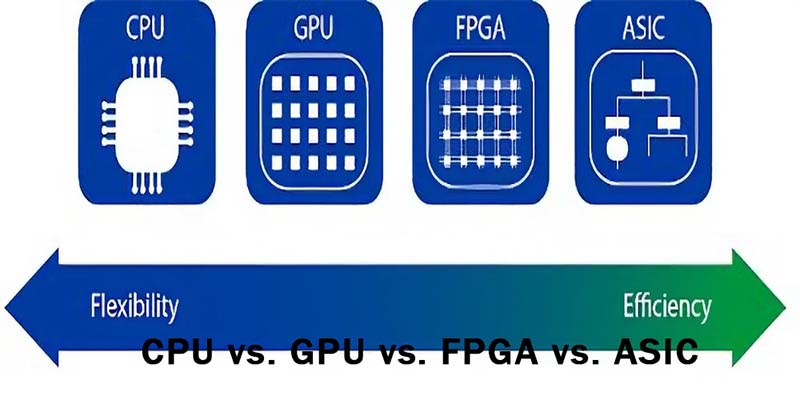
The continuous evolution of artificial intelligence and hardware technologies is driving rapid development across multiple industries, including healthcare, automotive, communications, and industrial manufacturing. As AI algorithms become increasingly complex and massive data continues to grow explosively, high-performance computing hardware has become a critical industry requirement. GPU, FPGA, and ASIC are the three mainstream chip solutions powering today's AI computing landscape.
GPU - The Mainstream Foundation for General AI Computing
Originally designed for graphics processing, GPUs have become the core choice for AI training and general-purpose inference due to their massive parallel computing cores, mature ecosystem, and strong programmability. Their advantages include high software development accessibility, large throughput, and excellent compatibility. GPUs are widely used in deep learning model training and large-scale data processing, enabling fast deployment and strong ecosystem support.
FPGA in Artificial Intelligence - A Flexible Mid-Tier Computing Solution
Field-Programmable Gate Arrays (FPGA) represent a flexible computing platform positioned between general-purpose chips and fully customized chips. They play a key role in the diversification of AI hardware development. The main feature of FPGA is hardware reconfigurability and programmability, allowing real-time adjustment of circuit logic based on AI algorithms and business requirements without replacing physical hardware. This provides a strong balance between performance and flexibility.
ASIC - Fully Customized Dedicated AI Chips
Application-Specific Integrated Circuits (ASIC) are highly customized chips designed for a single algorithm or fixed application scenario. They are optimized for specific AI models with streamlined architectures, delivering the highest performance, lowest power consumption, smallest size, and maximum computational efficiency. After mass production, ASICs achieve extremely low unit cost, making them ideal for large-scale, stable AI deployments. However, they lack flexibility, require long development cycles, and involve very high upfront investment, making them unsuitable for rapidly evolving algorithms and multi-scenario adaptation needs.
|
Hardware |
FPGA |
GPU |
ASIC |
|
Core Architecture |
Reconfigurable Logic Blocks |
Fixed large-scale parallel cores |
Custom dedicated logic circuits (designed for specific tasks) |
|
Adaptability |
Suitable for specific and customized tasks |
Ideal for general parallel computing |
Only applicable to single, fixed dedicated tasks (tailor-made and incompatible with other tasks) |
|
Latency Characteristics |
Extremely low and deterministic |
Higher and more variable |
The lowest and fully deterministic |
|
Computing Efficiency |
High (high efficiency of customized circuits) |
Relatively low (low efficiency of general-purpose cores) |
Extremely high (no redundancy in dedicated architecture, far more efficient than FPGA and GPU) |
|
Flexibility |
Extremely high; reprogrammable to meet new requirements |
Low; fixed architecture |
Extremely low; fixed circuit logic, non-modifiable after tape-out with no flexibility |
How to Use FPGA for Deep Learning Applications
1. Model Preparation and Training
First, train the deep learning model (such as CNN, Transformer, etc.) on CPU or GPU to obtain a deployable inference model.
2. Model Optimization and Quantization
Compress and optimize the model (e.g., pruning, quantization to INT8/FP16) to reduce computational complexity and resource usage, making it more suitable for FPGA deployment.
3. Hardware Mapping and Compilation
Use development tools such as Intel OpenVINO or Xilinx Vitis AI to convert the model into an FPGA-executable hardware acceleration structure (e.g., convolution units, matrix computation units).
4. Deployment to FPGA
Flash the generated bitstream into the FPGA and configure peripherals (memory, interfaces, etc.) to complete system deployment.
5. Inference and Accelerated Execution
Run model inference on the FPGA, enabling low-latency and high-efficiency data processing.
6. Performance Optimization and Iteration
Based on real-world application requirements, further optimize the model architecture or hardware configuration to continuously improve performance and energy efficiency.
How to Choose the Best FPGA for Ai Acceleration
1. AMD (Xilinx)
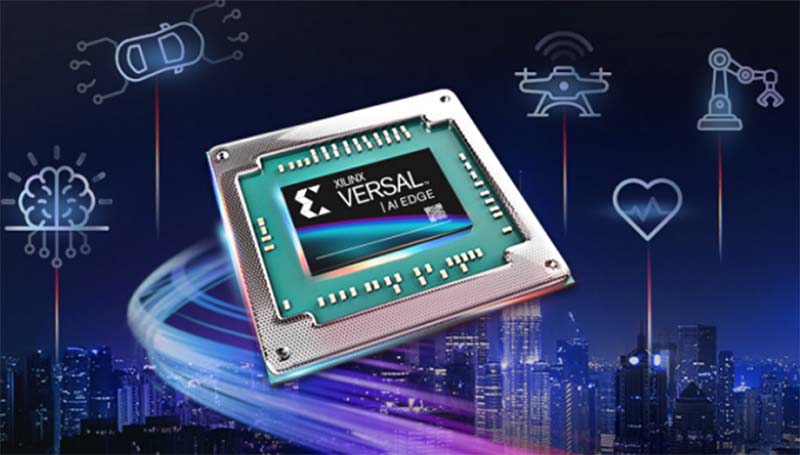
AMD (Xilinx) has years of experience in the AI acceleration field. Its key strengths are high architectural flexibility and strong AI acceleration performance, making it suitable for full-scenario applications including AI inference, video processing, and financial computing. Its FPGAs support dynamic reconfiguration, enabling adaptation to continuously evolving AI algorithms. They are widely used in data centers, 5G infrastructure, and intelligent automotive systems.
Xilinx FPGA 7-Series
As a classic AMD Xilinx family, the 7-Series is built on 28nm technology. It covers entry-level to mid-to-high-end AI acceleration scenarios, offering both reliability and cost efficiency. It is a strong choice for entry-level AI acceleration.
XC7A100T-2FG676I: A mid-range AI acceleration model featuring abundant logic resources and DSP slices, with integrated high-speed interfaces. It supports multi-channel data acquisition and preprocessing, making it suitable for industrial edge AI inference and small-scale device acceleration with a balance of performance and reliability.
Xilinx UltraScale Series
The UltraScale series targets mid-to-high-end AI acceleration. Built on 16nm FinFET technology, it delivers significantly improved performance while reducing power consumption by more than 60% compared to the 7-Series. It supports large-scale AI computation and is widely used in data centers and 5G base stations, making it a mainstream choice for AI acceleration.
XC7VX690T-2FFG1927I: A high-end AI acceleration model with extremely large logic capacity and strong parallel computing capability. It supports ultra-high-speed interfaces and is suitable for cloud AI inference, high-performance computing, and advanced defense and aerospace AI applications.
Xilinx Spartan Series
The Spartan series is designed for entry-level, low-cost AI acceleration scenarios. It focuses on low power consumption and compact size, making it ideal for lightweight edge AI inference and IoT AI nodes where cost and energy efficiency are critical. Some models also support high-speed interfaces and hardware-level security features.
XC7S15-1CPGA196Q: An entry-level AI acceleration model in the Spartan-7 family. It features 12,800 logic elements, distributed RAM, and embedded block RAM. With low power consumption and small form factor, it supports standard interfaces such as SPI and I2C. It is well-suited for IoT AI gateways and small industrial controllers requiring lightweight AI inference at low cost.
AMD (Xilinx) Virtex Series FPGA
The Virtex series represents AMD Xilinx's top-tier FPGA lineup, focusing on extreme performance for high-end AI acceleration and ultra-large-scale data processing. With leading-edge process technology, it delivers the highest logic density and computing power, making it ideal for demanding AI inference and training-support workloads.
XCV600E-7BG432Iis a flagship-class classic model featuring very large logic capacity, abundant DSP resources, and high-speed interfaces. It offers exceptional parallel computing capability and is suitable for large-scale AI inference and high-performance computing. It is a representative high-performance and reliable model within the Virtex family.
Altera FPGA products are known for their strong cost-performance ratio and excellent ecosystem compatibility. They focus on mid-to-high-end AI acceleration and industrial-grade applications, balancing performance and cost control. Their FPGAs demonstrate strong digital signal processing (DSP) capabilities, and some models integrate high-speed analog-to-digital converters (ADC/DAC), enabling direct RF processing. In addition, they offer high compatibility with Intel CPUs and server platforms, mature development tools, and long product life cycles.
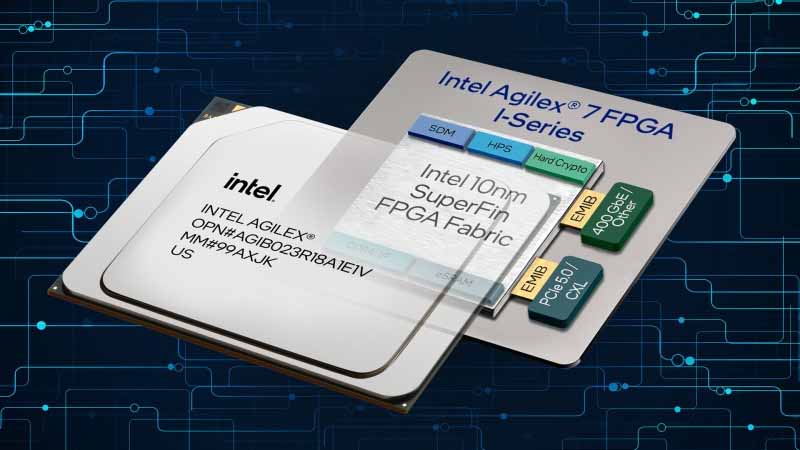
Intel Cyclone Series FPGA
The Cyclone series targets low-end, cost-sensitive AI acceleration scenarios. It emphasizes low power consumption and high cost-effectiveness, making it suitable for lightweight edge AI inference, industrial AI control, and IoT AI nodes. It is the main entry-level AI acceleration series from Intel Altera, optimized for cost efficiency and supporting various industrial interfaces for small-form-factor AI devices.
Cyclone IV EP4CE10F17C8N: An entry-level AI acceleration model with moderate logic capacity and low power consumption. It supports basic parallel computing and is suitable for IoT edge AI preprocessing and lightweight inference in small industrial AI controllers. It offers controlled cost and is ideal for beginners and simple AI acceleration tasks.
Cyclone 10 GX: An upgraded mid-range model with increased logic capacity and higher-speed interface support. It provides enhanced DSP capabilities and is suitable for industrial edge AI and entry-level machine vision applications, offering a good balance between performance and cost.
Altera Stratix Series
The Stratix series is Intel Altera's high-performance FPGA family, focusing on high compute capability and advanced AI acceleration. It is designed for mid-to-high-end AI applications, digital signal processing, and advanced industrial control systems. With advanced process technology and strong DSP performance, some models integrate ADC/DAC modules for direct RF signal processing, making them suitable for complex AI inference workloads.
10AS032H3F34I2SG: A high-end Stratix Agilex AI acceleration model built on advanced process technology. It integrates high-speed transceivers and powerful DSP slices, offering low latency and high computational throughput. It is suitable for complex AI inference and large-scale data processing, widely used in data center AI acceleration and 5G base station signal processing.
FLEX Series FPGA
The FLEX series is a classic Intel Altera product line positioned for mid-range general-purpose AI acceleration. It emphasizes high flexibility and compatibility, making it suitable for industrial AI, edge inference, and data acquisition and preprocessing applications. It offers strong cost-performance advantages, low development complexity, and is widely used by small and medium-sized enterprises for AI deployment.
EPF10K50RI2400-4N: An upgraded mid-range model in the FLEX 10K series. It offers improved logic capacity and DSP performance, as well as higher data transfer rates. It is suitable for more complex edge AI inference and AI-assisted processing in small industrial systems, balancing flexibility and cost efficiency for industrial automation scenarios.
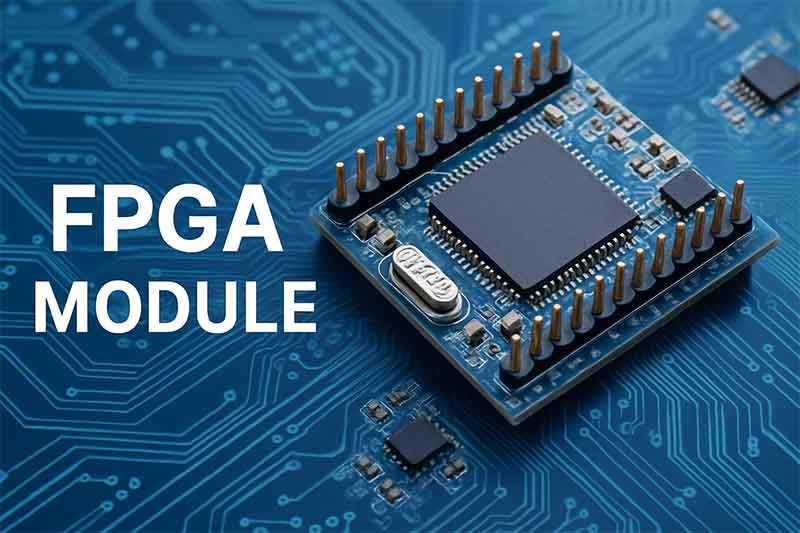
Eastech is your reliable partner for FPGA sourcing. We supply the full range of products from AMD (Xilinx) and Intel (Altera), ensuring stable and dependable supply with strict quality assurance. All FPGA chips we sell are 100% original and authentic, and we can provide complete product certification documents as well as quality inspection reports to ensure they meet the requirements of various applications.
With years of experience in the electronic components industry, we offer FPGA products from globally recognized brands with sufficient inventory to respond quickly to customer procurement needs. This helps significantly shorten delivery cycles while reducing both procurement and lead time costs. If you have any requirements regarding FPGA selection, stock inquiry, or bulk purchasing, please feel free to contact us at any time.